
Gaza Genocide · 04 May, 2026 · 9 min read
Palestinian Journalists Syndicate Says Israel Killed 262 Journalists Since October 2023
262 journalists killed in Gaza since Oct 2023, per Palestinian Journalists Syndicate. Al Jazeera journalist Mohammed Wishah killed in Gaza by Israeli drone strike.
10 of 11 outlets skipped it: UN/OHCHR reports that administrative detention is used for Palestinian journalists and describes alleged mistreatment during detention..
Al Jazeera was read line by line by the Watchdog: 2.9. See the score →
11outlets compared
Same story, two versions
tap a side to read it in full
Anadolu Ajansı
““The number of journalists killed has reached 262 male and female journalists since that date, including 261 in the Gaza Strip, in addition to six journalists killed since the beginning of 2026,””Read the original ↗
Countercurrents
““On World Press Day, Palestinians in the Gaza Strip commemorated more than 262 journalists killed by Israeli forces since the start of the genocide, while three others remain missing,””Read the original ↗
AA emphasizes a precise count and breakdown (261 in Gaza, six since 2026), while Countercurrents adds missing persons (three missing) and uses 'genocide' framing; the missing-person detail changes how uncertainty and ongoing risk are portrayed.
World Press Freedom Day Toll
On World Press Freedom Day, Palestinian journalists and media workers marked the day in Gaza while the death toll from Israeli military operations continued to rise, with multiple organizations and officials citing figures that vary by counting method and time window.
“about 300 violations and attacks against Palestinian journalists since the start of 2026”
Anadolu Ajansı reported that the Palestinian Journalists Syndicate recorded “about 300 violations and attacks against Palestinian journalists since the start of 2026,” and said the number of journalists killed since the start of the war on Gaza in October 2023 had reached “262 male and female journalists,” including “261 in the Gaza Strip,” plus “six journalists killed since the beginning of 2026.”A

The same Anadolu Ajansı report said the syndicate’s head of the freedoms committee, Mohammad al-Lahham, stated that total violations since October 2023 reached “3,983,” including “1,072 in 2023,” “1,325 in 2024,” “1,286 in 2025,” and “300 in 2026.”A
UN News, citing the UN Office of the High Commissioner for Human Rights (OHCHR), placed the Gaza-specific death toll differently, saying that “Between October 2023 and mid-December 2025, 289 journalists have died during Israeli military operations in Gaza.”
UN News also said OHCHR found that “all signs point to Palestinian journalists being deliberately targeted because of their work,” and it described repression intensifying alongside killings, including “the arrest of more than 200 Palestinian journalists.”
In parallel, Al Jazeera described Gaza as “the deadliest place ever recorded for media workers,” and it said Palestinian journalists marked the day by honoring colleagues killed and targeted by Israel.
The result is a picture of sustained lethal pressure on media personnel across 2023-2026, with counts ranging from 262 to 289 depending on the source and the period being measured.
Escalation, Arrests, and Detention
Alongside the killings, the sources describe a wider pattern of repression that includes arrests, detention, and restrictions on access for journalists.
UN News said that between “7 October 2023 and 31 October 2025,” Israeli security and military forces arrested “at least 202 Palestinian journalists in Gaza and the West Bank,” and that “41 of whom were still detained as of 31 October 2025.”

It added that “Most were placed in administrative detention,” warning that this “amounts to an arbitrary deprivation of liberty and exposes detainees to torture and other ill-treatment, as well as to enforced disappearances.”
UN News also reported that released journalists described interrogations focused on their reporting or posts on social media, based on vague charges of “incitement,” “support for terrorism,” or threats to Israel’s “national security,” and it said detainees faced “secret detentions, abusive interrogations, degrading treatment, inhumane detention conditions, and the systematic use of physical and sexual violence, including two cases of rape.”
Anadolu Ajansı similarly described the scale of violations recorded by the Palestinian Journalists Syndicate, including “10 direct injuries, 22 arrests, 120 cases of detention or prevention from coverage, and 12 attacks carried out by Israeli occupiers” in 2026.A
In the same Anadolu Ajansı report, Mohammad al-Lahham said the syndicate recorded “240 cases of direct gunfire at media crews and 352 cases involving tear gas and stun grenades,” along with “beatings, confiscation of equipment, and travel bans.”A
The Al Jazeera Mubasher tour described how journalists continued working despite destruction of their offices, saying the Israeli occupation army “destroyed the journalists' bureaus and main offices,” but that journalists “pitched modest tents beside shops and street stalls” and continued “fighting power outages.”
Taken together, the sources portray a system where lethal attacks and coercive detention operate alongside efforts to disrupt the practical ability to report from the field.
Named Deaths: Wishah and Washah
The sources also document specific journalist deaths in Gaza tied to drone strikes and vehicle attacks, while the accounts differ on the framing of intent and responsibility.
“on Wednesday, April 8”
Le Monde reported that Qatar’s Al-Jazeera announced the death of Mohammed Washah on Wednesday, April 8, describing him as “one of its journalists in the Gaza Strip,” and saying he died “after an Israeli drone attack on his car.”
Le Monde quoted Al-Jazeera’s statement that it described the death as “a heinous crime, not a random act but a deliberate and targeted crime aimed at intimidating journalists,” and it said the channel “holds the Israeli occupying forces fully responsible.”
Reporters Without Borders (RSF) denounced the killing of Mohammed Washah in an email to AFP, and Le Monde said RSF noted it was “the second journalist killed by the Israeli army since the start of the ceasefire, after Amal El Shamali, an independent journalist killed by a drone on March 9, 2026.”
BFM and TRT Français similarly reported that Al Jazeera condemned the death of Mohammed Wishah (spelled Wishah in those outlets) as “a 'deliberate and targeted crime'” and said the network “holds the Israeli occupying forces fully responsible.”
In contrast, Franceinfo reported that the Israeli army stated on April 9 that Mohammed Wishah “was a member of the Palestinian Islamist movement Hamas who 'operated under the cover' of journalism,” and it added that the army accused him of being “a key member of the Hamas headquarters responsible for the production of rockets and armaments.”
Franceinfo also said Al Jazeera specified it would pursue “all necessary legal actions to pursue the perpetrators of the murder of its correspondents and staff in Gaza, and to ensure justice for them and for all journalists fallen in the line of duty.”
The sources further connect the death to broader tallies: Le Monde said the channel’s tally brought the number of Al-Jazeera journalists killed in Gaza since October 7, 2023 to “ten,” while TRT Français said it was “the tenth Al Jazeera journalist killed in Gaza since 2023.”
Across these accounts, the same incident is narrated through competing explanations—Al Jazeera and RSF emphasizing intimidation and targeted killing, while the Israeli army frames the journalist as operating under Hamas cover.
How Outlets Frame the Same Pattern
The sources show a sharp divergence in how they frame the broader “war on Gaza” impact on journalists, even when they cite overlapping organizations and similar event timelines.
Anadolu Ajansı describes the Palestinian Journalists Syndicate rally outside its headquarters in al-Bireh on World Press Freedom Day, and it quotes Omar Nazzal saying “Activities organized on World Press Freedom Day aim to highlight the exceptional and unprecedented conditions under which the Palestinian journalist operates,” while Mohammad al-Lahham says the “current year has also seen 10 direct injuries, 22 arrests, 120 cases of detention or prevention from coverage, and 12 attacks carried out by Israeli occupiers.”A
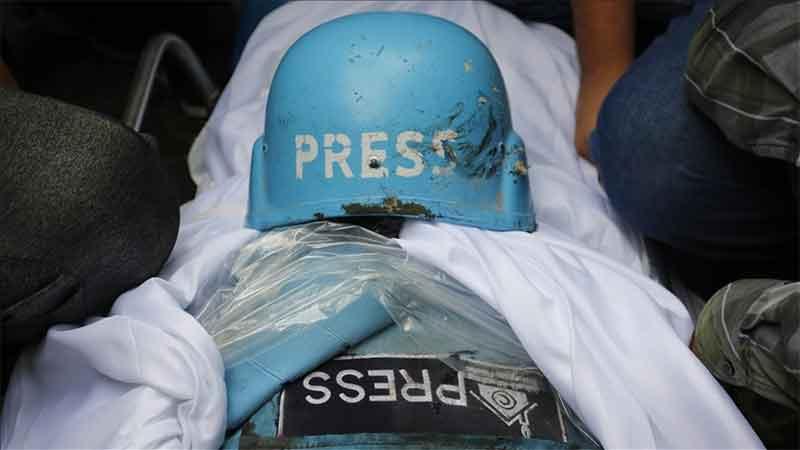
UN News, by contrast, emphasizes OHCHR’s findings that “all signs point to Palestinian journalists being deliberately targeted because of their work,” and it situates the issue within legal and access restrictions, including that Israel “continues to impose a general ban on independent access to Gaza for international media.”
Courrier international relays CPJ’s annual report through the lens of Israeli political debate, quoting Haaretz as calling the statistic “that shames the country,” and it states that CPJ reported “Israeli forces are responsible for the death of 86 journalists and media professionals killed in 2025 out of 129 total, about two-thirds of the deaths.”
RTL.fr also cites CPJ, saying “129 journalists and press workers were killed worldwide in 2025,” and it attributes responsibility to Israel in “two-thirds of the cases,” while adding that “The Israeli army has now carried out more targeted killings of members of the press than any other government army to date.”
Meanwhile, Countercurrents and Gaza Government Media Office language frames the killings as genocide-era silencing, with Countercurrents quoting the Gaza Government Media Office saying “This constitutes clear evidence of a systematic policy aimed at silencing the Palestinian voice and preventing the truth from reaching the world.”C
In the same Countercurrents report, the Palestinian Journalists Syndicate says “Targeting journalists will not succeed in breaking the will of the Palestinian journalistic community,” while it also claims “three others remain missing.”C
Even within the same outlet family, the framing differs: Al Jazeera’s World Press Freedom Day coverage describes journalists’ resilience through tent workplaces and drone exposure, while Le Monde and BFM focus on the named death of Mohammed Washah/Wishah and the dispute over whether the strike was intimidation or part of a Hamas-related operation.
The result is that the same underlying events—deaths, arrests, and restrictions—are narrated through different institutional lenses: syndicate and UN documentation, CPJ global tallies, and political commentary about accountability.
What Comes Next: Accountability and Protection
Across the sources, the immediate next steps revolve around calls for international protection, independent investigations, and accountability, alongside continued documentation of violations.
“to provide urgent protection for Palestinian journalists, open independent investigations into violations, and ensure accountability”
Anadolu Ajansı reported that the Palestinian Journalists Syndicate called on the UN and international organizations “to provide urgent protection for Palestinian journalists, open independent investigations into violations, and ensure accountability,” and it said the syndicate’s report read at the event documented “188 arrests since October 2023,” “the destruction of 187 media institutions and offices,” and “140 homes belonging to journalists.”A
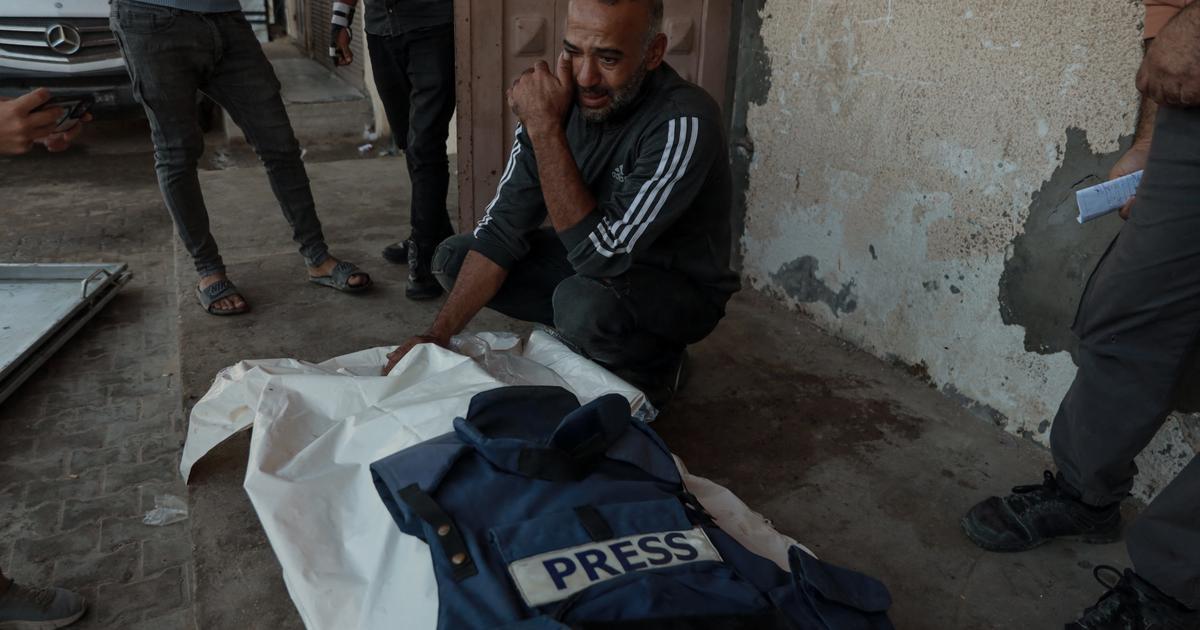
UN News similarly framed the issue as one that requires action, quoting Ajith Sunghay saying the abuses “deprive Palestinians of any means to make the world aware of the reality of their lives, to seek justice for decades of discrimination, violence and oppression,” and it warned that administrative detention exposes journalists to “torture and other ill-treatment.”
In the named death case of Mohammed Washah/Wishah, Al Jazeera said it would take legal action, with BFM reporting the network would take “all necessary legal actions to pursue those responsible for the murder of its correspondents and staff in Gaza, and to ensure justice for them and for all journalists fallen in the line of duty.”
Countercurrents reported that the Gaza Government Media Office described the killings as violating international humanitarian law and said they “amount to fully fledged war crimes that require international accountability and prosecution,” while it also said the Palestinian Journalists Syndicate called the Gaza Strip “witnessing the largest massacre of journalists in history.”C
The sources also connect the stakes to ongoing operational constraints: UN News said Israel continues to impose restrictions on international media work in the West Bank and a “general ban on independent access to Gaza,” while Al Jazeera’s field reporting described journalists working from tents “fighting power outages” and operating in exposed areas where they “have become easy targets for drones.”
Even CPJ-focused reporting in Courrier international and RTL.fr emphasizes the global nature of the risk, with CPJ’s Jodie Ginsberg quoted in RTL.fr saying “Journalists are being killed at a record rate at a time when access to information is more important than ever.”
Taken together, the sources depict a continuing emergency for press freedom, where the next phase is framed as protection and accountability measures that must operate even as strikes and repression continue.