USA03 February, 20263 min read
Bill And Hillary Clinton Agree To Testify Before Congress In Jeffrey Epstein Probe Ahead Of Contempt Vote
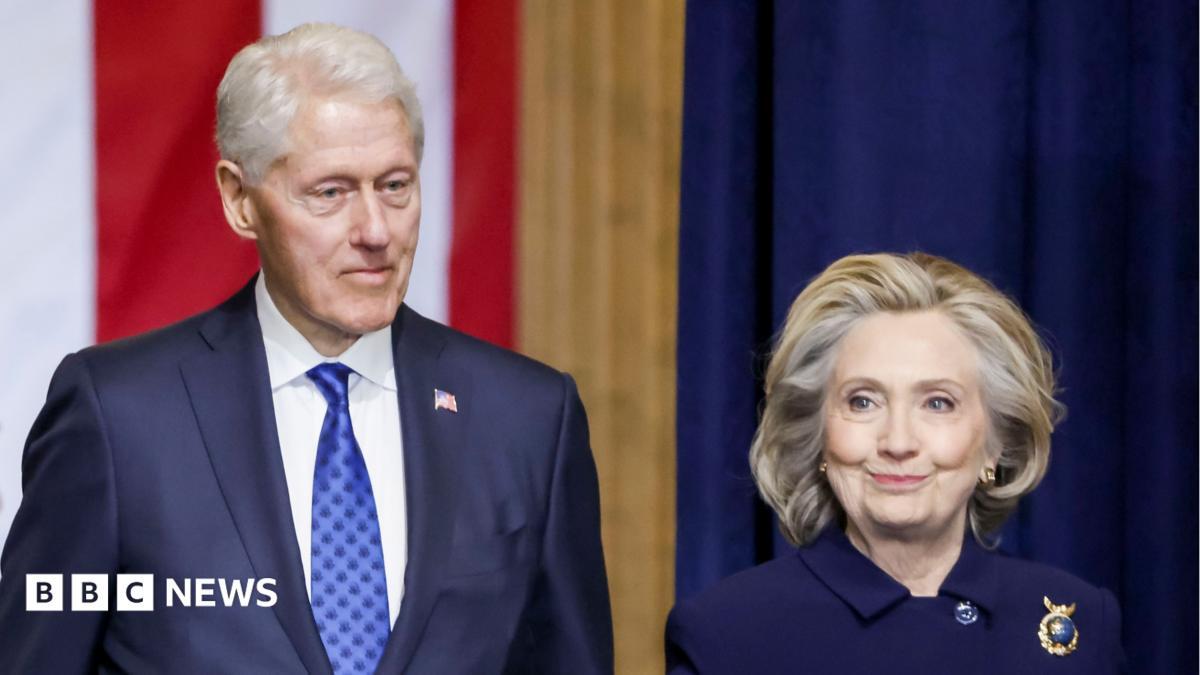
Bill and Hillary Clinton agreed to testify to House Oversight Committee in Epstein investigation Agreement came hours before a planned House vote to hold them in criminal contempt

56 outlets told this the same way.
Outlets did split on Trump Interrupted by Protesters at San Antonio Rally for Ken Paxton →
Clintons agree to testify
Bill and Hillary Clinton told House Oversight Committee staff late Monday that they will appear for depositions in the panel’s probe of convicted sex offender Jeffrey Epstein.
“Former President Bill Clinton and former Secretary of State Hillary Clinton have agreed to testify before the House Oversight Committee in the investigation of financier Jeffrey Epstein, the decision confirmed Monday, Feb. 2.”
The reversal came just days before the House was set to vote on whether to hold them in criminal contempt of Congress.

Multiple outlets reported the decision as ending a months-long standoff.
News.meaww said the couple "have agreed to testify... the decision confirmed Monday, Feb. 2," and DW wrote the move "could avert a planned contempt vote."
Al Jazeera quoted Clinton deputy chief of staff Angel Ureña saying the Clintons "will be there" to testify.
CBS News reported the Clintons’ lawyers said they "accept the terms" and will sit for depositions on "mutually agreeable dates."
Clintons' Testimony Dispute
The path to testimony was contested: the Clintons' lawyers had earlier proposed alternatives the committee rejected.
Several outlets reported the offer included a capped, transcribed interview for Bill Clinton and a written or sworn declaration for Hillary Clinton.

Oversight Chair Rep. James Comer publicly dismissed the compromise.
NOTUS reported Bill Clinton's lawyer offered a four-hour transcribed interview and Hillary Clinton's lawyers proposed a sworn declaration, while ABC News described the same four-hour, transcribed (not sworn) interview.
WIFR noted Comer rejected the Clintons' earlier offer, which was a transcribed interview for Bill Clinton and a sworn declaration from Hillary Clinton, and insisted both sit for sworn depositions.
UPI and CBS reported Comer called such limitations special treatment and inadequate.
Legal and historical stakes
The immediate stakes were legal and historical. Multiple outlets warned that a contempt finding could carry fines or criminal exposure if the full House approved the resolution and the Justice Department pursued charges. The Sunday Guardian reported Republicans said contempt votes could lead to fines or criminal prosecution.
“Republicans say potential contempt of Congress votes — which could lead to fines or even criminal prosecution if the full House approved them and the Justice Department pursued charges — are necessary to enforce congressional authority; Democrats call the effort politically motivated and overly punitive.”
WIFR noted the potential for fines or jail. Several reports also noted bipartisan committee support to advance contempt resolutions, with a panel approving a contempt measure late last month that included several Democrats joining Republicans, according to news.meaww.
Outlets placed the planned testimony in historical context, noting this would be the first appearance by a former U.S. president before Congress since Gerald Ford, according to Roll Call, The Jerusalem Post and Evrim Ağacı. The standoff also echoes President Trump’s 2022 resistance to a House subpoena, a precedent noted in NOTUS and The Jerusalem Post.
Political reactions and evidence
Political reactions, surrounding evidence and competing narratives intensified the dispute.
The Clintons' camp continued to call the subpoenas 'politically motivated', with Firstpost reporting they accused the probe of that and other outlets noting they pointed to prior sworn statements they had already given.

Republican leaders framed the move as enforcing oversight, with UPI quoting Rep. Comer saying the Clintons 'failed to comply with lawful subpoenas' and ABC News recording his concerns that transcription requirements and time limits could allow evasion.
Several outlets also noted newly released Justice Department files and images, with the Australian Broadcasting Corporation reporting the release of 'millions of internal Epstein files' and quoting Deputy Attorney General Todd Blanche warning that the newly released 'horrible photographs' do not automatically make prosecutions possible.
Other reports highlighted photographs showing Clinton on Epstein's jet in 2002–2003.
Contempt process uncertainty
Key procedural uncertainties remain: several reports said the committee paused or delayed advancing contempt action while talks continued but also quoted Chair Comer saying no written agreement existed and he had not withdrawn contempt plans. KZYX and WIFR reported Comer saying no agreement was finalized and he was moving forward, while CBS News and Euronews described the Clintons' lawyers asking the panel to halt contempt proceedings and offering to 'sit for depositions on mutually agreeable dates.'
“Late Monday, Bill and Hillary Clinton told House Oversight Committee staff they would agree to appear for depositions in the committee’s probe of convicted sex offender Jeffrey Epstein, but Rep. James Comer said no written agreement existed and he had not withdrawn plans to pursue criminal contempt of Congress charges for allegedly defying subpoenas.”
That inconsistency - some outlets saying the offer 'accepts the terms' and others quoting Comer that 'we don't have anything in writing' - leaves open when and how the depositions will occur and whether the contempt process will be formally dropped. Observers noted the timing was urgent because the Rules Committee had been preparing to advance contempt resolutions to the full House.