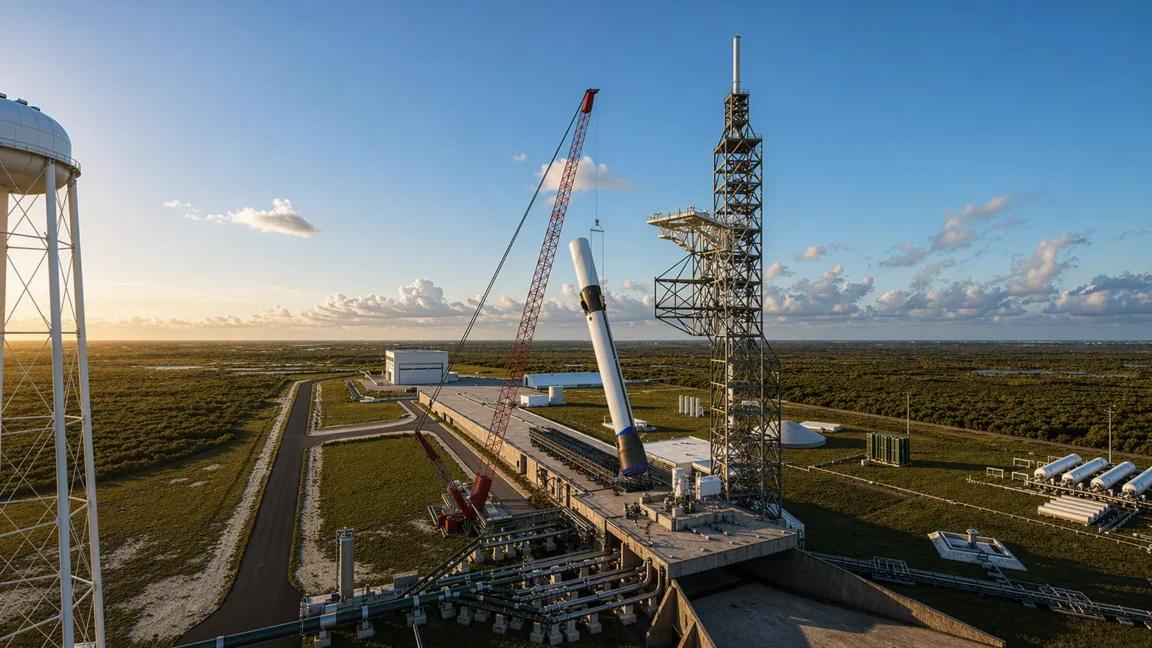
Technology and Science · 01 July, 2026 · 8 min read
FAA Grounds Blue Origin New Glenn After Failed AST SpaceMobile Satellite Orbit Delivery
Second-stage failed to deploy AST SpaceMobile satellite into the correct orbit. FAA ordered a mishap investigation and grounded Blue Origin's New Glenn.
Payload outcome and survivability.
47outlets compared
Same story, two versions
tap a side to read it in full
BBC
“Since New Glenn did not drop the satellite as far into orbit as it needed to go, it will be unusable.”Read the original ↗
Florida Today
“"While the satellite separated from the launch vehicle and powered on, the altitude is too low to sustain operations with its on-board thruster technology and will de-orbit," an AST SpaceMobile post-launch press release said.”Read the original ↗
Shows how outlets differ in describing the payload's fate (unusable vs. destined to de-orbit), revealing divergent framing of the same failure.
Grounded After Orbit Failure
Blue Origin’s New Glenn rocket was grounded after a Sunday launch attempt failed to deliver an AST SpaceMobile satellite into the correct orbit, prompting the Federal Aviation Administration (FAA) to order a “mishap investigation.”
“The company, founded by Amazon billionaire Jeff Bezos, attempted to place a satellite from AST SpaceMobile using its New Glenn rocket but was unable to get it as far into orbit as intended.”
The BBC described the FAA action as an order to investigate a “mishap” involving the failed launch of a satellite, after Blue Origin attempted to place a satellite from AST SpaceMobile using its New Glenn rocket but was “unable to get it as far into orbit as intended.”B
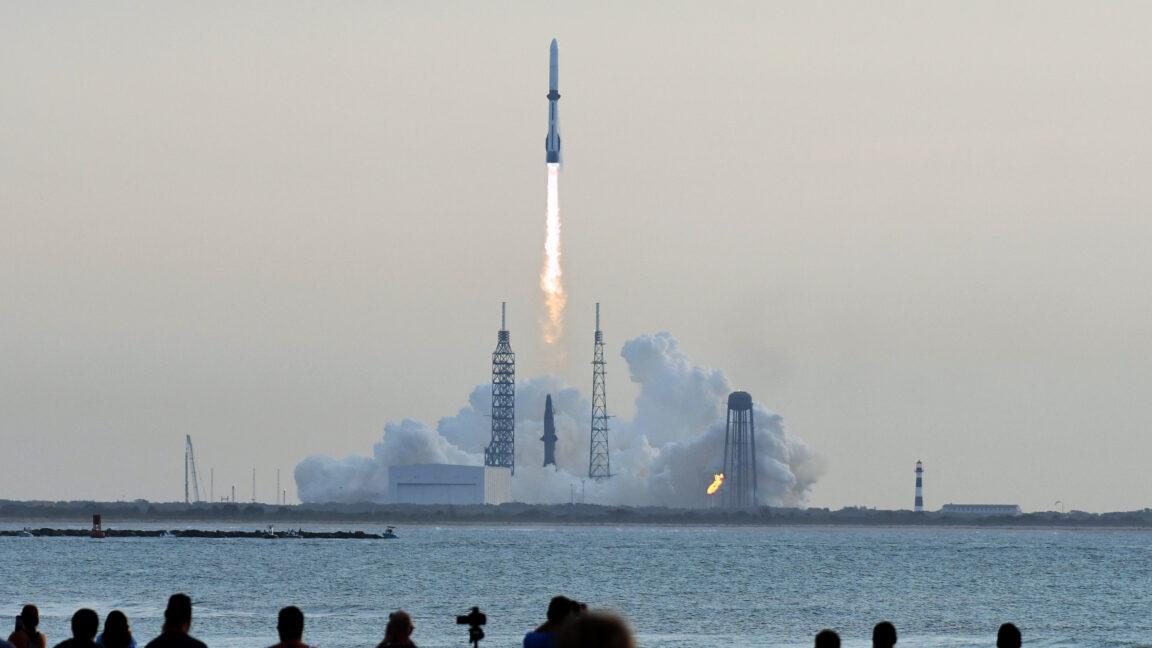
In Florida, Florida Today reported that the rocket’s second, upper stage deployed AST SpaceMobile’s BlueBird 7 broadband satellite into a lower-than-planned orbit, and that the satellite was “doomed to reenter Earth's atmosphere in a fiery demise.”F
The FAA’s stated basis for grounding and oversight was consistent across outlets: Engadget said the FAA is calling the incident a “mishap” and is beginning an investigation to “enhance public safety, determine the root cause of the event and identify corrective actions to avoid it from happening again.”
Reuters likewise said the FAA ordered Blue Origin to investigate the upper-stage malfunction and that the FAA must determine that no system, process or procedure related to the mishap poses a public safety hazard.
Blue Origin CEO Dave Limp said the failure was tied to engine performance, stating, “We clearly didn't deliver the mission our customer wanted, and our team expects.”
The incident was New Glenn’s third flight, with the BBC noting “Sunday's operation was only the third flight for the New Glenn rocket,” while Florida Today said the Sunday launch was “just Blue Origin's third-ever launch” of its 321-foot New Glenn heavy-lift rocket.
What Went Wrong
Multiple reports tied the failure to the New Glenn upper stage not delivering enough performance after stage separation, even though the first-stage booster recovery succeeded.
Engadget said the rocket “looked good on the way up” but was “ultimately unable to put its payload into the correct orbit,” and it added that it was supposed to position a satellite into a “285 mile orbit after completing two burns,” but telemetry showed the satellite only reached a “95 mile orbit, which is not sustainable.”
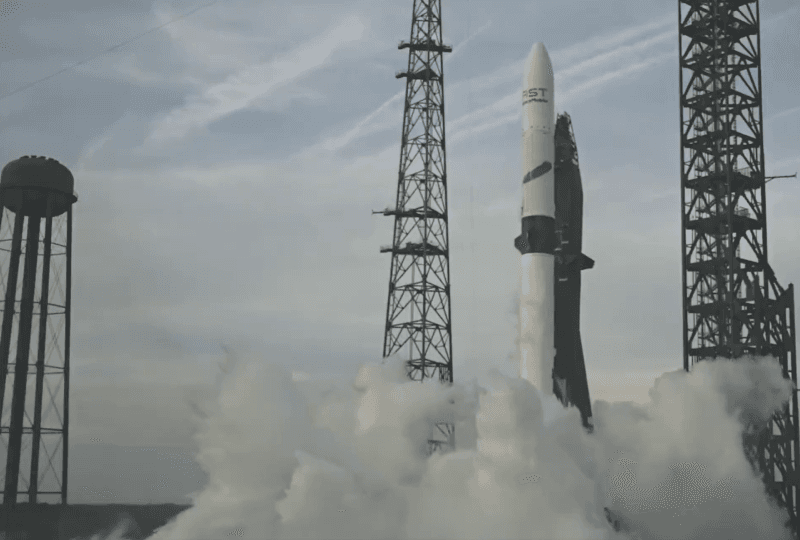
Florida Today provided a more specific account of the timing and mechanism, describing a “7:25 a.m. liftoff” on Sunday from Cape Canaveral and saying the second stage deployed BlueBird 7 into a lower-than-planned orbit, with AST stating, “While the satellite separated from the launch vehicle and powered on, the altitude is too low to sustain operations with its on-board thruster technology and will de-orbited.”
In a Monday statement, Blue Origin CEO Dave Limp said, “Early data suggest that on our second GS2 burn, one of the BE-3U engines didn’t produce sufficient thrust to reach our target orbit,” and he reiterated, “Blue Origin is leading the anomaly investigation with FAA oversight to learn from the data and implement the improvements needed to quickly return to flight operations.”
The FAA’s oversight structure was described in detail by the BBC, which quoted an authority spokesperson saying, “The FAA will oversee the Blue Origin-led investigation, be involved in every step of the process and approve Blue Origin's final report, including any corrective actions.”B
Reuters similarly reported that the FAA order referred to an unspecified “mishap” during New Glenn 3’s “second-stage flight sequence,” and that early data suggested one of the two BE-3U engines “didn’t produce sufficient thrust to reach our target orbit.”
In addition to the engine-thrust explanation, outlets described what happened to the satellite after deployment: TechCrunch said AST SpaceMobile considered the satellite a “lost cause” and would let it “burn up in the Earth’s atmosphere,” while DW said the upper stage and satellite had “reentered the atmosphere.”
Company, Customer, and Regulators Speak
Blue Origin and AST SpaceMobile framed the incident around the mission objective and the consequences for the satellite, while the FAA framed it around investigation, public safety, and corrective actions.
“We clearly didn't deliver the mission our customer wanted, and our team expects.”
The BBC reported that Blue Origin’s chief executive Dave Limp said the failure was caused by a lack of “sufficient thrust” in an engine, and Limp also said, “We clearly didn't deliver the mission our customer wanted, and our team expects.”B
In Florida Today’s reporting, Limp provided more detail, saying, “While we are pleased with the nominal booster recovery, we clearly didn't deliver the mission our customer wanted, and our team expects,” and he added that “Early data suggest that on our second GS2 burn, one of the BE-3U engines didn’t produce sufficient thrust to reach our target orbit.”F
AST SpaceMobile’s post-launch press release was quoted by Florida Today, stating, “The cost of the satellite is expected to be recovered under the company’s insurance policy,” and it also said the satellite’s altitude was “too low to sustain operations with its on-board thruster technology and will de-orbited.”F
Reuters reported that AST’s ill-fated BlueBird 7 satellite “re-entered the atmosphere on Monday,” citing Harvard-Smithsonian astrophysicist Jonathan McDowell, who tracks space objects for the American Astronomical Society.
The FAA’s directive was described in multiple ways: Engadget said the FAA is beginning an investigation to “enhance public safety, determine the root cause of the event and identify corrective actions to avoid it from happening again,” while the BBC quoted a spokesperson saying, “The FAA is requiring Blue Origin to conduct a mishap investigation.”B
TechCrunch added that the FAA’s instruction meant Blue Origin “won’t be able to fly New Glenn again until it completes the probe,” and it also quoted the FAA’s return-to-flight logic that “a return to flight is based on the FAA determining that any system, process or procedure related to the mishap does not affect public safety.”
Different Outlets, Different Emphases
While the core facts of the mishap were shared across outlets, the reporting diverged in emphasis—particularly around how the FAA action was described, what the satellite outcome meant, and how the failure affected broader plans.
The BBC framed the FAA order as grounding after a satellite “mishap,” and it said the FAA would determine “when New Glenn can be launched again,” while Engadget said the FAA “has grounded Blue Origin's New Glenn rocket” and described the investigation’s aims in operational terms.B
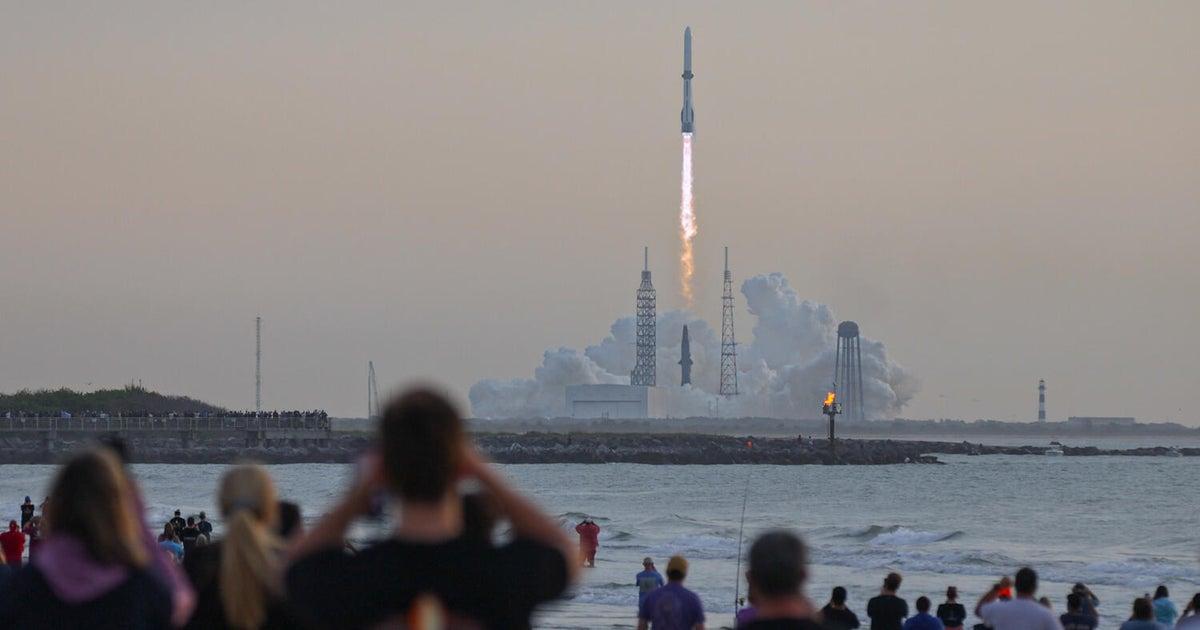
Florida Today focused on the launch day details, including that the “NG-3 mission failed to deliver its payload,” and it provided a precise liftoff time of “7:25 a.m.” and a description of the rocket’s manufacturing and transport from “Rocket Park complex on northern Merritt Island” to “Launch Complex 36 at Cape Canaveral Space Force Station.”
TechCrunch emphasized the business and competitive implications, saying the FAA instruction “could put a damper on Blue Origin’s ambitions to launch as many as 12 more New Glenn missions this year,” and it connected the mishap to Blue Origin’s broader plans including a lunar lander and New Glenn certification.
DW, by contrast, emphasized the technical and regulatory sequence, saying the FAA ordered Blue Origin to “obtain agency approval of its final report before resuming flights,” and it added that “the rocket’s upper stage and the satellite had reentered the atmosphere.”
UPI described the FAA grounding as following a “botched satellite release,” and it stated that “the spacecraft delivered AST SpaceMobile's BlueBird 7 satellite to an orbit too low for it to operate properly,” while also asserting that “the satellite was released and powered on properly.”
Even where outlets agreed on the engine-thrust explanation, they differed in how they characterized the satellite’s fate: TechCrunch said AST would let it “burn up in the Earth’s atmosphere,” while Florida Today quoted AST saying it “will de-orbited,” and Reuters said it “re-entered the atmosphere” on Monday.F
Consequences and Next Steps
The grounding and investigation carry consequences for Blue Origin’s launch cadence, for AST SpaceMobile’s satellite deployment plans, and for the company’s broader roadmap.
“Blue Origin was planning on a dozen launches this year.”
The BBC said Blue Origin was planning “a dozen launches this year,” and it reported that the FAA will determine when New Glenn can be launched again, while Engadget said the FAA’s action meant Blue Origin “won’t be able to fly New Glenn again until it completes the probe.”B

TechCrunch similarly warned that the mishap “could put a damper” on Blue Origin’s ambitions to launch “as many as 12 more New Glenn missions this year,” and it noted that the mission was the third flight of New Glenn and that the company had been planning a later-year mission that would use New Glenn to launch “Amazon Leo broadband satellites.”
Florida Today reported that AST SpaceMobile officials said launches are still expected to continue “every month or two this year via multiple rocket providers,” and it said BlueBird 7 would have been the company’s “eighth satellite successfully deployed.”F
The satellite’s loss also triggered an immediate operational consequence: Florida Today quoted AST’s post-launch press release that the satellite’s altitude was “too low to sustain operations” and that it “will de-orbited,” while Reuters said the satellite “re-entered the atmosphere” on Monday and that it presumably “burned up harmlessly over the Earth.”F
The FAA’s return-to-flight conditions were spelled out in multiple sources, including the BBC’s quote that “The FAA will oversee the Blue Origin-led investigation, be involved in every step of the process and approve Blue Origin's final report, including any corrective actions,” and Engadget’s statement that “return to flight is based on the FAA determining that any system, process or procedure related to the mishap does not affect public safety.”B
Beyond the immediate mission, Reuters and TechCrunch connected the mishap to Blue Origin’s competitive position versus SpaceX and to its larger government and NASA ambitions, with TechCrunch saying Blue Origin is working on a lunar lander and trying to get New Glenn certified by the U.S. Space Force, while the BBC and TechCrunch reported AST’s share-price drop of “more than 6%” and “more than 10%” respectively.B