Entertainment07 February, 20262 min read
Brad Arnold, 3 Doors Down Frontman, Dies at 47 After Stage 4 Kidney Cancer
This article is an automated aggregation of coverage from news outlets. Our editorials offer in-depth analysis curated by the NewsCord team.
Brad Arnold, 3 Doors Down founder and lead singer, died February 7, 2026, aged 47. Diagnosed May 2025 with stage 4 clear cell renal carcinoma that metastasized to his lungs.

65 outlets told this the same way.
Outlets did split on Chad Lowe and Kim Painter Mourn Daughter Fiona Hepler Lowe’s Death at 13 →
Brad Arnold death summary
Brad Arnold, the founding lead singer of rock band 3 Doors Down, died on Saturday, Feb. 7, at age 47 after a months-long battle with stage 4 kidney cancer.
“Brad Arnold, lead singer of 3 Doors Down, died Saturday, Feb. 7, at 47 after a battle with stage 4 kidney cancer, the band confirmed on social media.”
The band said he passed away peacefully, surrounded by loved ones, in his sleep.

Arnold had publicly disclosed a May 2025 diagnosis of clear cell renal carcinoma that had metastasized to his lungs.
The diagnosis prompted the group to cancel planned summer tour dates.
Coverage across outlets consistently notes the date, age, and that the family asked for privacy as they grieve.
3 Doors Down overview
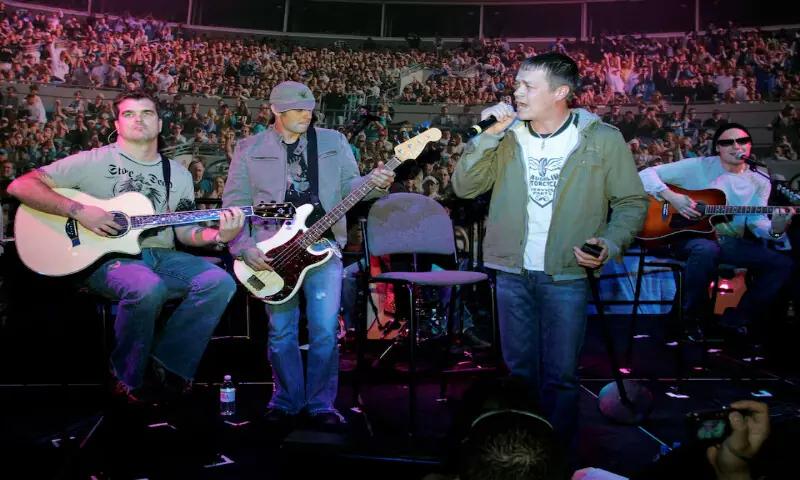
Arnold co-founded 3 Doors Down in Mississippi in the mid-1990s. He helped write the band's breakout 2000 hit "Kryptonite," which he reportedly penned as a teenager in class. The Better Life, the band's 2000 debut, propelled them to mainstream success.
Several sources note The Better Life sold more than six million copies in the U.S., and other coverage places the band's wider commercial tally in the tens of millions globally. The group released six studio albums and earned multiple Grammy nominations during their peak in the early 2000s.
Family, faith, and recovery
Multiple reports describe Arnold as a devoted husband and family man who faced illness with faith and public candor. Band and family statements said he was surrounded by his wife, Jennifer, and other relatives in his final moments.
“In an emotional video when he first went public with his illness he said he was at peace, adding, ‘I have no fear.’”
Some coverage highlights that Arnold had spoken publicly about his Christian faith and being at peace after his diagnosis. Other outlets recalled his struggles with alcoholism and celebrated his decade of sobriety.
Professional and peer reactions
News coverage details the professional consequences of Arnold's illness. 3 Doors Down canceled a series of 2025 tour plans, including a scheduled support slot with Creed and other festival appearances. Fellow musicians publicly paid tribute after the announcement of his death.
Several outlets cited peers remembering him from touring in the early 2000s. Billboard noted Brent Smith of Shinedown recalled 3 Doors Down giving his band a first road slot, and specialty music outlets cataloged the canceled festival and support dates.

Obituaries and tributes
Outlets remember Arnold for his songwriting and for helping shape mainstream post-grunge rock. The band's statement and numerous obituaries praised his role as a songwriter who connected with large audiences and requested privacy while the family grieves.
“The band’s Instagram statement remembered him for his songwriting and role in shaping mainstream post‑grunge rock—most notably penning the band’s breakout hit ‘Kryptonite’ when he was 15—and asked for privacy as the family grieves.”
Some music outlets added context about the band's charitable work and Arnold's advocacy. Local press carried family tributes that emphasized his warmth and generosity and expressed hopes that his music will be deeply missed and forever remembered.