Full Analysis Summary
Bolsonaro sentence reduction
Brazil’s lower house of Congress approved a bill early on Dec. 10 that would sharply reduce former president Jair Bolsonaro’s 27-year prison sentence for plotting a coup to block Luiz Inácio Lula da Silva from taking office, potentially cutting it to just over two years if the Senate ratifies the measure.
The proposal still needs Senate approval and would likely face judicial review.
Bolsonaro, 70, has been jailed since late November and his lawyers have asked the Supreme Court to allow his release for surgery and to serve his sentence at home on "humanitarian" grounds.
The vote in the Chamber of Deputies provoked chaos and strong political backlash as allies pursue sentence reduction after a broader amnesty push failed amid nationwide protests.
Coverage Differences
Emphasis/Tone
Le Monde.fr (Western Mainstream) emphasizes the legislative mechanics and humanitarian requests by Bolsonaro’s lawyers, framing the move as a shift by conservative allies after an amnesty effort failed, while Digital Journal (Western Mainstream) stresses the chaotic scenes and practical effects such as potential parole for about 100 supporters; the BBC (Western Mainstream) highlights the broader narrative of an ongoing effort to exonerate Bolsonaro and notes health details from court documents. Le Monde.fr reports the bill could cut the sentence “to just over two years if the Senate ratifies the measure,” Digital Journal reports it could cut the sentence to “roughly two years and four months,” and the BBC reports a sponsor said it would cut the term to “about two years and four months.”
Chaotic parliamentary session
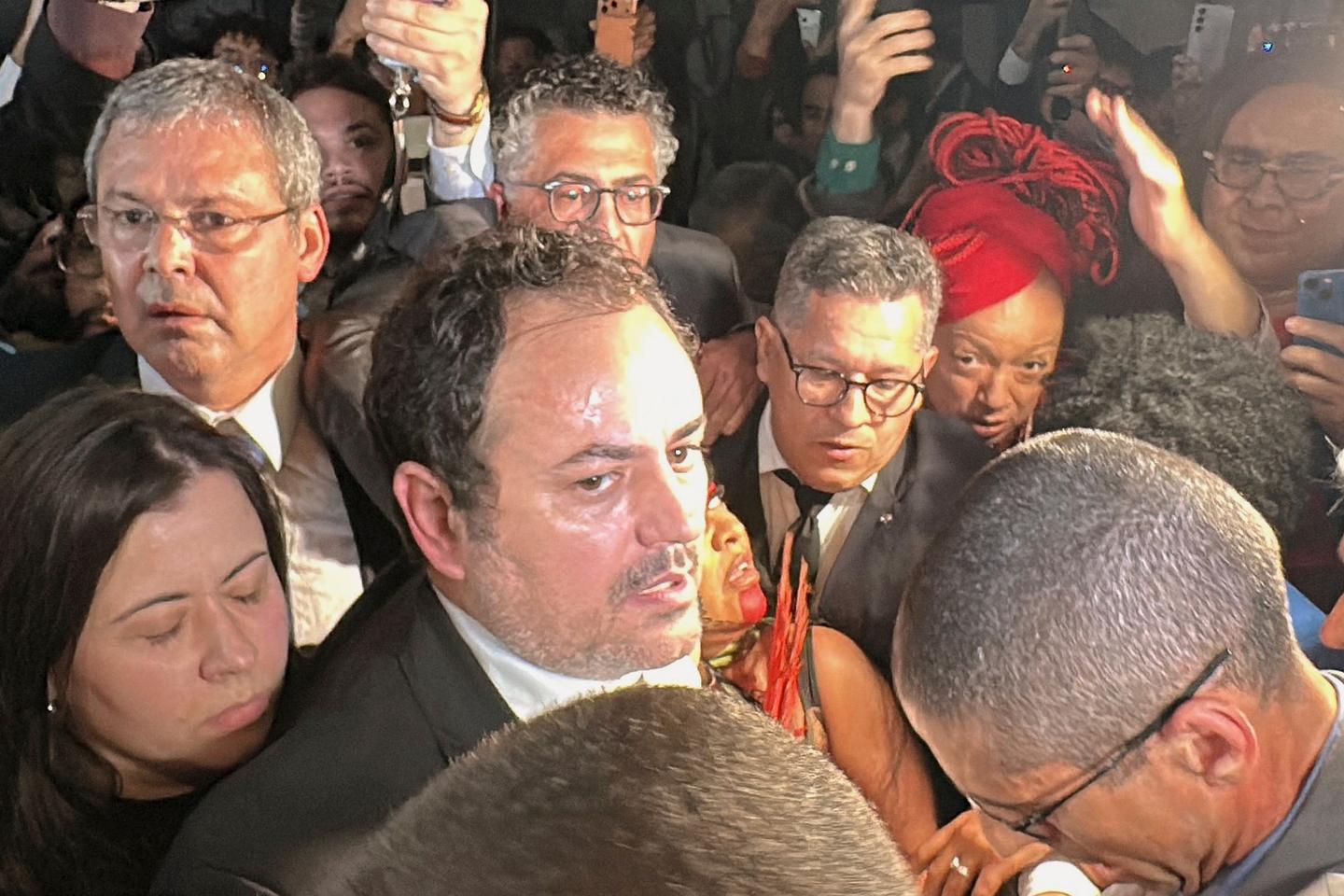
The session in the Chamber turned chaotic.
Deputies clashed with security, and a government-allied leftist lawmaker occupied the Speaker's chair in protest before being forcibly removed by police.
Journalists were expelled and television coverage was interrupted before debate resumed.
Security footage and reporting showed scuffles as order was restored.
House President Hugo Motta faced accusations of censorship for ordering reporters out while condemning attacks on institutions.
Sources described a frenzied environment as the bill was pushed forward amid heated debate.
Coverage Differences
Detail/Focus
Digital Journal provides the most granular account of specific incidents—naming deputy Glauber Braga occupying the Speaker’s chair, removal by police, and journalists expelled—while the BBC highlights police removing a left-wing lawmaker and footage of scuffles; Le Monde.fr refers more generally to ‘turmoil’ provoked in the Chamber of Deputies without those same operational specifics. Digital Journal reports “journalists were expelled as television coverage was interrupted,” BBC reports “Police forcibly removed a left-wing lawmaker who tried to disrupt proceedings,” and Le Monde.fr says “the vote on the bill provoked turmoil in the Chamber of Deputies.”
Parole and sentence changes
Legally, the bill would reduce penalties for crimes including attempted coup d'état.
In practice, it could grant parole to about 100 Bolsonaro supporters jailed after the Jan. 8, 2023 attacks on government buildings.
Proponents say it is a step toward pacification, while critics call it a targeted maneuver to benefit Bolsonaro.
If enacted, the law's effects on individual sentences would still be subject to judicial review.
The measure must clear the Senate to take effect.
Backers present the proposal as restorative, but opponents sharply criticize it as preferential and politically motivated.
Coverage Differences
Narrative/Interpretation
Digital Journal details the practical impact—“in practice could grant parole to about 100 Bolsonaro supporters” and frames proponents’ language of “pacification” vs critics’ view of a “targeted maneuver,” while Le Monde.fr emphasizes the strategic shift from a failed amnesty push to sentence reduction and frames the vote as causing ‘turmoil’; the BBC frames the measure as part of “ongoing efforts by his allies to exonerate the divisive former president,” emphasizing the political aim rather than the parole numbers. Digital Journal states the bill “would reduce sentences for crimes including attempted coup d’état and in practice could grant parole to about 100 Bolsonaro supporters,” Le Monde.fr says conservative allies “have shifted to pursuing sentence reduction,” and the BBC says “The move is the latest in ongoing efforts by his allies to exonerate the divisive former president.”
Bolsonaro: legal and health
Bolsonaro's legal team has sought temporary release and house arrest on health or "humanitarian" grounds, asking permission for him to return home for surgery and to serve his sentence under home custody.
Coverage notes his recent health history, saying he spent time in intensive care earlier this year after intestinal surgery and that he was stabbed in 2018, which the BBC explicitly cites.
Those legal maneuvers and health claims are part of parallel efforts by allies to change his detention conditions or overturn parts of his punishment.
Coverage Differences
Focus/Detail
Le Monde.fr highlights the lawyers’ formal Supreme Court petition to allow Bolsonaro’s release for “a surgical procedure” and to serve his sentence at home on “humanitarian” grounds, while the BBC adds medical history context—“he spent time in intensive care earlier this year following intestinal surgery and was stabbed in 2018”—and Digital Journal notes simply that Bolsonaro “began serving his sentence in November,” focusing less on medical detail. Le Monde.fr reports “His lawyers have asked the Supreme Court to allow his release for a surgical procedure and to let him serve his sentence at home on ‘humanitarian’ grounds,” BBC reports “court documents show Bolsonaro’s legal team has asked to allow him temporary release for surgery and to serve his sentence under house arrest on health grounds; he spent time in intensive care earlier this year following intestinal surgery and was stabbed in 2018,” and Digital Journal says “Bolsonaro… began serving his sentence in November.”
Political polarization and legal stakes
Politically, the episode underscores deep polarization.
Proponents and some conservative allies present the measure as a path to pacification and relief for supporters, while critics from the ruling Workers' Party and other opponents decry it as a targeted legal maneuver to benefit Bolsonaro and his followers.
The House President's handling of the session drew accusations of censorship even as he condemned attacks on institutions.
If the Senate does not ratify the bill or the courts overturn parts of it, the current 27-year sentence would stand.
Bolsonaro continues to pursue legal remedies and his allies press Congress for legislative relief.
Coverage Differences
Narrative/Political framing
Le Monde.fr frames the vote as conservatives shifting strategy after an amnesty push “faltered amid nationwide protests,” Digital Journal includes explicit quotes and naming of critics (Workers’ Party leader Lindbergh Farias) and describes proponents’ language of “pacification,” while the BBC situates the bill as part of continuing efforts to exonerate Bolsonaro and notes that allies want laws to free supporters who “stormed government buildings.” Le Monde.fr says the amnesty push “faltered amid nationwide protests,” Digital Journal reports “Proponents say the measure is a step toward ‘pacification’ … critics, including the ruling Workers’ Party leader Lindbergh Farias, call it a targeted maneuver to benefit Bolsonaro,” and the BBC reports allies seek to “free dozens of supporters who stormed government buildings.”