
Breaching the Iron Dome: the Iranian cluster bombs bypassing Israeli air defences
Key Takeaways
- A post on Ali Khamenei's X account appeared March 5 after his February 28 death.
- The post showcased a large Khorramshahr missile arcing over a blazing city.
- The article discusses Iranian cluster munitions and claims they can breach Israeli air defences.
Context and escalation risk
On 5 March, a post appeared on the X account of Iran’s late supreme leader, Ali Khamenei, managed by his staff after he was killed in an Israeli airstrike on 28 February.
“On 5 March, a post appeared on the X account of Iran’s late supreme leader, Ali Khamenei, managed by his staff after he was killed in an Israeli airstrike on 28 February”
The tweet featured a stark piece of propaganda: a gleaming, oversized missile arcing across the sky as a city below is engulfed in flames.
The Khorramshahr missile, Iran’s most advanced ballistic missile, is believed to be capable of carrying a cluster warhead dispersing up to 80 submunitions.
Since that post, it has come to loom large in Israeli threat assessments, a persistent concern for a country equipped with a multi-layered missile defence system that is widely regarded as the world’s most sophisticated.
The Guardian, which reviewed the impact of dozens of Iranian strikes alongside statements from Israeli officials, has identified at least 19 ballistic missiles carrying cluster warheads that penetrated Israeli airspace and struck urban areas since the beginning of the war with Iran on 28 February.
Those attacks have killed at least nine people and wounded dozens, reflecting a broader shift in Iran’s tactics that appears to have exposed a vulnerability in Israel’s air defences.
Cluster munitions mechanics
Cluster munitions are designed to release dozens of smaller bombs over a wide area, and the latest attacks show Iran’s use of such payloads as it seeks to challenge Israel’s air defences.
Roughly half of the missiles launched since the escalation have carried cluster warheads, and the Guardian review finds at least 19 ballistic missiles with cluster submunitions that penetrated Israeli airspace and struck urban areas, killing nine people and wounding dozens.
Intercepting cluster munitions is fundamentally more difficult than stopping unitary missiles because submunitions disperse mid-air; an interceptor must strike the carrier before dispersal for a chance at neutralisation.
Once the bomblets are released, interception becomes virtually impossible even with advanced defences.
Legal and ethical framing
Cluster munitions are inherently indiscriminate, and their use in populated areas is prohibited under international humanitarian law.
“On 5 March, a post appeared on the X account of Iran’s late supreme leader, Ali Khamenei, managed by his staff after he was killed in an Israeli airstrike on 28 February”
The 2008 convention on cluster munitions bans them for signatory states, but neither Israel nor Iran are party to it.
Amnesty International condemned Iran’s use of cluster munitions last June during its 12-day war with Israel as a flagrant violation of international law, and the organisation accused Israel of similar breaches over its use in Lebanon in 2006.
Israel has acknowledged deploying cluster munitions in the past, maintaining that it does so in line with international law, but described Iran’s use near a population as a war crime by the Iranian regime.
Civil impact and context
Videos circulating online show cluster munitions descending as dozens of bright points of light over greater Tel Aviv before impact.
In the early morning of 18 March, two strikes killed a couple in their 70s in Ramat Gan and a 30-year-old Thai worker in Adanim.
Israeli officials say that even a direct intercept of a ballistic missile, before its warhead splits and scatters its payload, does not always ensure the submunitions are fully neutralised, and Tehran’s strategy may aim to drain interceptor stocks by forcing Israel to expend missiles to neutralise a single threat.
Over the weekend, Iranian ballistic missile barrages wounded nearly 200 people in southern Israel, including Arad and Dimona, as the sirens and air defences persist.
A Guardian investigation last year found evidence of Israel having used cluster munitions in Lebanon during its war with Hezbollah starting in October 2023, with remnants identified near the Litani River; the Guardian does not have information about the strikes the shells were used in, as remnants were found after the fact.
More on Iran

President Trump Says Iran Deal Within Reach Amid Talks With Senior Iranian Official
10 sources compared

Trump Approves Iran Operation After Netanyahu Presses for Joint Strike on Khamenei
12 sources compared

President Donald Trump orders ICE officers deployed to airports amid DHS shutdown.
227 sources compared
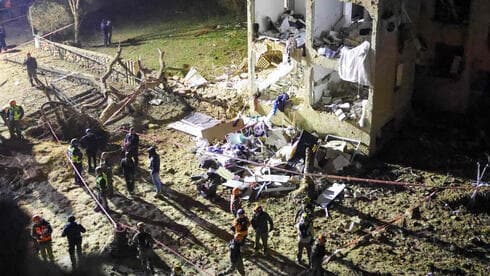
Iranian Missiles Strike Israel; Officials Report 180 Injured Amid Conflicting Casualty Figures.
12 sources compared