
Brett Guthrie and Frank Pallone Jr. Reach Deal on KIDS Act for Kids Online Safety
Key Takeaways
- House reached bipartisan deal on a package of kids online safety bills; Congress to vote.
- Congress aims to vote on the KIDS Act in coming week.
- AI age verification is discussed as a means to enforce age checks.
KIDS Act vs Senate
Congress is racing to pass kids online safety legislation before the end of the year, but clashing priorities between the Senate and House are complicating a path forward.
“Within the next week, Congress is preparing to vote on the KIDS Act, a sprawling package of legislation that seeks to control Americans’ web browsing and private messaging”
In a rare breakthrough this week, House Energy and Commerce Committee Chair Brett Guthrie (R-Ky.) and ranking member Frank Pallone Jr. (D-N.J.) announced on Monday they reached a deal on a sprawling kids safety package called the Kids Internet and Digital Safety (KIDS) Act.
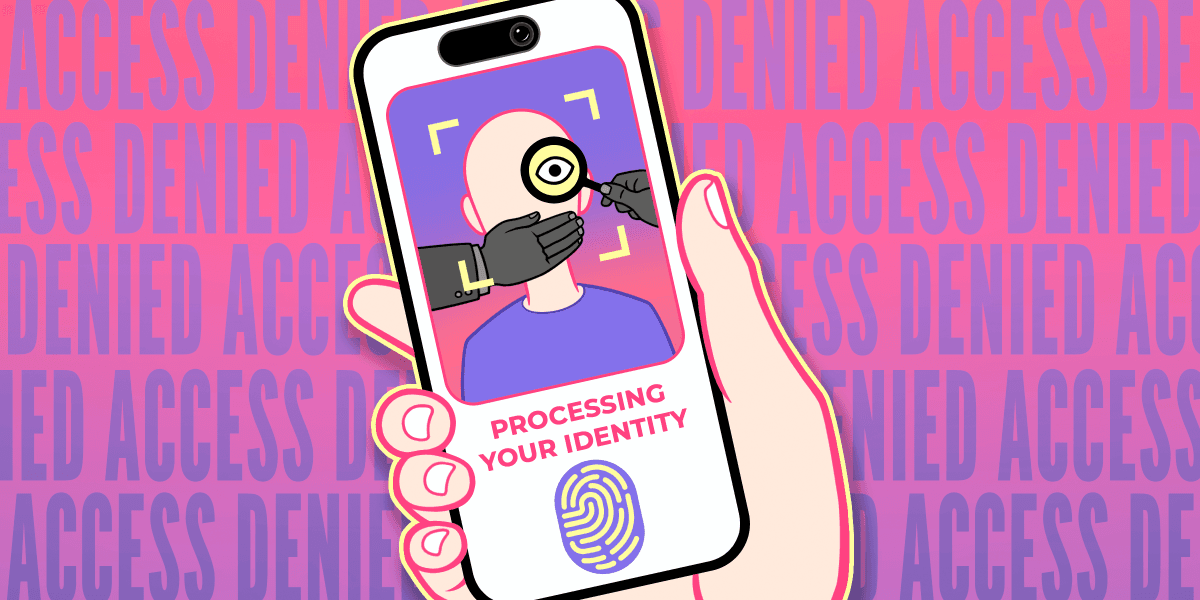
The package includes the landmark social media bill, the Kids Online Safety Act (KOSA), along with portions of 13 other bills related to age verification, AI chatbots, data protections and raising awareness about drug sales on social media.
The House version differs from the Senate version by not including a “duty of care” provision, which would legally require platforms to “exercise reasonable care” to prevent harms to minors.
Senate co-authors Marsha Blackburn (R-Tenn.) and Richard Blumenthal (D-Conn.) said removing the duty of care is a nonstarter, with Blumenthal arguing, “If my colleagues are serious, they’re going to reject laws that eliminate the duty of care.”
Age checks and legal risk
The Electronic Frontier Foundation said the KIDS Act would require age checks to get online, warning that lawmakers are attempting to move a “cobbled-together” package under an ultra-expedited process.
The group argued the bill’s complexity would push companies toward restrictive age-checking practices across their entire platforms, describing it as “a mess, with different age-gating schemes for different services, using different standards.”

While supporters claim KOSA doesn’t require age verification, the EFF said the KOSA section instead relies on a low “knows or should have known” standard for whether a user is a child (under 13) or a teen (between 13 and 16).
EFF warned that to avoid liability, services would have to determine which users are teenagers and which are not, potentially requiring more information about age before any lawsuit or government action arises.
The EFF also said the bill’s approach would create age surveillance beyond minors, arguing that “If websites and apps are expected to reliably identify teenagers, adults will be asked to prove they are adults.”
AI age verification expansion
A separate policy brief in The Fulcrum framed AI age verification as an emerging technology designed to estimate users’ age, while warning it can be less accurate for certain groups and may require ongoing investment to remain effective.
“byMiranda Nazzaro06/25/26 06:00 AM ET The clock is ticking for Congress to pass kids online safety legislation before the end of the year, but clashing priorities between the Senate and House are complicating a path forward”
The brief said that as of February 2026, 25 U.S. states, the U.K., Australia, and Spain have laws requiring age verification, pointing to a rapidly growing global trend with consequences for safety, anonymity, and data privacy on the internet.
It described two major AI age verification techniques—Facial Age Estimation and Social Graph Age Estimation—and said Roblox requires users to submit a video of their face or a copy of their ID before they can use chat features.
The brief also said TikTok uses Social Graph Age Estimation to assign accounts a score between 0 and 1 using a “combination of profile data, content analysis, and behavioral signals” to identify accounts belonging to those under 13.
In discussing the broader policy push behind these tools, The Fulcrum noted that federal lawmakers have tried to update the U.S. approach to child internet safety through bills such as the Kids Online Safety Act (KOSA) and the App Store Accountability Act, which seek to prevent minors from being exposed to harmful content. “2026 is poised to be the year age verification changes the internet as we know it.”
More on Technology and Science

Three Firefighters Killed Fighting Knowles, Gore, And Snyder Wildfires Near Colorado-Utah Border
20 sources compared

WHO Links Europe Heatwave To More Than 1,300 Excess Deaths Since June 21
16 sources compared

Cottonwood Fire Spreads in Utah, Blackening 92,000 Acres and Forcing Closures
12 sources compared

The New York Times Sues Microsoft And OpenAI Over ChatGPT Copyright Infringement
20 sources compared