Full Analysis Summary
New UK Protest Legislation
Britain is moving to criminalize protests targeting the private homes of public officials as part of a broader Crime and Policing Bill.
Ministers argue this move is intended to protect democracy and public safety, while critics warn it could curtail protest rights.
Arab News reports the plan would create a new criminal offense banning protests outside the homes of elected officials, judges, and local councillors to combat harassment and intimidation in politics.
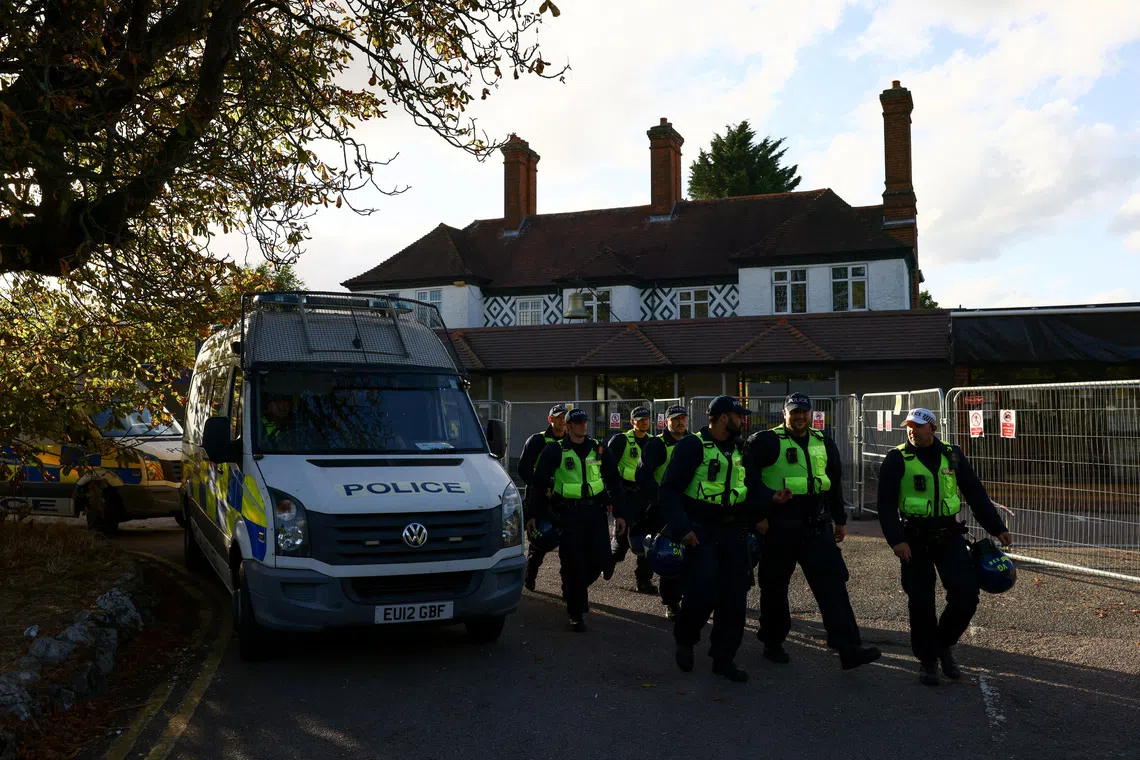
The Straits Times places the push in recent context, noting that in 2023, then-Prime Minister Rishi Sunak faced protests from climate activists outside his homes in London and North Yorkshire.
Devdiscourse echoes the official rationale, stating the government is advancing a bill aimed at protecting democratic institutions and public safety by regulating certain protest tactics.
Concerns persist about the potential impact on free expression despite the government's stated intentions.
Coverage Differences
missed information
Arab News (West Asian) specifies a new criminal offense targeting protests outside officials’ homes, which The Straits Times (Asian) does not explicitly spell out; The Straits Times instead highlights the contextual trigger of protests at Rishi Sunak’s residences. Devdiscourse (Asian) offers a high-level rationale but omits the home-protest offense detail.
tone
Arab News (West Asian) frames the change as a response to “harassment and intimidation in politics,” emphasizing protection of officials; The Straits Times (Asian) balances government motives with civil-liberties concerns; Devdiscourse (Asian) foregrounds the security rationale and cites a minister’s emphasis on safe participation.
unique detail
Arab News (West Asian) uniquely details enforcement and penalties associated with the home-protest ban, information not provided in the Straits Times or Devdiscourse snippets.
New Protest Regulation Measures
The proposed law would empower police to stop demonstrations aimed at officials in both their public and private lives and criminalize targeted picketing at residences.
Arab News adds that offenders could face up to six months in prison.
In parallel, the bill tightens rules on methods often used at protests.
The Straits Times lists new offences covering climbing war memorials, using flares or fireworks, and wearing face coverings in designated protest zones.
Arab News also says the bill proposes bans on these tactics.
Devdiscourse summarizes the same thrust as regulating certain protest tactics in the name of safeguarding institutions and safety.
Coverage Differences
unique detail
Arab News (West Asian) alone specifies that offenders could face “up to six months in prison,” whereas The Straits Times (Asian) and Devdiscourse (Asian) do not cite a penalty term.
alignment and overlap
Both The Straits Times (Asian) and Arab News (West Asian) detail identical lists of targeted protest tactics, while Devdiscourse (Asian) stays general without enumerating specific tactics.
narrative
Arab News (West Asian) emphasizes police powers over protests at private residences as part of combating intimidation, while The Straits Times (Asian) frames provisions as responses to disruptive tactics and prior demonstrations; Devdiscourse (Asian) frames the narrative around institutional protection broadly.
Government Justifies Security Measures
Ministers justify the measures as necessary to safeguard participation and institutions.
Devdiscourse reports that Security Minister Dan Jarvis stressed the importance of allowing political participation without fear.
This aligns with the stated aim, echoed by The Straits Times and Arab News, to protect democratic institutions and public safety.
Arab News also supports the policy case with data, citing a parliamentary survey revealing that 96% of lawmakers have experienced harassment.
This underscores the government’s argument that officials face widespread abuse.
Coverage Differences
unique detail
Devdiscourse (Asian) uniquely names a serving minister, Dan Jarvis, and quotes his emphasis on safe participation; this specific attribution does not appear in The Straits Times (Asian) or Arab News (West Asian) snippets.
missed information
Only Arab News (West Asian) reports the parliamentary survey statistic that “96% of lawmakers have experienced harassment,” a data point not cited by the Asian outlets.
tone
Arab News (West Asian) grounds the government’s rationale in the language of combating “harassment and intimidation,” while The Straits Times (Asian) and Devdiscourse (Asian) use broader institutional-protection framing without citing the survey detail.
Concerns Over Protest Rights Bill
Civil liberties concerns run through all three accounts as the bill advances.
The Straits Times cautions that critics warn the bill may further restrict the right to protest.
Arab News notes that critics say the measures may restrict the right to protest.
Devdiscourse states that critics worry the law may infringe on the right to protest.
On timing, the outlets converge, reporting that the bill is progressing through parliament and is expected to receive royal assent next year.
Coverage Differences
tone
The phrasing of rights concerns differs across outlets: The Straits Times (Asian) says measures “may further restrict the right to protest,” Arab News (West Asian) that they “may restrict,” and Devdiscourse (Asian) that they “may infringe,” signaling varying degrees of alarm.
alignment and overlap
All three sources agree on legislative status and timeline, indicating no contradiction on the bill’s progression and expected assent.
narrative
The Straits Times (Asian) links the legislative push to past protests outside the then-Prime Minister’s homes, while Arab News (West Asian) centers harassment of officials and the new home-protest offense; Devdiscourse (Asian) maintains a general institutional-protection narrative.