Full Analysis Summary
UK detainees' hunger strike
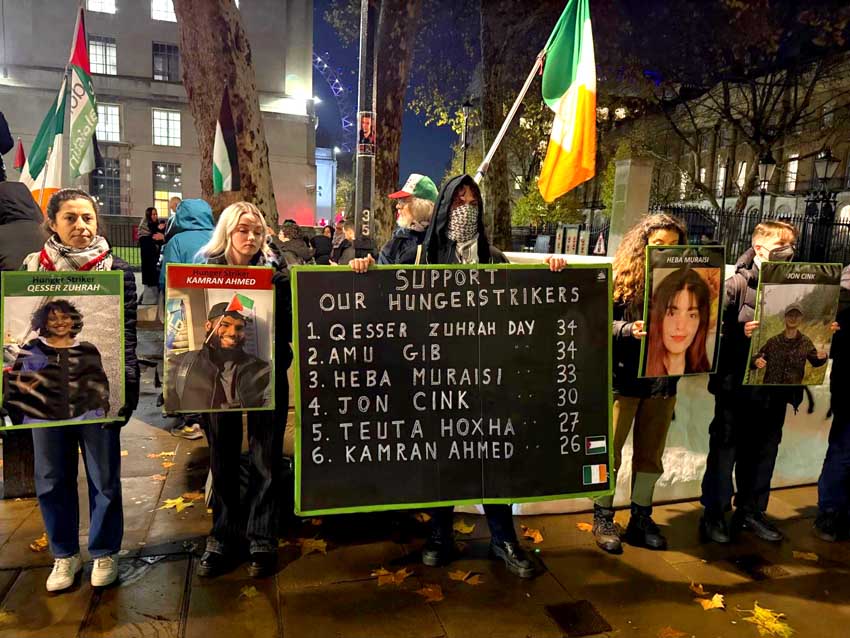
A group of eight pro‑Palestine detainees in UK custody are staging a coordinated hunger strike, and families warn that two individuals have passed the 45‑day mark and may die while on remand.
The News Line reports Teuta Hoxha has been on remand for 13 months and is on day 45 of her strike.
Teuta's 17-year-old sister Rahma says Teuta's condition is deteriorating, including continuous headaches, mobility problems, and an inability to stand to pray.
The Guardian cites medical letters warning that prolonged remand and coordinated hunger strikes pose a serious and increasing risk to detainees' health, and notes several strikers are now beyond 40-50 days without food.
Coverage Differences
Tone and focus
The News Line frames the story primarily as a political and human‑rights crisis centred on pro‑Palestine prisoners and family testimony, emphasising individual names, family fears and political demands. In contrast, The Guardian frames the story through clinical and ethical concerns, quoting doctors’ letters that stress risks to detainees’ health and the moral burden on healthcare staff.
Hunger strike medical updates
Families and sources report acute medical deterioration among strikers.
The News Line reports that two other hunger strikers required hospital treatment.
Amu Gib, 30, held at HMP Bronzefield, is on day 52 and was recently given a wheelchair and taken to hospital; Kamran Ahmed, 28, at Pentonville, is on day 44 and was also hospitalized.
The Guardian’s reporting of doctors’ letters says that after prolonged fasting clinicians face ethical decisions over discharge and escalation, warning that current guidance "focuses on early stages and leaves staff uncertain about monitoring and escalation later on."
Coverage Differences
Emphasis on clinical detail vs. named individuals
The News Line emphasises named individual strikers, their exact days without food and concrete hospitalisations, conveying immediacy and personal risk. The Guardian emphasises systemic clinical uncertainty and the ethical burden on healthcare staff, citing letters from doctors about guidance gaps rather than naming specific detained individuals.
Remand and legal concerns
Legal status and remand lengths are central to both accounts but are highlighted differently.
The News Line reports Teuta has been on remand for 13 months, that her trial is not due until April, and that bail has repeatedly been denied.
It warns families fear that young British citizens may die in prison without being convicted.
The Guardian echoes broader procedural concerns through medical letters noting many prisoners on hunger strike have not been tried and some are not due for trial until 2027.
Those letters say prolonged remand harms mental health and place remand practices at the centre of clinicians' ethical worries.
Coverage Differences
Scope of remand reporting
The News Line focuses on an individual case (Teuta Hoxha’s 13‑month remand and imminent trial date) and family fears about conviction status, while The Guardian presents a wider systemic picture — multiple detainees with trials far in the future (some “not due until 2027”) and clinical evidence on the mental‑health impact of prolonged remand.
Strike demands and responses
Sources emphasize different political demands and institutional responses.
The News Line lists strikers' demands as ending UK hosting of weapons factories that supply arms to Israel, de-proscribing Palestine Action, ending alleged mistreatment of prisoners, and securing immediate bail.
The News Line also reports trade unions have written to the Justice Secretary asking for intervention.
The Guardian foregrounds doctors' appeals to ethical and legal safeguards, recalling the 1989 'Kalk refusal' and urging careful advance directives and decisions on hospital discharge.
The Guardian also records a call for urgent government action to prevent deaths.
Coverage Differences
Political framing vs. clinical/ethical framing
The News Line gives prominence to the political aims of the hunger strikers and to union and family activism directed at the Justice Secretary. The Guardian places emphasis on clinicians’ ethical frameworks, precedent cases (the “Kalk refusal”) and the necessity for legal and medical safeguards rather than detailing the political demands themselves.
Detainee hunger strike risks
There is urgent and unresolved uncertainty about how authorities will respond and whether detainees will avoid severe injury or death.
The News Line quotes families saying young people may die in prison without being convicted.
The Guardian records medical calls for urgent government action and clearer guidance for clinicians facing prolonged fasts.
The two sources differ in what they prioritise: the News Line foregrounds political protest and family testimony while The Guardian foregrounds clinical ethics and systemic safeguards.
Taken together, they present both immediate individual risk and institutional dilemmas that remain unresolved.
Coverage Differences
Uncertainty and unresolved outcomes
Both sources report urgent concern but differ on priorities: The News Line stresses family fears and political framing, while The Guardian stresses clinical uncertainty and the need for legal/medical protocol. Neither source provides a definitive account of state action or the future health outcomes of those on hunger strike, leaving the situation ambiguous.