Britain14 February, 20262 min read
British PM Sir Keir Starmer Pivots UK Toward Deeper Economic Integration With EU
This article is an automated aggregation of coverage from news outlets. Our editorials offer in-depth analysis curated by the NewsCord team.
UK pledges deeper economic integration with the EU, moving closer to the single market European nations urged to strengthen defence cooperation and be prepared to fight

6 outlets told this the same way.
UK–EU economic pivot
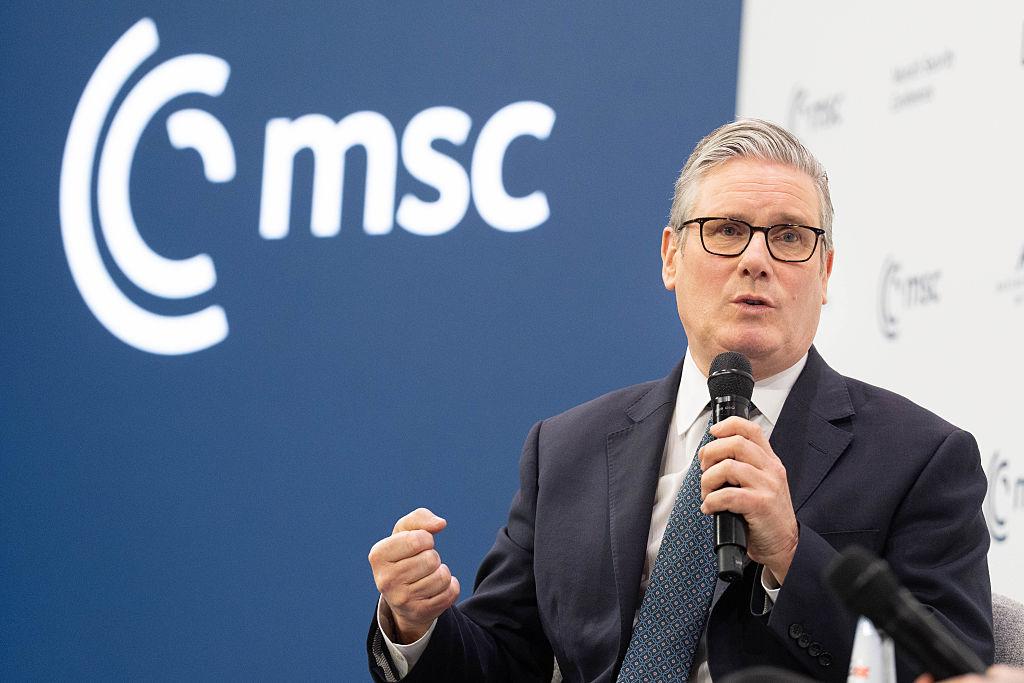
At the 62nd Munich Security Conference on 14 February 2026, Prime Minister Sir Keir Starmer announced a strategic pivot toward closer UK–EU economic ties. He promised "deeper economic integration" and a move closer "to the single market" in some sectors.
“British prime minister Keir Starmer used a defence conference speech to set a tougher, pro‑European tone, saying ‘the world has changed fundamentally’ and stressing the need to uphold the rule of law.”
He said the UK would take a larger defence role alongside European NATO partners, adding "there is no British security without Europe and no European security without Britain." He framed the shift as a break with recent years, asserting "We are not the Britain of the Brexit years anymore," and his remarks were met with warm applause.

Starmer and single market
Starmer’s economic message centred on selective re-engagement with the single market: several sources record pledges to work 'closer to the single market' in certain sectors and to pursue deeper economic integration while protecting national priorities. The Spectator and Manchester Evening News both report that Starmer offered few technical details on which sectors or rules would change, and The Spectator additionally flags recent setbacks over UK participation in EU procurement schemes as a practical constraint. The Telegraph’s terse line—"It will mean trade-offs."—is consistent with coverage that stresses costs and choices implicit in closer EU ties.
Starmer on defence
On defence, Starmer combined a reaffirmation of NATO commitments with a call for greater European burden-sharing. He reiterated the UK would uphold NATO's Article 5 and "would come to your aid today," and urged Europeans to build stronger defence capabilities and shared industries.
“He reaffirmed the UK’s commitment to NATO’s Article 5—saying the UK ‘would come to your aid today’—and urged greater burden‑sharing with European allies rather than a US withdrawal.”
The Spectator frames those remarks as part of a tougher posture, calling for joint development of a European defence industry and announcing a carrier strike group deployment. The Sunday Guardian and Manchester Evening News emphasise the speech's message that UK and European security are inseparable and that Europe must be prepared to deter aggression.
Coverage of Starmer speech
Starmer’s speech also contained pointed domestic messaging. The Spectator records that he used pointed jibes at political rivals and named the Reform UK and Green parties as 'soft on Russia' or undermining NATO, framing part of the European pivot as a rebuttal to domestic critics.
Manchester Evening News captures the rebranding thrust by declaring an end to Brexit-era Britain, while the Sunday Guardian records that the proposals provoked debate, with supporters welcoming greater European autonomy and critics warning of potential strain on US ties or on UK sovereignty. The Telegraph's lone line about trade-offs is consistent with coverage emphasising political and policy compromises.
Coverage of Starmer's pivot
Taken together, the coverage shows broad agreement that Starmer signalled an intentional pivot toward closer UK-EU economic and security cooperation while keeping NATO and US ties in view. The Sunday Guardian summarises the strategy as balancing deeper European defence collaboration with transatlantic ties. The Spectator highlights concrete military signalling and partisan barbs.
“His headline announcement was that the carrier strike group, led by HMS Prince of Wales, will deploy to the North Atlantic and the high North later this year.”
Manchester Evening News stresses the rhetoric of change and interdependence. The Telegraph reduces the package to the shorthand that "It will mean trade-offs." Each source's type and editorial focus shape what details are foregrounded or omitted.
