Protests11 December, 20253 min read
Bulgarian Prime Minister Rosen Zhelyazkov Resigns After Mass Protests Over Tax Hikes
This article is an automated aggregation of coverage from news outlets. Our editorials offer in-depth analysis curated by the NewsCord team.
Prime Minister Rosen Zhelyazkov resigned after weeks of mass protests over tax hikes and corruption Resignation announced minutes before parliament’s scheduled no-confidence vote

25 outlets told this the same way.
Outlets did split on France Suspends Police Stun Grenades at High School Protests After 15-Year-Old Loses Hand →
Bulgarian PM resigns amid protests
Bulgarian Prime Minister Rosen Zhelyazkov unexpectedly resigned on Thursday amid massive street protests and weeks before Bulgaria is due to adopt the euro. His resignation ended a crisis that had been building for days. The US Sun reports he quit minutes before MPs were due to vote on a no-confidence motion and said his minority centre-right coalition was collapsing.
“Bulgarian prime minister Zhelyazkov unexpectedly resigned minutes before MPs were due to vote on a no-confidence motion, saying his minority centre‑right coalition was collapsing.”
El Mundo notes the government resigned less than a year into the cabinet’s term and roughly three weeks before Bulgaria is due to adopt the euro on January 1. Euronews likewise says he resigned after massive nationwide protests and that the opposition had called a no-confidence vote. Le Monde reports that after a meeting of ruling party leaders, Zhelyazkov announced the government would resign.
Nationwide protest turnout
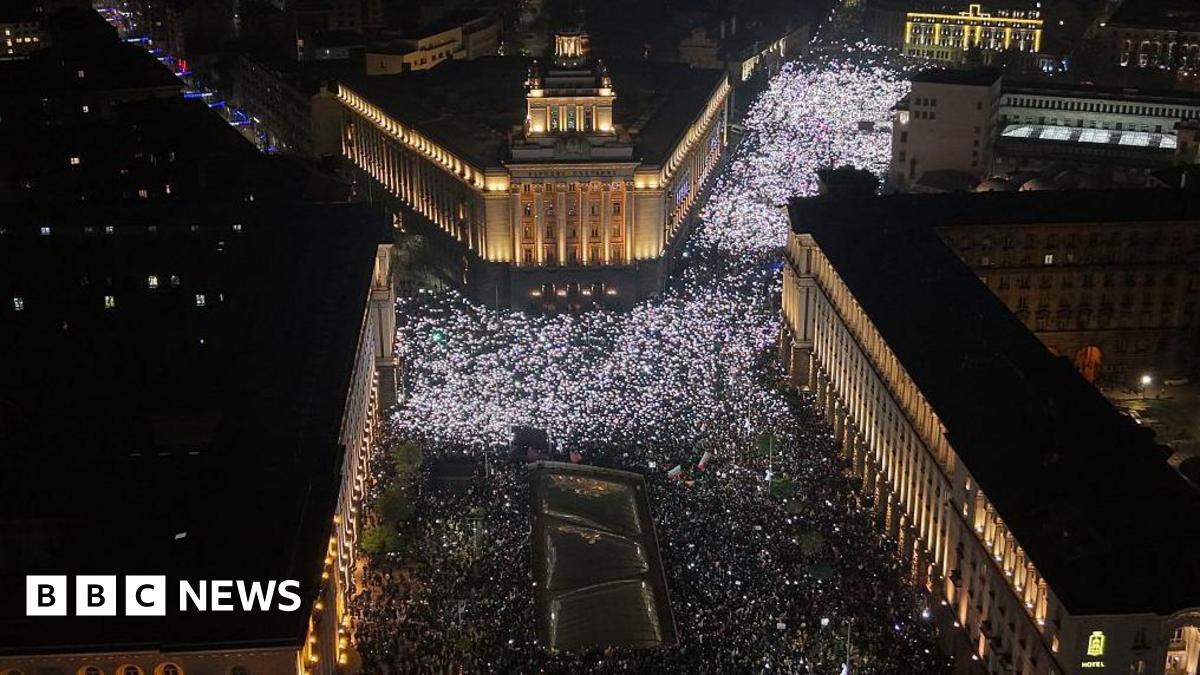
Outlets varied in their descriptions of the unrest's scale, but all agreed on large turnout and nationwide action. The US Sun cited drone footage indicating a rise from rallies of more than 50,000 to over 100,000 in the capital. Euronews reports organisers and media put turnout in Sofia at over 100,000, with some reports up to 150,000, and noted additional rallies in Plovdiv, Varna, Veliko Tarnovo, Razgrad, Burgas and abroad.
El Mundo described weeks of street protests driven by economic policy concerns, poverty and entrenched corruption. Le Monde noted that public anger persisted despite the government withdrawing the budget last week. Overall, accounts converge on very large protests but diverge on exact figures and geographic emphasis.

Drivers of recent protests
Protesters were driven by anger at a controversial 2026 budget and by broader accusations of corruption and oligarchic influence. The US Sun says the budget proposed higher taxes, bigger social‑security payments and expanded spending, and that it was later withdrawn. Euronews likewise links the unrest to the controversial 2026 budget proposals (since withdrawn) and to anger at perceived oligarchic influence, particularly targeting politician and media owner Delyan Peevski, who has been sanctioned by the US and UK.
“Large nationwide protests had been mounting against the government’s handling of the economy, driven by a controversial 2026 budget that proposed higher taxes, bigger social‑security payments and expanded spending.”
El Mundo emphasises poverty and entrenched corruption as core grievances. Le Monde specifically notes that public anger persisted even after the budget withdrawal. Together the sources make a consistent case that the budget proposals plus long‑standing corruption complaints fuelled the demonstrations, though El Mundo adds geopolitical context not present in the others.
Bulgarian political fallout
Coverage highlights a fragile, minority government propped up by allied parties and targeted by opposition manoeuvres. The US Sun calls Zhelyazkov's coalition a minority centre-right coalition and reports critics accuse oligarch Delyan Peevski and his MRF New Beginning party of propping up the government. Euronews similarly notes Peevski and says his DPS party props up the minority government, adding that police detained youths outside DPS/MRF headquarters and found large sums on detainees.
El Mundo frames the situation as a political clash between pro-EU and pro-Russian forces. Le Monde records that party leaders met before the resignation announcement. Across outlets the picture is consistent that the government was politically vulnerable, though sources stress different actors and implications.

Bulgaria resignation fallout
What happens next is unclear; reporting flags immediate domestic uncertainty and international concern over the timing ahead of euro adoption. The US Sun reports the resignation came just 20 days before Bulgaria is due to join the euro, a timing that alarmed Brussels. El Mundo echoes the calendar and warns of strategic implications, stressing Bulgaria’s manufacturing and transit roles important for Ukraine.
“The resignation came just 20 days before Bulgaria is due to join the euro, a timing that alarmed Brussels.”
Euronews highlights that opposition moves and arrests preceded the resignation and that the country saw rallies abroad as well. Le Monde underlines persistent anger despite concessions. Together, the pieces show broad agreement on causes and outcomes but differ on which consequence—economic timing, geopolitical implications, or domestic stability—they emphasize.