
Bulgarians Vote in Eighth Legislative Election in Five Years as Progressive Bulgaria Leads
Key Takeaways
- Bulgaria holds eighth parliamentary election in five years amid deep political instability.
- Radev's anti-corruption bloc leads in polls ahead of the vote.
- Snap vote follows government resignations and nationwide anti-corruption protests since 2021.
Bulgaria’s election cycle
Bulgarians voted Sunday in their eighth legislative election in five years, with the EU’s poorest member state again trying to break a cycle of short-lived governments and public mistrust.
The vote was held after anti-corruption rallies in 2021 ended the administration of long-time leader Boyko Borissov, and after a conservative-led government resigned late last year amid nationwide protests.
Rumen Radev, who stepped down from the largely ceremonial presidency in January, led the centre-left Progressive Bulgaria grouping that polls tipped to win.
Reuters and other outlets described the political backdrop as a long political crisis fueled by corruption allegations and repeated collapses of fragmented parliaments.
The Associated Press reported that the snap vote followed the resignation of a conservative-led government amid nationwide protests last December that drew hundreds of thousands, mainly young people, to the streets.
AP said protesters called for an independent judiciary to tackle widespread corruption, while noting that since 2021 Bulgaria has struggled with fragmented parliaments that produced weak governments that none survived more than a year.
Euronews similarly framed the election as a test after 2021 anti-graft rallies brought down Borissov’s conservative government, with Radev’s anti-corruption bloc leading in polls.
In Sofia, voters cast ballots as polling stations opened at 7 a.m. and were to close at 8 p.m., with preliminary results expected on Monday.
Russia ties and Ukraine
Alongside anti-corruption pledges, the campaign in Bulgaria was dominated by questions about relations with Russia and support for Ukraine.
Multiple outlets said Rumen Radev advocated renewing ties with Russia and opposed military aid to Kyiv, while also saying he officially denounced Russia’s invasion of Ukraine.

TVP World quoted Radev saying, “I hope that we will develop practical relations with Russia based on mutual respect and equal treatment. This is our approach to Russia.”
The same outlet added that Radev said, “Especially in security, I do believe that there will [be] future steps to finally set the relations between Europe and Russia based on the security agreement.”
The Guardian reported that on relations with Moscow, Radev said, “I hope that we will develop practical relations with Russia based on mutual respect and equal treatment.”
France 24 with AFP reported that Radev slammed sending military aid to Ukraine “since 2022” while also saying he would not use Bulgaria’s veto to block Brussels’ decisions.
Euronews said Radev opposes any Bulgarian efforts to send arms to help Ukraine fight back Russia’s 2022 invasion, while also noting he would not use his veto to block Brussels’ decisions.
In the campaign, Radev also denounced a “10-year defence agreement between Bulgaria and Ukraine signed last month,” a point France 24 with AFP said earned fresh accusations that he was too soft on Moscow.
Anti-corruption promises and turnout
Radev’s campaign message centered on ending what he called Bulgaria’s “oligarchic governance model,” with multiple outlets quoting voters and campaign rhetoric as the election unfolded in Sofia.
Radev’s campaign message centered on ending what he called Bulgaria’s “oligarchic governance model,” with multiple outlets quoting voters and campaign rhetoric as the election unfolded in Sofia.
South China Morning Post said the former air force general, 62, has said he wants to rid the country of its “oligarchic governance model,” and it quoted Decho Kostadinov, 57, saying after casting his ballot in Sofia that corrupt politicians “should leave – they should take whatever they’ve stolen and get out of Bulgaria”.
The Guardian reported that Radev said after casting his ballot in Sofia, “We need, finally, a path to a democratic, modern European Bulgaria,” and it quoted him again saying, “We need our very robust programme in the parliament to support the Bulgarian citizens to get out as soon as possible of this very difficult situation.”
AP said after voting on Sunday, Radev urged people to go to the polls because mass “voting is the only way to drown vote-buying in a sea of free votes.”
Euronews said polling participation was expected to surge, with more than 3.3 million Bulgarians expected to cast ballots, and it said voting would close at 1700 GMT with exit polls expected immediately afterwards.
DW reported that polling stations opened at 7 a.m. local time (0400 GMT) and would close at 8 p.m local time (1700 GMT), and it said high turnout was expected following just 39% participation at the 2024 election.
Euronews also said police seized more than one million euros in raids against vote buying in stepped-up operations and detained hundreds of people, including local councillors and mayors.
Different frames of the same vote
While all the outlets described the same election day and the same central figures, they framed the stakes differently, especially around Europe and Russia.
The Guardian emphasized Radev’s promise to “stamp out corruption” and “end a succession of weak, short-lived governments,” while also highlighting his Eurosceptic stance and opposition to military support for Ukraine.

Euronews foregrounded the EU dimension by noting that Bulgaria ranks last in the EU by GDP per capita, saying in 2025 Bulgaria (along with Greece) was at 68% of the EU average, and it tied Radev’s Russia posture to fears about EU efforts to back Ukraine.
Le Monde.fr explicitly connected Bulgaria’s vote to European politics by saying it reflected the significance of Hungarian Prime Minister Viktor Orban’s broad defeat on April 12, and it described comparisons with Hungary’s race as constant.
TVP World framed the election as a test for “practical” Russia relations and warned that Radev’s stance could become “a new obstacle for the EU’s attempts to back Ukraine in the ongoing war with Moscow.”
AP, by contrast, framed the vote as a chance to finally elect a parliament able to resolve the “longtime politicalimpasse,” and it stressed that the snap vote followed protests calling for an independent judiciary.
DW focused on the election’s mechanics and turnout, reporting that by 4 p.m. local time nationwide turnout had reached nearly 35% and that preliminary results were expected on Monday.
Anadolu Ajansı placed the election within a longer governance and coalition-building narrative, quoting Jan Nowinowski on coalition culture and Boris Petrov Popivanov on polarization.
What happens next
The immediate next steps after Sunday’s vote were expected to hinge on preliminary results and coalition math in a parliament that has repeatedly failed to last.
Multiple outlets said preliminary results were expected on Monday, and that exit polls would be announced immediately after voting closed at 8 p.m. or 1700 GMT.
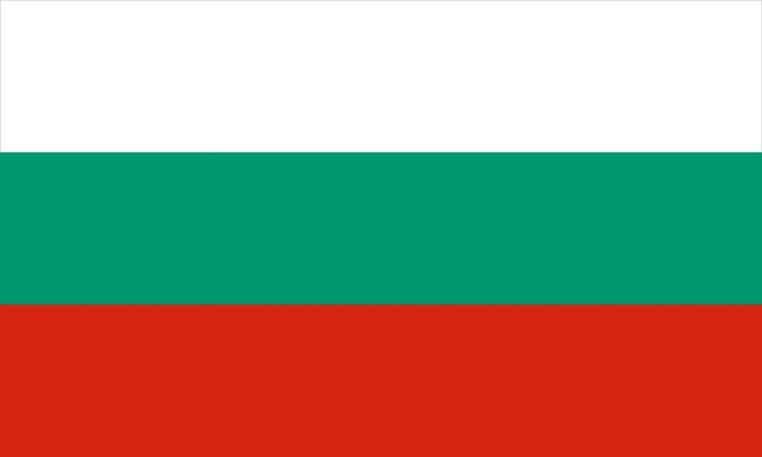
Euronews said Radev was aiming for an absolute majority in the 240-seat parliament, while France 24 with AFP said he vowed to avoid a coalition with GERB after the election and also ruled out cooperation with Delyan Peevski.
TVP World reported that second place was expected to be the GERB-SDS coalition led by former prime minister Boyko Borisov, and it said Borisov ruled out forming a government with Radev’s camp, with Bulgarian news agency BTA reporting that “GERB will not participate in coalitions,”.
DW said Borissov stressed that GERB will not enter any coalitions, adding that he “I don't see who we can enter a coalition with,” as quoted by Bulgaria's national broadcaster.
Anadolu Ajansı described the structural challenge Radev faces as forming a viable coalition, quoting Popivanov that if Radev’s party wins more than 100 seats “it is possible to have a minority government or something of the game, which could be stable,” but if it is under 100 “it again means a political deadlock.”
The same Anadolu report said Radev’s campaign centers on dismantling what he describes as a corrupt system linking political elites, business interests and the judiciary, and it quoted Nowinowski on how forming governments requires agreements among more than one party.
For voters, the stakes were personal and immediate: the Guardian quoted Miglena Boyadjieva, a taxi driver of about 55, saying, “the problem is that there is no one to vote for,” and it quoted her adding, “You vote for one person and get others. The system has to change,” as she described the need for change.
More on Europe
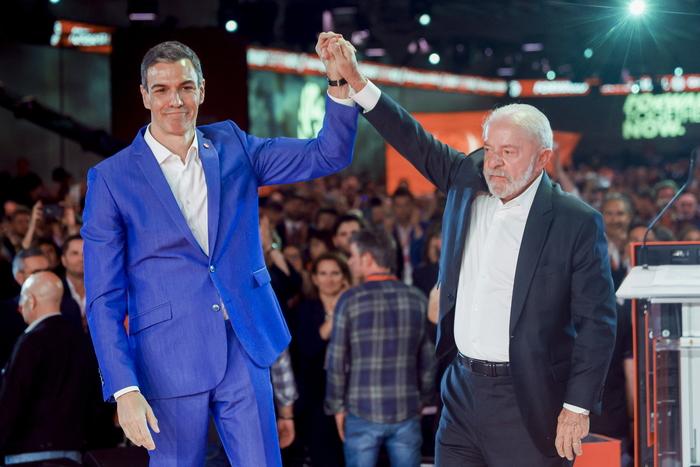
Pedro Sánchez, Lula, and Lars Klingbeil Rally Global Left in Barcelona Against Far-Right Populists
13 sources compared
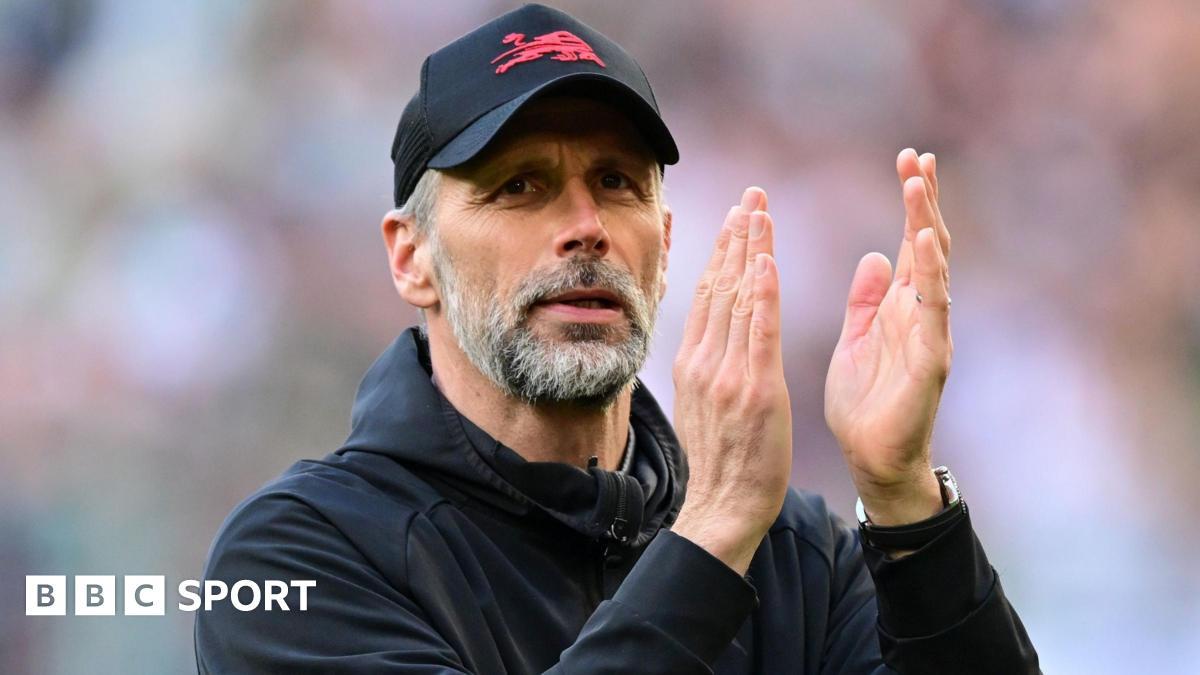
Bournemouth Reach Agreement To Appoint Marco Rose As Andoni Iraola Successor
13 sources compared
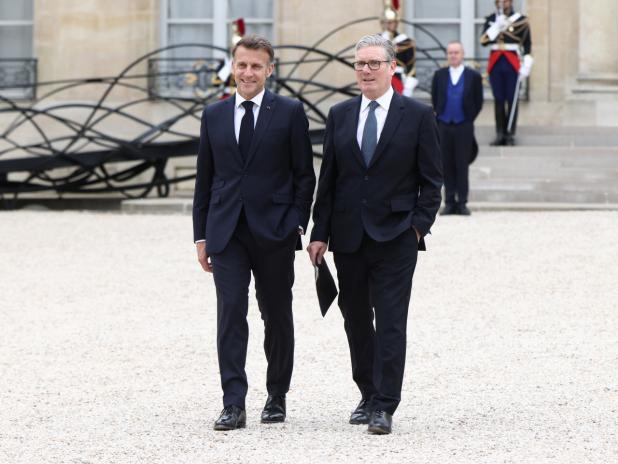
Keir Starmer and Emmanuel Macron Formalize UK-France Defensive Hormuz Shipping Mission With Dozens of Countries
24 sources compared

Macron And Starmer Convene European Allies In Paris To Plan Strait Of Hormuz Maritime Force
14 sources compared