
Can Iran’s asymmetric warfare hold US-Israeli military power at bay?
Key Takeaways
- President Donald Trump repeatedly declared victory in the US-Israeli war on Iran
- Tehran’s retaliatory strikes hit Israel and US military assets, disrupting global financial and energy markets
- Iran says it studied two decades of US military defeats nearby and incorporated lessons
Immediate developments
Despite United States President Donald Trump’s repeated declarations of victory in the US-Israeli war on Iran, Tehran’s retaliatory strikes on Israel and US military assets in the region have continued, upending global financial and energy markets.
“Despite United States President Donald Trump’s repeated declarations of victory in the US-Israeli war on Iran, Tehran’s retaliatory strikes on Israel and US military assets in the region have continued, upending global financial and energy markets”
Iranian Foreign Minister Seyed Abbas Araghchi wrote on X on March 1, the day after US and Israeli strikes on Tehran killed Iran’s Supreme Leader Ayatollah Ali Khamenei and other senior Iranian officials: “We’ve had two decades to study defeats of the US military to our immediate east and west.
We’ve incorporated lessons accordingly.”
He added: “Bombings in our capital have no impact on our ability to conduct war.”
What asymmetric means
Al Jazeera defines Iran’s approach as “asymmetric” warfare: when a conventionally weaker actor uses unconventional methods to offset an opponent’s superior capabilities, John Phillips, a British safety, security and risk adviser, told Al Jazeera.
Phillips listed guerrilla tactics, terrorism, cyberattacks, proxies and other indirect tools as ways to avoid an enemy’s strengths and exploit vulnerabilities in political will, logistics and legal or ethical constraints.
He said Iran is conventionally weaker than the US and Israel but relatively strong compared to many neighbours, and that what makes Tehran distinctive is that these methods sit at the centre of its grand strategy rather than at the margins.
Phillips and other analysts said Iran began using this posture after the 1979 revolution, adopting a “forward deterrence” approach backed by inventories of ballistic and cruise missiles, mass‑produced drones, cyber‑operations and dispersed, hardened facilities to preserve retaliatory capability.
Tactics used
Tehran has applied several asymmetric tactics since US-Israeli strikes on Iran began on February 28: it launched a wave of short and medium-range ballistic missiles and drone swarms aimed at depleting Israeli and US interceptor stockpiles.
“Despite United States President Donald Trump’s repeated declarations of victory in the US-Israeli war on Iran, Tehran’s retaliatory strikes on Israel and US military assets in the region have continued, upending global financial and energy markets”
It has pursued economic warfare by shutting the Strait of Hormuz—through which about 20 percent of global oil and gas supplies are shipped—attacking fuel tankers in Iraqi waters, targeting airports, desalination plants and oil depots, and driving Brent crude past $100 a barrel.
Iran’s Islamic Revolutionary Guard Corps threatened to attack “economic centres and banks” after what it claimed was an attack on an Iranian bank, and banks like Citibank and HSBC in Qatar have begun shutting.
Tehran has also used proxies—Hezbollah, Shia militias in Iraq, groups in Syria, Hamas and Palestinian Islamic Jihad in Gaza, and the Houthis in Yemen—with Hezbollah firing missiles and drones into northern Israel since March 2.
Iran has organised a “mosaic” defence with multiple regional, semi-independent layers and the IRGC at its core to make command difficult to dismantle and to turn the battlefield into a layered arena of regular defence, irregular warfare, local mobilisation and long-term attrition.
Costs and impact
Iran’s asymmetric playbook has raised costs and complicated US and Israeli operations, though analysts say its effects are important but limited.
The article cites the Center for Strategic and International Studies (CSIS) saying the first 100 hours of Operation Epic Fury cost approximately $3.7bn, mostly unbudgeted, and reports that the Pentagon compiled a $50bn supplemental request to replace missiles and interceptors.
Two congressional sources told MS NOW the war was costing the United States an estimated $1bn a day, Politico reported Republicans privately fear the Pentagon is spending close to $2bn a day, and Reuters cited US administration officials saying the first six days cost at least $11.3bn.
Analysts such as Ali Vaez of the International Crisis Group and Phillips said Iran has shown an ability, at a fraction of the cost, to hold the global economy at risk, impose steady human and financial costs, and raise the political and military cost of attempts at regime change, while also facing clear constraints such as damaged proxies, fragmented networks and the risk of unwanted escalation.
More on Iran
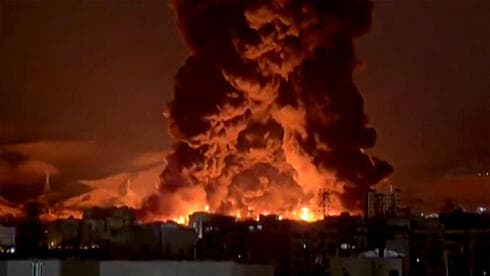
US obliterates military targets on Iran’s Kharg Island, Trump warns
13 sources compared
US Deploys About 2,500 Marines to Middle East After Iran Attacks Gulf Shipping
33 sources compared
FBI Warns of Iranian Drone Plot Based on Unverified Tip; California Says No Credible Threat
10 sources compared

White House Demands ABC Retract Report Claiming Iran Sought To Launch Drone Attacks On California
11 sources compared