Australia12 December, 20252 min read
Cessna Tail Snags Skydiver's Parachute, Leaves Him Dangling at 15,000 Feet
This article is an automated aggregation of coverage from news outlets. Our editorials offer in-depth analysis curated by the NewsCord team.
Skydiver’s reserve parachute snagged on the plane’s tail at about 15,000 feet over Queensland. Australian Transport Safety Bureau released video and images of the parachute snagging incident.

5 outlets told this the same way.
Skydiver snagged on Cessna
A midair skydiving incident over Queensland in September left one jumper tangled on the tail of a Cessna before he freed himself and landed safely. Video released by the Australian Transport Safety Bureau and shared on X via Collin Rugg shows the skydiver’s reserve parachute becoming caught on the aircraft’s tail. The footage captures him cutting himself free after the snag.
“The footage, shared via the X account of Collin Rugg, accompanies the Australian Transport Safety Bureau’s investigation report into the incident and shows the skydiver cutting himself free after the parachute snagged.”
Reports say the jump involved 17 people and began from about 15,000 feet. The incident prompted an ATSB investigation and the release of both a report and the dramatic video.
Skydiving aircraft incident chronology
NBC4 Washington’s account supplies the most detailed chronology: the jump was set for a 16-way formation when a 17th jumper filming from an open door had his reserve ripcord snag on a wing flap, causing the reserve to deploy prematurely and yank him backward. That premature deployment reportedly knocked the camera operator out of the plane and left the jumper 'tangled and dangling from the aircraft’s horizontal stabilizer.'
According to the report, the stranded jumper used a knife to cut 11 lines to free himself, fell clear with part of the torn reserve, then deployed his main parachute which inflated despite some entanglement, enabling a safe landing. NBC4 also reports most jumpers had already exited and that two remained on board trying to control the aircraft while the pilot made a mayday before controllers judged the aircraft controllable and it landed at Tully.
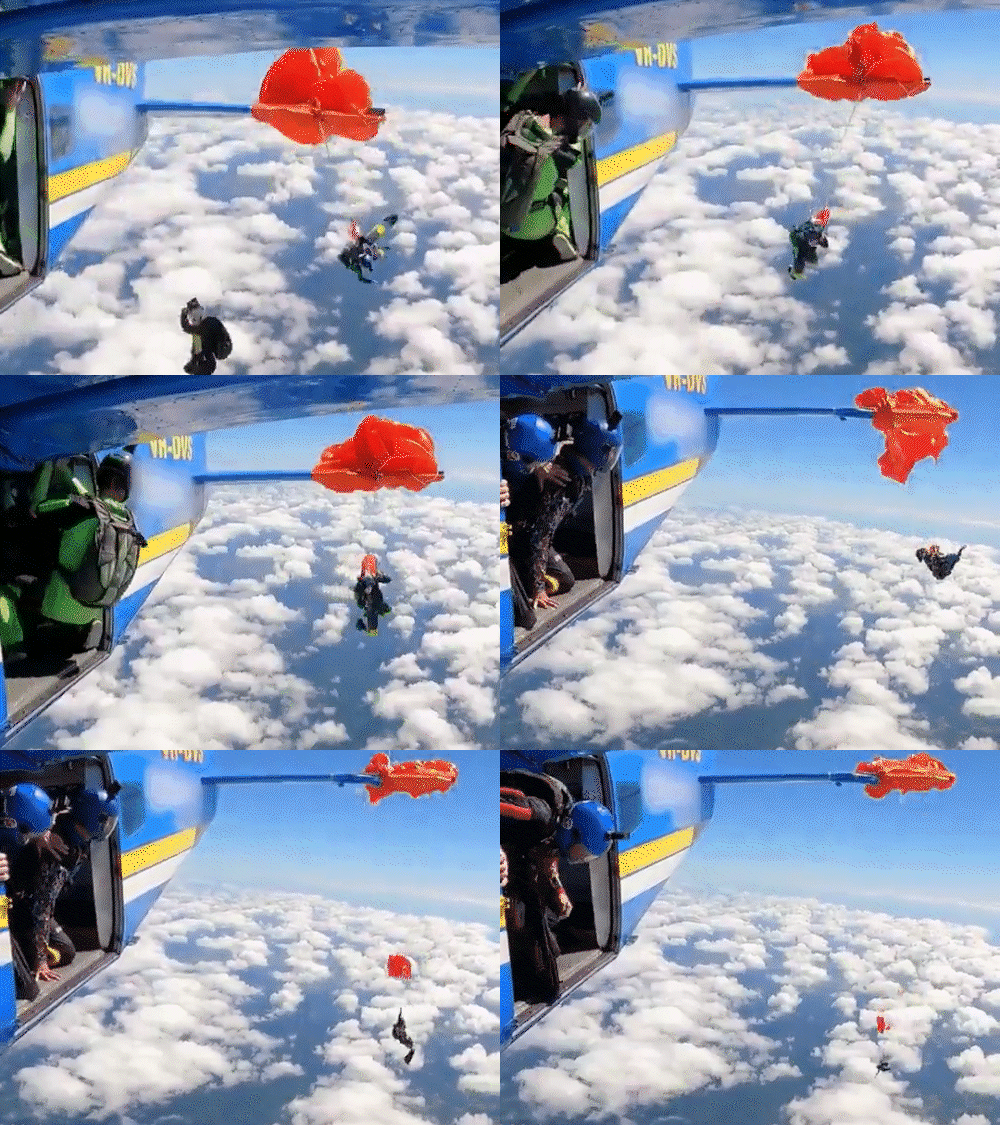
NDTV coverage of ATSB footage
The ATSB’s release and the source of the footage figure prominently in NDTV Profit’s coverage. NDTV highlights that Australia’s transport safety investigators released video showing the moment the reserve became caught on the tail.
“Australia’s transport safety investigators have released video showing the moment a skydiver’s reserve parachute became caught on the tail of a plane during a mid‑air jump over Queensland in September.”
The coverage explicitly names the X account Collin Rugg that shared the footage alongside the ATSB investigation report. NDTV frames the visual evidence as the primary public record accompanying the bureau’s probe.
Bhaskar report summary
Bhaskar English provides a markedly briefer, less resolved account compared with the Western-local and Asian coverage. It states the jump "went wrong seconds after the first jumper exited the plane from about 15,000 feet" and that "the pilot began preparing to jump," but notes "the report gives no further details on the outcome." The Bhaskar piece also connects this incident to "other recent parachute and aircraft incidents," suggesting a broader pattern or context but without offering the specific sequence or the safe landing described elsewhere.
Media coverage contrasts
NBC4 quotes ATSB chief commissioner Angus Mitchell stressing that carrying a hook knife, while not required, can be lifesaving in premature reserve deployments and frames a specific equipment recommendation. NDTV highlights the ATSB's investigative release and the raw video evidence.
“ATSB chief commissioner Angus Mitchell said carrying a hook knife—though not required—can be lifesaving in cases of premature reserve deployment.”
Bhaskar raises broader incident context but omits explicit safety advice or the detail about the hook knife. These contrasts reflect how source type shapes focus, with operational safety detail and human outcome emphasized in local Western reporting, visual and documentary elements foregrounded in Asian reporting, and concise contextual mentions in other outlets.