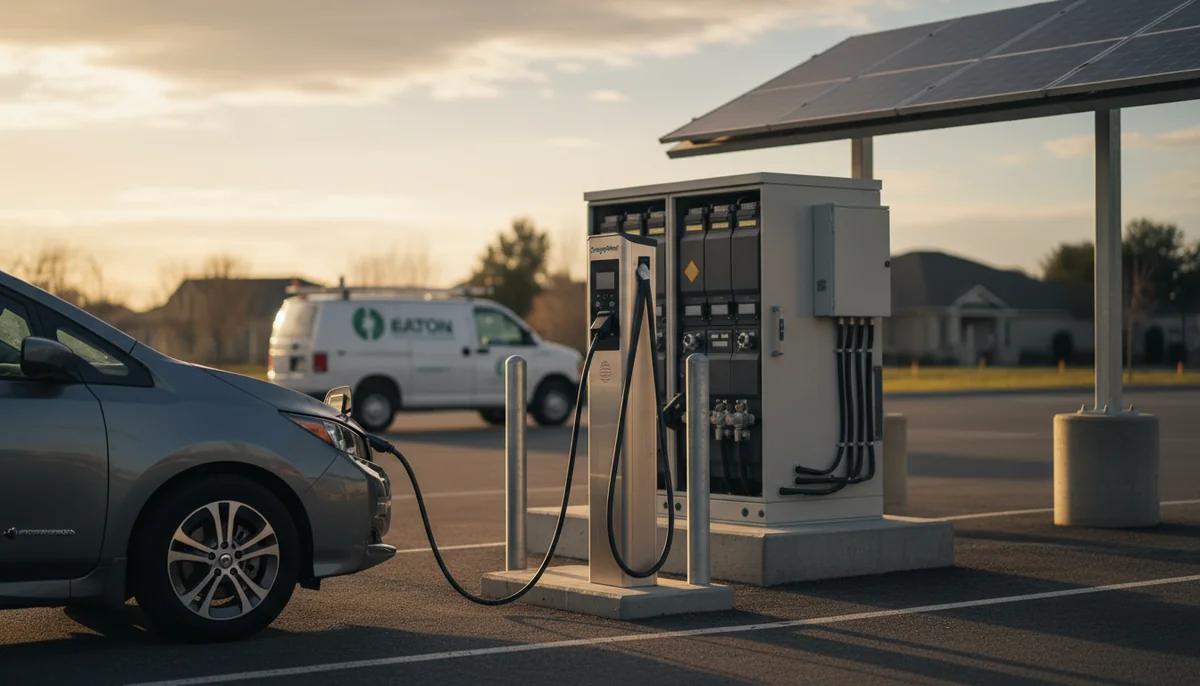
ChargePoint Debuts Express Solo DC Fast Charger With Up To 600 kW Power
Key Takeaways
- Delivers up to 600 kW to a single EV.
- Designed for a compact footprint with high power density.
- Express Solo marks entry in ChargePoint's Express DC fast charging line.
ChargePoint’s 600 kW debut
ChargePoint has introduced its Express Solo DC fast charger, positioning it as a compact, high-power option designed to be installed in “tight spaces” and to deliver up to 600 kW to a single EV.
“If charging speed is one of the major stumbling blocks preventing people from considering an electric vehicle, then ChargePoint’s new Express Solo DC fast charger is a step in the right direction”
Ars Technica describes the Express Solo as “designed to be compact and work with DC power,” and says it “maxes out at a hefty 600 kW.”
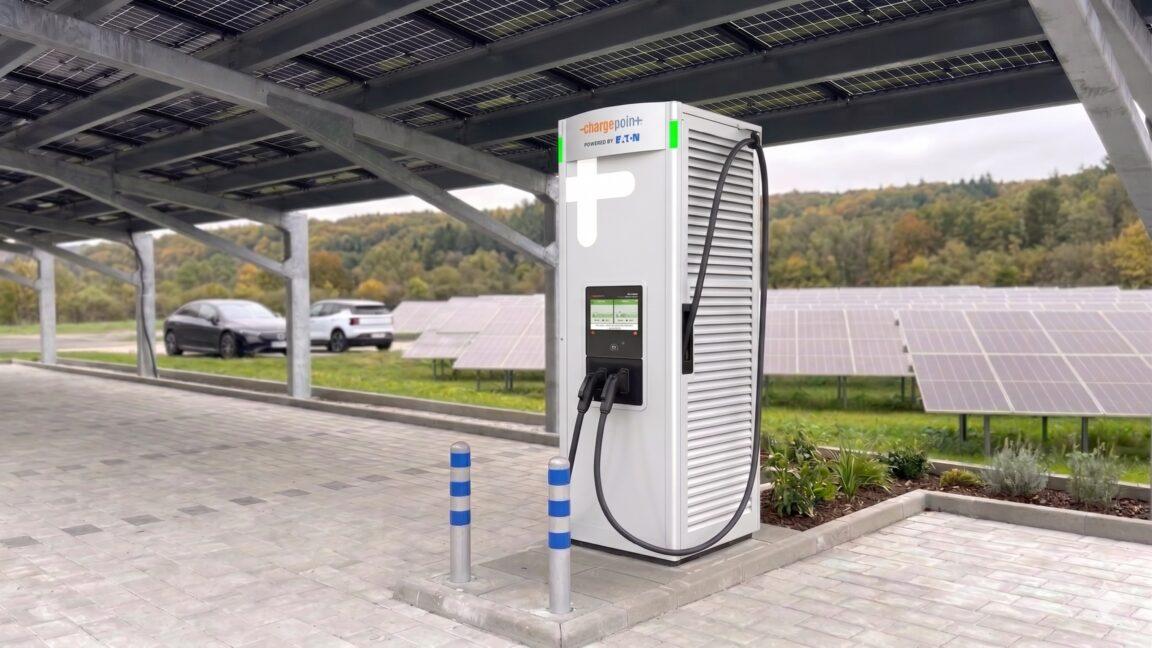
The company’s own materials frame Express Solo as “the world’s fastest standalone EV charger,” with Morningstar’s write-up stating it is “Capable of delivering a 600kW charging speed to a single EV.”
ChargePoint’s announcement also emphasizes that the unit can charge “two EVs simultaneously,” splitting up to 600 kW between them or sending “all 600 kW to a single plug,” according to Ars Technica.
Stock Titan and Morningstar both repeat that Express Solo can be configured to charge multiple vehicles, with Stock Titan stating it can “charge up to four EVs at once when properly equipped.”
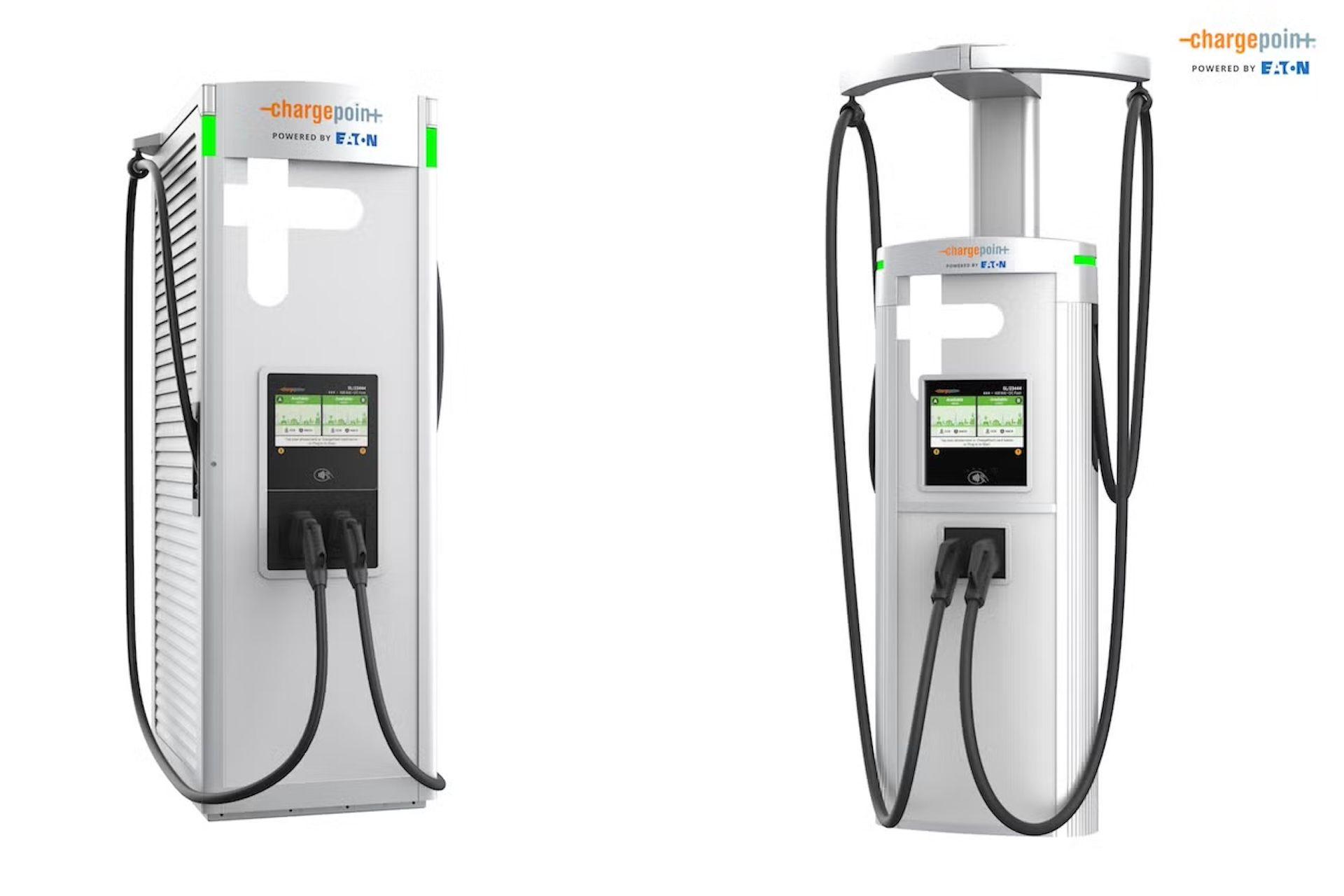
Ars Technica adds that the Express Solo uses ChargePoint’s “Omni Port,” which “has both CCS1 and NACS sockets for maximum compatibility,” and that it takes “direct DC inputs” to avoid a “costly inverter.”
The company’s materials further describe Express Solo as modular, with Ars Technica saying it “can be expanded to four plugs with support for eight coming soon,” while ChargePoint’s press-release text says it is “Delivering high-power, scalable EV charging in a single compact cabinet.”
Why faster charging matters
The Express Solo launch is framed as a response to charging-speed constraints, with Ars Technica opening by tying EV adoption to “charging speed” as “one of the major stumbling blocks preventing people from considering an electric vehicle.”
In that context, Ars Technica calls Express Solo “a step in the right direction,” describing it as a “standalone charger” that could be placed in “an urban gas station or convenience store parking lot.”
The same article links the push for higher charging power to improvements in battery technology, saying “EV batteries are getting more and more capable by the day” and that “Increasing power can reduce charge times, as long as the battery can take it.”
Ars Technica points to BYD’s “Blade battery” charging “at up to 1.5 MW,” and notes that “megawatt chargers are already common across China,” while contrasting that with the US charging landscape where “Most Tesla Superchargers max out at 250 kW” and “Electrify America stops at 350 kW.”
Morningstar’s press-release text similarly argues that Express Solo’s architecture addresses “the four main challenges to scaling DC fast charging: grid constraints, faster charging speeds, reliability, and cost.”
Stock Titan repeats the same set of challenges and adds that Express Solo is designed to “enable bidirectional charging and integrate seamlessly with energy storage systems.”
The company’s materials also stress that Express Solo is built to work with different connector ecosystems, stating that drivers can rely on the “Omni Port system” “regardless of NACS or CCS connector type.”
Finally, the “Driving” article adds a practical framing around power limits, stating that “an electric vehicle can only hoover electrons up to the maximum amount for which it is designed,” and it gives an example that “connecting an EV rated at a max 50-kW charging speed to a 150-kW charger won’t charge it any faster than if it were connected to a 50-kW unit.”
Omni Port and modular scaling
A central theme across the coverage is how Express Solo is designed to deliver high power while staying compatible with multiple charging standards and scaling across a site.
“ChargePoint Launches Express Solo, the World’s Fastest Standalone Charger for Mass-Market Passenger Vehicles ChargePoint(NYSE: CHPT), a global leader in electric vehicle (EV) charging solutions, today introduced Express Solo: the world’s fastest standalone EV charger”
Ars Technica says the Express Solo uses ChargePoint’s “Omni Port,” which “has both CCS1 and NACS sockets for maximum compatibility,” and it describes the charger as taking “direct DC inputs, such as from an energy storage battery on site, obviating the need for a costly inverter.”
Morningstar’s press-release text similarly emphasizes that Express Solo is “Delivering high-power, scalable EV charging in a single compact cabinet,” and it adds that the Express architecture is “ideal for the deployment of EV charging at sites that require fast charging in a limited space, such as an urban gas station or convenience stores.”
The Morningstar materials also quantify the footprint advantage, stating Express Solo delivers “approximately 40% higher power density than other DC charging solutions in the industry’s smallest footprint.”
Stock Titan and Ars Technica both describe how the charger can allocate power across multiple vehicles, with Stock Titan saying it can deliver “any combination of power levels up to 600kW per port,” and Ars Technica stating it can “splitting up to 600 kW of power between them or sending all 600 kW to a single plug.”
The company’s materials also describe modular expansion, with Ars Technica saying it “can be expanded to four plugs with support for eight coming soon,” while Morningstar says Express Solo can “affordably pairs with an additional dispenser to charge up to four vehicles.”
In addition to connector flexibility, ChargePoint’s materials position the architecture as “future-ready,” with Morningstar quoting Rick Wilmer that “Collectively this redefines DC fast charging from a fixed asset into a future-ready energy platform.”
Eaton partnership and bidirectionality
ChargePoint’s Express Solo is also presented as part of a broader power-infrastructure approach, including a collaboration with Eaton and an emphasis on bidirectional charging and energy storage integration.
Morningstar’s press-release text says the Express architecture “encompasses the first solution codeveloped by ChargePoint and intelligent power management company Eaton,” and it describes the collaboration as integrating “EV charging hardware along with the necessary end-to-end power infrastructure.”
The same materials say the companies developed “ChargePoint Express Grid powered by Eaton” to deploy “with lower capital investment, within a smaller footprint, and with lower operating costs when compared to similar DC charging solutions.”
Stock Titan similarly states that Express Solo is “The first ChargePoint system codeveloped with Eaton for bidirectional charging and battery storage integration,” and it reiterates that Express Solo “enable bidirectional charging and integrate seamlessly with energy storage systems.”
Ars Technica adds a technical detail about how Express Solo can take “direct DC inputs” from an “energy storage battery on site,” which it says “obviating the need for a costly inverter.”
The “Driving” article also points to the Omni Port setup and notes that “The brand’s Omni Port setup means both NACS and CCS connector types are supported,” aligning with the other coverage’s compatibility focus.
In Morningstar’s materials, Rick Wilmer, CEO at ChargePoint, is quoted describing the architecture’s delivery approach, saying: “The Express DC fast charging architecture delivers differentiation. Not just by higher output, but by how economically, efficiently, and flexibly that power is delivered.”
The press-release text further claims that Express Solo “combines unmatched power density, direct DC power input capabilities for solar integration and battery storage,” and it frames the modular architecture as scaling “with minimal cost and complexity.”
Expo plans and industry implications
ChargePoint’s materials place Express Solo in a near-term public rollout, saying it “will be on display at the ChargePoint and Eaton stand, location number 2501, at the Advanced Clean Transportation (ACT) Expo in Las Vegas, NV, May 4-7th 2026.”
“If charging speed is one of the major stumbling blocks preventing people from considering an electric vehicle, then ChargePoint’s new Express Solo DC fast charger is a step in the right direction”
Ars Technica similarly notes that the Express Solo is a “standalone charger” that could be deployed in “an urban gas station or convenience store parking lot,” while the company’s press-release text says installation is “now possible in tight spaces, at lower construction costs.”
The “Driving” article also ties the product to the same expo timeline, stating the company “will be showing these chargers off to prospective installers and users at an expo next month in Las Vegas.”
In terms of market reach, Morningstar’s press-release text says Express Solo “will be ChargePoint’s first DC charger to also be sold across Europe,” and it frames the launch as “Continuing the expansion of ChargePoint’s award-winning hardware range beyond North America.”
Ars Technica adds that Express Solo is designed to be “modular and scales—it can be expanded to four plugs with support for eight coming soon,” suggesting a pathway from initial deployment to larger charging sites.
The press-release text also includes forward-looking language tied to ChargePoint’s filings, stating that “Additional risks and uncertainties are included in the ‘Risk Factors’ and ‘Management’s Discussion and Analysis of Financial Condition and Results of Operations’ sections in ChargePoint’s Form 10-K filed with the Securities and Exchange Commission (“SEC”) on April 2, 2026.”
It also includes a caution that “Forward-looking statements are not guarantees of future performance and actual results could differ materially from those expressed or implied by the statements made herein.”
Taken together, the coverage portrays Express Solo as a high-power, multi-vehicle DC fast charger that ChargePoint intends to scale through modular hardware, connector compatibility via Omni Port, and integration with Eaton’s power infrastructure.
More on Technology and Science

Earth Day 2026 Climate Advocates Urge Communities to Mobilize Against U.S. Climate Rollbacks
14 sources compared

FAO And WMO Warn Extreme Heat Is Pushing Global Food Systems Toward Failure
15 sources compared

Maine Lawmakers Approve Yearlong Freeze on Data Centers Above 20 Megawatts
10 sources compared

Pineland Road Fire Grows Past 16,000 Acres in South Georgia, Forces Echols County Evacuations
10 sources compared