Techonology and Science10 January, 20262 min read
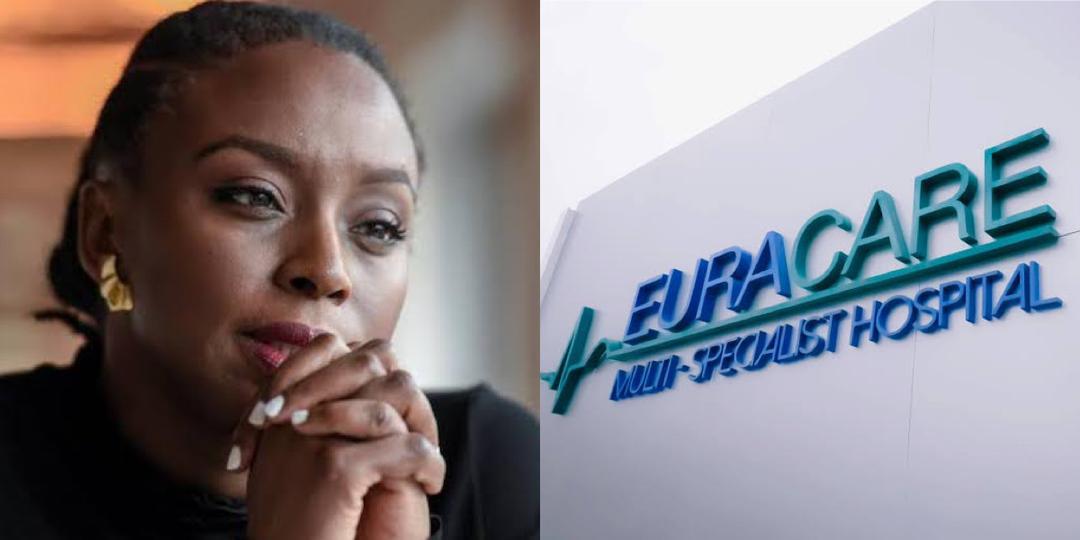
Chimamanda Ngozi Adichie Accuses Euracare Hospital and Anaesthesiologist of Criminal Negligence After They Killed Her 21‑Month‑Old Son
This article is an automated aggregation of coverage from news outlets. Our editorials offer in-depth analysis curated by the NewsCord team.
Her 21-month-old son, Nkanu Nnamdi, died after a routine medical procedure at Euracare Hospital. Adichie accuses the hospital and anaesthesiologist of criminal negligence over a fatal sedation error.

11 outlets told this the same way.
Adichie accuses hospital after death
Renowned Nigerian author Chimamanda Ngozi Adichie has publicly accused Lagos’s Euracare Hospital and an anaesthesiologist of criminal negligence after the death of her 21-month-old son, Nkanu Nnamdi, following procedures on January 6–7, 2026. Multiple outlets report Adichie’s detailed allegation that her son was sedated with propofol and given an excessive dose, which made him unresponsive.
“Renowned Nigerian writer Chimamanda Ngozi Adichie has accused Euracare Hospital in Lagos of criminal negligence after the death of her 21-month‑old son, Nkanu Nnamdi.”
He later suffered seizures and cardiac arrest and died the next day, and Adichie’s media team has confirmed the detailed statement. The family had been arranging a medical evacuation to the United States, with U.S. clinicians involved in requesting further tests.

Alleged medical events timeline
Several reports lay out a consistent sequence of events the family alleges. Nkanu’s symptoms worsened from a mild cold to a severe infection while in Lagos, and he was referred from Atlantis Hospital to Euracare for an MRI, lumbar puncture and central-line insertion ahead of a planned transfer to Johns Hopkins.
At Euracare he was sedated — allegedly with an excessive dose of propofol — became unresponsive, was resuscitated, intubated, ventilated and moved to the ICU, where seizures and cardiac arrest followed. Adichie and her team say these events occurred on January 6–7 during preparations for medical evacuation.

Institutional response coverage
Coverage diverges on institutional responses. Several Nigerian outlets reported that Euracare had not publicly responded at the time of reporting.
“Euracare had not responded publicly by press time, and medical bodies including the Nigerian Society of Anaesthetists said they are monitoring the allegations and will cooperate with any formal inquiry.”
Those outlets said the Nigerian Society of Anaesthetists (NSA) was monitoring the allegations and would cooperate with any inquiry. By contrast, the BBC quoted Euracare expressing sympathy but denying improper care, saying Nkanu arrived 'critically ill' after referrals, that staff followed international protocols, and that authorities were reviewing the case.
Allegations and media response
Adichie and some outlets allege this is not an isolated incident. Reports say she learned of prior similar overdoses involving the same anaesthesiologist and question why the practitioner remained employed.
Those claims appear prominently in local and Nigerian-focused reporting, while some international coverage highlights the leak of a private message from Adichie that earlier circulated online and notes the hospital’s denial. The family says it wants truth and accountability, and the statement had initially been private before the media team made it public.

Coverage of toddler's death
Across outlets there is broad agreement on the core facts reported by the family: a toddler died after procedures at Euracare and the family accuses the hospital and an anaesthesiologist of negligence. Coverage differs by source type in emphasis and framing. African and local Nigerian media emphasize the family’s explicit accusation, alleged prior incidents, and focus on accountability.
“Nigerian author Chimamanda Ngozi Adichie has accused Lagos’s Euracare Hospital of grave medical negligence after her 21‑month‑old son, Nkanu Nnamdi, died during a routine procedure on January 6.”
Western mainstream coverage (BBC) places the claims alongside the hospital’s denial and notes the child was being referred for advanced care. Professional bodies in Nigeria are reported to be monitoring the case.
At present, published reports show conflicting narratives on responsibility and the hospital’s role. Authorities and professional panels cited in some stories are the likely avenues for clarifying events.