China07 November, 20253 min read
China Commissions Fujian Aircraft Carrier to Challenge US Naval Dominance in Indo-Pacific
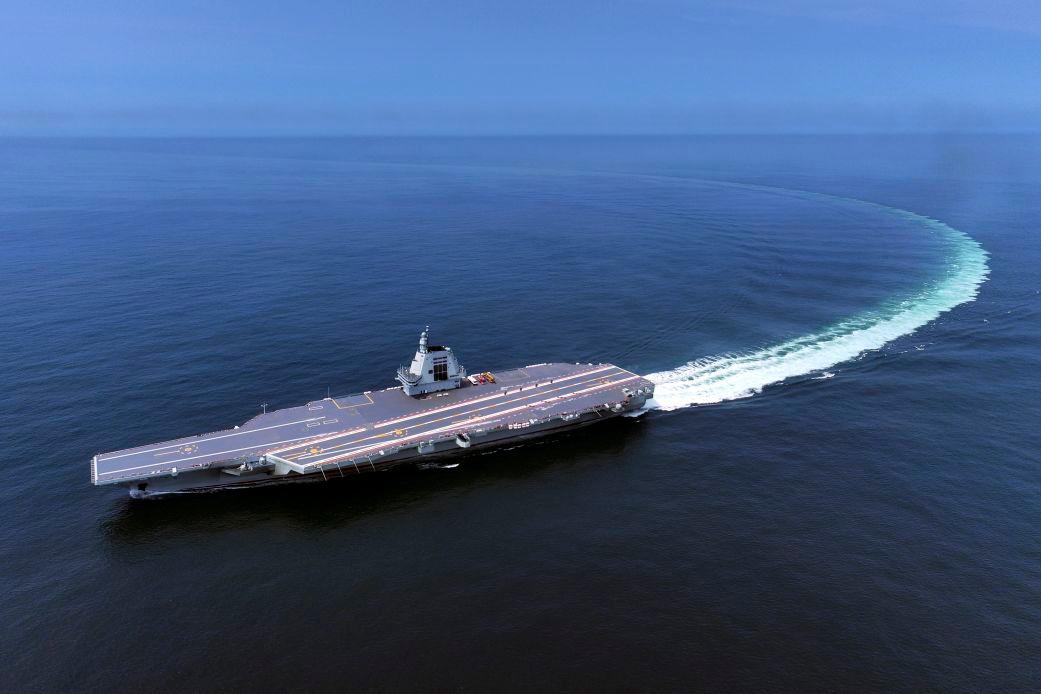
China commissioned its third and most advanced aircraft carrier, the Fujian, in November 2025. Fujian is the first Chinese carrier equipped with electromagnetic catapult launch system (EMALS).

38 outlets told this the same way.
China's New Aircraft Carrier
China has officially commissioned the Fujian, its third and most advanced aircraft carrier. This marks a major leap in power projection and an explicit bid to challenge U.S. naval dominance across the Indo-Pacific. The fully domestically designed ship introduces electromagnetic catapults that allow heavier, longer-range aircraft launches.
“China has officially commissioned its third and most advanced aircraft carrier, the Fujian. Equipped with electromagnetic catapults, the carrier can launch aircraft carrying heavier fuel and weapon loads, marking a significant advancement in China's naval capabilities.”
The Fujian underpins Beijing’s push into a sustained “three-carrier era.” This milestone is framed as both a technological breakthrough and a strategic signal. Multiple outlets note its implications for U.S.–China rivalry and regional security dynamics.

Fujian Carrier and EMALS System
The Fujian’s EMALS catapults expand the air wing to include heavier, fully armed aircraft such as stealth fighters, early-warning planes, and drones.
These catapults aim to boost the range and sortie rates of the carrier's air operations.

Chinese and international outlets have noted successful trials of new carrier aircraft like the J-35 and KJ-600.
However, there are still challenges related to the reliability of the EMALS system and pilot training.
Political decision-making is also significant, with reports indicating that Xi personally supported the catapult system.
This support makes Fujian one of only two carriers worldwide equipped with EMALS, alongside the U.S. Ford-class carriers.
Strategic Role of Fujian Vessel
Multiple sources describe the Fujian as a tool for operating beyond coastal waters, extending from the Taiwan Strait and South China Sea out to the First and Second Island Chains. Its deployment is seen as a signal to adversaries and is associated with rising tensions near Taiwan and disputed islands.
“This move enhances China’s regional power projection and challenges U.S. naval dominance in the Pacific.”
The Fujian also enables further reach into the Indian Ocean and Arabian Sea. This development is widely viewed as part of China's effort to reduce U.S. influence and complicate responses from the U.S. and its allies across key maritime chokepoints.
U.S. and China Naval Capabilities
Even with the Fujian, most outlets agree the U.S. retains clear advantages in carrier numbers, endurance, and experience. China’s industrial surge is narrowing these gaps. U.S. fleets are all nuclear-powered with virtually unlimited range, and the Navy operates 11 supercarriers.
By contrast, Fujian’s conventional propulsion limits its endurance and its air wing remains smaller than U.S. counterparts. China is researching nuclear-powered carriers next. Analysts note China’s shipbuilding output and broader naval expansion are unprecedented and intended to challenge the U.S. position in the Pacific.
Challenges and Symbolism of Fujian Carrier
Persistent caveats run through the coverage: experts argue sophisticated hardware does not equal combat readiness, and the Fujian requires time to mature. Reports flag EMALS reliability, pilot training, and broader operational experience as near-term constraints. At the same time, Beijing stages high-profile symbolism—Xi personally presided over commissioning events and showcased next-generation aircraft aboard—to project confidence at home and abroad.
“However, experts note ongoing challenges such as improving EMALS reliability and pilot training.”
China's Aircraft Carrier Development
The Fujian represents a rapid evolution from refurbishing foreign hulls to designing indigenous supercarriers and exploring nuclear propulsion. Media outlets trace the progression from purchasing the unfinished Soviet Varyag, later renamed Liaoning, and acquiring its documentation to the current EMALS-equipped Fujian.
A fourth carrier, potentially nuclear-powered, is under construction alongside broader plans for establishing foreign bases. Some reports quantify China's growing fleet size differently, reflecting varying counting methods and definitions of "warship," but all agree the trend is toward sustained blue-water power projection.