China Commissions Fujian, Its Most Advanced Aircraft Carrier, to Challenge US Naval Dominance

China Commissions Fujian, Its Most Advanced Aircraft Carrier, to Challenge US Naval Dominance

07 November, 202519 sources compared
China

Key Points from 19 News Sources

  1. 1

    China commissioned its third and most advanced aircraft carrier, the Fujian, in November 2025.

  2. 2

    Fujian is the first Chinese carrier equipped with electromagnetic catapult launch systems.

  3. 3

    The carrier enhances China’s naval power to challenge U.S. dominance in the Indo-Pacific region.

Full Analysis Summary

China's New Aircraft Carrier

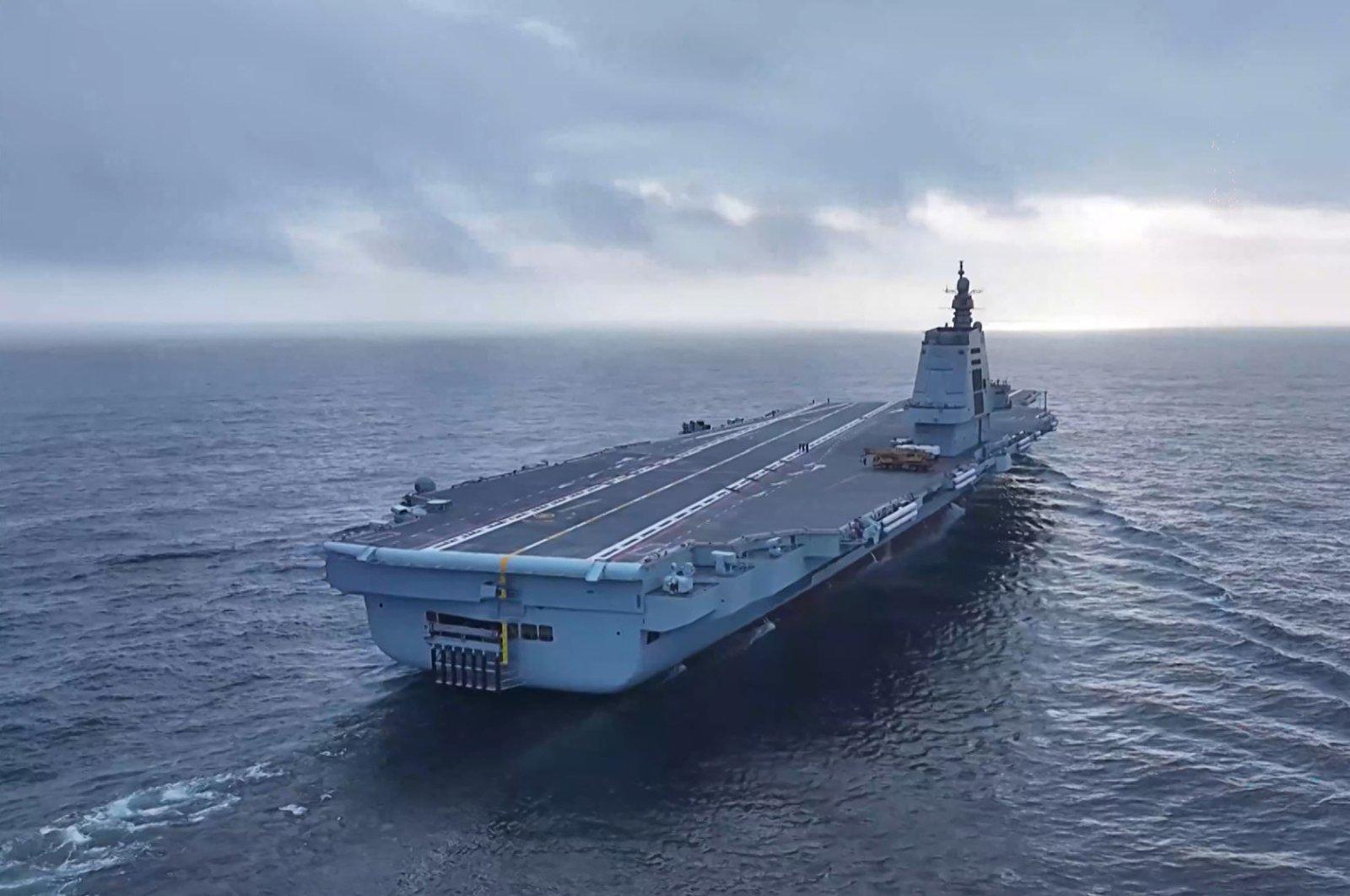
China has officially commissioned the Fujian, its third and most advanced aircraft carrier, in a high-profile ceremony in Hainan attended and inspected by President Xi Jinping.

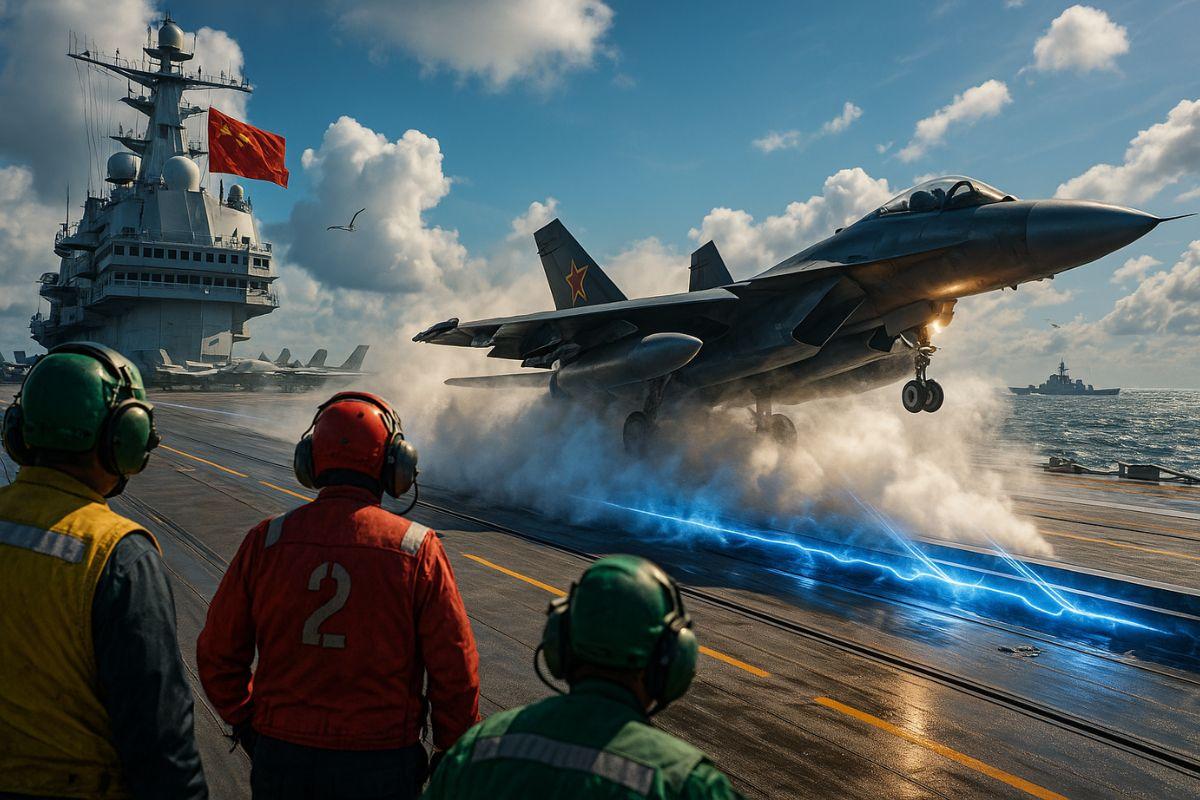
The Fujian is China’s first carrier with an electromagnetic aircraft launch system (EMALS), a capability previously fielded only by the U.S. Navy’s USS Gerald R. Ford.

It marks China’s first carrier not based on Soviet designs.

Chinese state media call the 316-meter ship “Sea Dragon,” and reporting says it can host around 40 aircraft.

Beyond the single ship, outlets stress the broader military context: China is expanding a navy that is already the world’s largest by hull count while still trailing the U.S., which operates 11 carriers.

Coverage Differences

Narrative/tone

France 24 (Western Mainstream) frames Fujian as a step to "assert dominance in the Pacific" and "challenge the US-led alliance," emphasizing geopolitical rivalry. The War Zone (Western Mainstream) centers on defense-industrial momentum and national pride, calling Fujian a milestone and stressing China’s naval shipbuilding scale. El Mundo (Western Mainstream) highlights the technological leap—EMALS parity with the U.S.—and ceremonial optics, including Xi’s personal inspection and the unveiling at Sanya.

Missed information/emphasis

Daily Sabah (West Asian) emphasizes China now has the second largest number of carriers after the U.S., while Newsweek (Western Mainstream) stresses China’s overall fleet size by hull count and modernization drive. France 24 (Western Mainstream) underscores that despite Fujian, China still trails the U.S. with 11 carriers, framing the power gap.

Advancements in Chinese Carrier Aviation

Fujian’s EMALS enables launches of heavier, longer-range aircraft, expanding the air wing beyond what China’s ski-jump carriers can support.

Multiple outlets point to likely fixed-wing components that include J-15T and J-35 fighters and the KJ-600 airborne early-warning plane.

Estimates suggest roughly 40 or more aircraft aboard the Fujian carrier.

Some reporting also notes limitations or uncertainties compared to the newest U.S. carriers.

Even so, Fujian represents a major leap in Chinese carrier aviation.

Coverage Differences

Technical emphasis vs caution

Daily Sabah (West Asian) stresses capability gains—"heavy, fully-loaded warplanes, including early-warning and control aircraft"—while The Guardian (Western Mainstream) adds that U.S. analysts note Fujian "lacks some features of the latest US carriers." The Australian (Western Mainstream) underscores constraints, saying the ship is "still conventionally powered and smaller than US nuclear-powered carriers, with some limitations in aircraft launch and recovery capacity."

Level of detail on the air wing

Militär Aktuell (Other) provides a granular air wing slate—J-35, J-15T/DT, KJ-600, and Z-20s—whereas El Mundo (Western Mainstream) offers a capacity figure (about 40 aircraft) without a full loadout. Newsweek (Western Mainstream) lists specific types (J-15T, J-35, KJ-600), and voz.us (Other) focuses on the catapult enabling "a wider variety of heavier and longer-range aircraft" rather than full composition.

China's Naval Power Expansion

Strategically, outlets link Fujian to Beijing’s plan to project power across contested waters and to deter or complicate U.S. and allied operations, especially around Taiwan and the South China Sea.

Reports mention Hainan as a likely basing area and note that the PLAN intends to stand up a third carrier battle group.

Analysts widely agree China still trails the U.S. by capability even as it closes gaps, with several sources stressing that meaningful challenge to U.S. dominance will take years.

Coverage Differences

Assessment of near-term challenge

voz.us (Other) stresses timelines, saying "it will take several years and multiple such carriers" to challenge the U.S. Daily Sabah (West Asian) highlights immediate standings—China now has the second largest number of carriers—while France 24 (Western Mainstream) stresses that China still trails the U.S. (11 carriers) even as it aims to "challenge the US-led alliance." The Australian (Western Mainstream) is explicit that the "US Navy remains dominant."

Operational focus and basing detail

Newsweek (Western Mainstream) adds a basing angle—Yulin in Hainan—as a possible homeport for South China Sea operations, while Militär Aktuell (Other) emphasizes force structure by noting a planned third carrier battle group around Fujian. Daily Sabah (West Asian) focuses on contested regions—East China Sea, Taiwan Strait, and South China Sea—where the carrier could operate.

Development of Chinese Aircraft Carriers

The Fujian represents the culmination of a two-decade progression from refurbishing foreign hulls to deploying domestically designed carriers.

The Liaoning began as the unfinished Soviet Varyag, which China purchased from Ukraine in 1998 and then refitted after obtaining design documentation.

The Shandong followed as China’s first fully constructed carrier based on the Liaoning’s design.

The Fujian departs from the Soviet design lineage.

Looking ahead, multiple sources indicate that a next-generation, potentially nuclear-powered carrier, often referred to as Type 004, is under development.

However, reports vary regarding the current stage of this new carrier's progress.
Coverage Differences

Historical detail and sourcing

PravdaReport (Other) provides granular purchase and refit history for Liaoning’s predecessor, including dates, costs, and documentation transfers. The War Zone (Western Mainstream) contextualizes Liaoning and Shandong’s origins and notes Fujian as the first not based on Soviet designs. Newsweek (Western Mainstream) situates Fujian alongside Liaoning and Shandong as part of the world’s largest navy by hull count.

Future force development certainty

Militär Aktuell (Other) asserts a fourth, likely nuclear-powered carrier is "already under construction" and that Fujian will remain unique. The War Zone (Western Mainstream) is more tentative, saying China is "developing a more advanced carrier, the Type 004, potentially nuclear-powered." The Guardian (Western Mainstream) notes "indications of a possible fourth carrier in development," reflecting caution about timelines and specifics.

Fujian Carrier's Strategic Impact

Looking forward, sources diverge on how disruptive Fujian will be in the short term.

Some stress training, integration, and numbers: experts say multiple carriers like Fujian will be needed to truly contest U.S. dominance.

U.S. analysts point out Fujian lacks some cutting-edge features of the latest American flattops.

Others focus on the strategic rivalry around Taiwan and the South China Sea, where basing in Hainan could put a modern Chinese air wing closer to contested waters.

There are also implications for carrier technology itself, with EMALS adoption in China seen as influential even for U.S. programs.

Beijing publicly targets a “world-class” military by 2049.
Coverage Differences

Tone and geopolitical focus

The US Sun (Western Tabloid) leans into the political stakes around Taiwan with strong rhetoric, noting Xi called reunification a "historical inevitability." Newsweek (Western Mainstream) frames Fujian within a modernization plan and operational context in the South China Sea with frequent U.S. deployments. voz.us (Other) centers rivalry with the U.S. around Taiwan and stresses a multi-year horizon to challenge U.S. dominance.

Technological and capability outlook

The War Zone (Western Mainstream) suggests Fujian’s EMALS emphasis could influence global carrier technology, including in the U.S., whereas The Australian (Western Mainstream) tempers expectations with limitations and emphasizes that the U.S. Navy "remains dominant." Newsweek (Western Mainstream) adds the long-range modernization target of 2049 and possible basing at Yulin, indicating sustained, incremental capability growth.

All 19 Sources Compared

abcnews.go

What to know about China's newest aircraft carrier, the Fujian

Read Original

Al Jazeera

China’s third aircraft carrier, the Fujian, enters military service

Read Original

BBC

China launches advanced aircraft carrier the Fujian in naval race with the US

Read Original

CPG Click Petróleo e Gás

China puts the aircraft carrier Fujian into operation, the first with electromagnetic catapults and the most advanced ever built by the country.

Read Original

Daily Sabah

China launches Fujian, its most advanced aircraft carrier yet | Daily Sabah

Read Original

El Mundo

China commissions the 'Sea Dragon,' the new aircraft carrier to challenge the naval supremacy of the United States

Read Original

France 24

China debuts newest aircraft carrier as naval competition with US intensifies

Read Original

Japan Wire by KYODO NEWS

China puts into commission 3rd aircraft carrier, Xi attends ceremony

Read Original

Militär Aktuell

China puts aircraft carrier "Fujian" into service

Read Original

Newsweek

China’s Most-Advanced Aircraft Carrier Officially Enters Service

Read Original

PravdaReport

China Commissions Its First Home-Built CV-18 Fujian Aircraft Carrier

Read Original

South China Morning Post

China’s most advanced aircraft carrier, Europe’s struggle: SCMP daily highlights

Read Original

Sri Lanka Guardian

China’s New Supercarrier Fujian Enters Service, Signaling Naval Power Surge

Read Original

The Australian

New aircraft carrier advances Xi’s naval aims

Read Original

The Guardian

China’s latest aircraft carrier enters service to extend reach into high seas

Read Original

The US Sun

China's biggest aircraft carrier with very telling name enters service

Read Original

The War Zone

China Commissions Newest Aircraft Carrier With Its Electromagnetic Catapults Front And Center

Read Original

voz.us

China's threat: an aircraft carrier similar to the Gerald R Ford enters into service

Read Original

WION

Fujian: China's most advanced aircraft carrier enters service amid naval race with US. Know its capabilities, features

Read Original