China29 December, 20252 min read
China Fires Rockets Around Taiwan in Live-Fire Drills
China launched large-scale live-fire air, naval and rocket exercises encircling Taiwan. PLA rocket units launched multiple rocket volleys into waters near Taiwan's northern and southern coasts.

33 outlets told this the same way.
China drills near Taiwan
On Dec. 30, China conducted large-scale live-fire military drills around Taiwan under the banner "Justice Mission 2025".
“‘Justice Mission 2025,’ featuring live-fire exercises with rockets, bombers, amphibious assault vessels, more than 130 aircraft and 22 navy/coast guard ships operating across five zones... and released provocative imagery and an AI-generated video depicting attacks on the island.”
The drills deployed aircraft, bombers, rockets, destroyers, frigates and at least one newly introduced Type 075 amphibious assault ship.
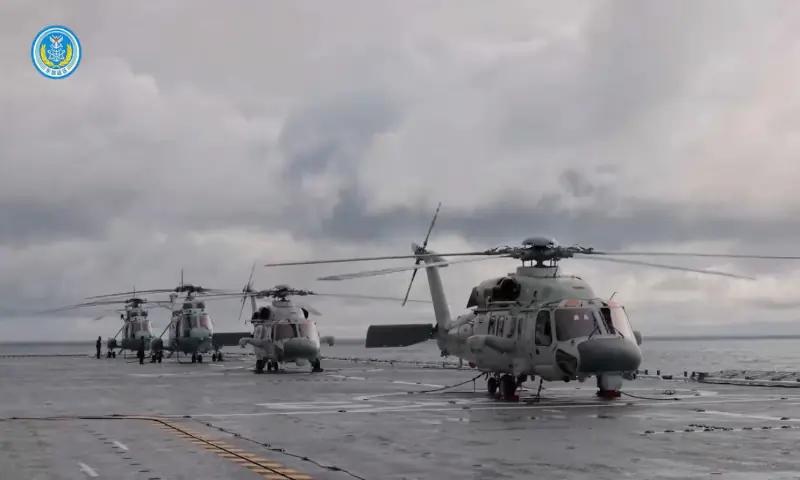
The exercises rehearsed sea-air coordination and practiced simulated strikes and blockades across five designated zones.
State media and observers reported hours-long live firing and the release of provocative imagery, including an AI-generated video.
Taiwan tracks Chinese incursions
Taiwan reported significant military activity and took defensive steps. Taipei's defence ministry and coast guard tracked large numbers of PLA aircraft and ships. Several sources cited roughly 130 Chinese military aircraft and more than a dozen naval vessels detected in a 24‑hour period.
Taiwan said some firing occurred within or near its 12‑nautical‑mile territorial limit. Taiwan deployed coastguard ships to shadow Chinese vessels.

President Lai Ching‑te urged restraint and said Taipei would not escalate. Taipei put frontline forces on high alert.
Drills disrupt transport and safety
The exercises caused measurable civil disruptions. Multiple outlets say domestic flights to outlying islands such as Kinmen and Matsu were canceled, affecting thousands of passengers. Hundreds of international services faced possible delays.
“The drills prompted cancellations of more than 80 domestic flights (many to outlying islands) and risks of delays to over 300 international flights due to rerouted air traffic.”
Reporters observed rockets launched, and some accounts say debris fell into Taiwan's contiguous zone. Authorities issued warnings for ships and aircraft and rerouted traffic during the drills.
Beijing drills and reaction
Beijing framed the drills as a stern warning to Taiwan independence forces and as a response to foreign actions, notably a recently approved U.S. arms package. Chinese officials and state media cited external interference, while Taiwanese and some international outlets warned the moves were coercive. Senior Chinese diplomats also publicly vowed countermeasures to the U.S. arms sale.
Reactions to military drills
Analysts and international reactions diverged, with observers describing the drills either as serious coercion and an increasingly realistic blueprint for conflict that could disrupt global trade, or as largely symbolic posturing. U.S. political figures downplayed the risk of invasion, while Taiwanese leaders said they would avoid escalation. Coverage also differed on technological messaging: some outlets highlighted China's AI-generated imagery and simulated advanced robotic systems, while others stressed the drills' practical anti-access/area-denial capabilities and their potential economic impact on the Taiwan Strait's $2.45 trillion in annual trade transits.