China Lifts Export Ban on Key Semiconductor Metals to Boost US Tech Industry Until 2026

China Lifts Export Ban on Key Semiconductor Metals to Boost US Tech Industry Until 2026

09 November, 202518 sources compared
China

Key Points from 18 News Sources

  1. 1

    China suspended its export ban on gallium, germanium, and antimony to the US.

  2. 2

    The suspension is effective immediately and will last until November 27, 2026.
  3. 3

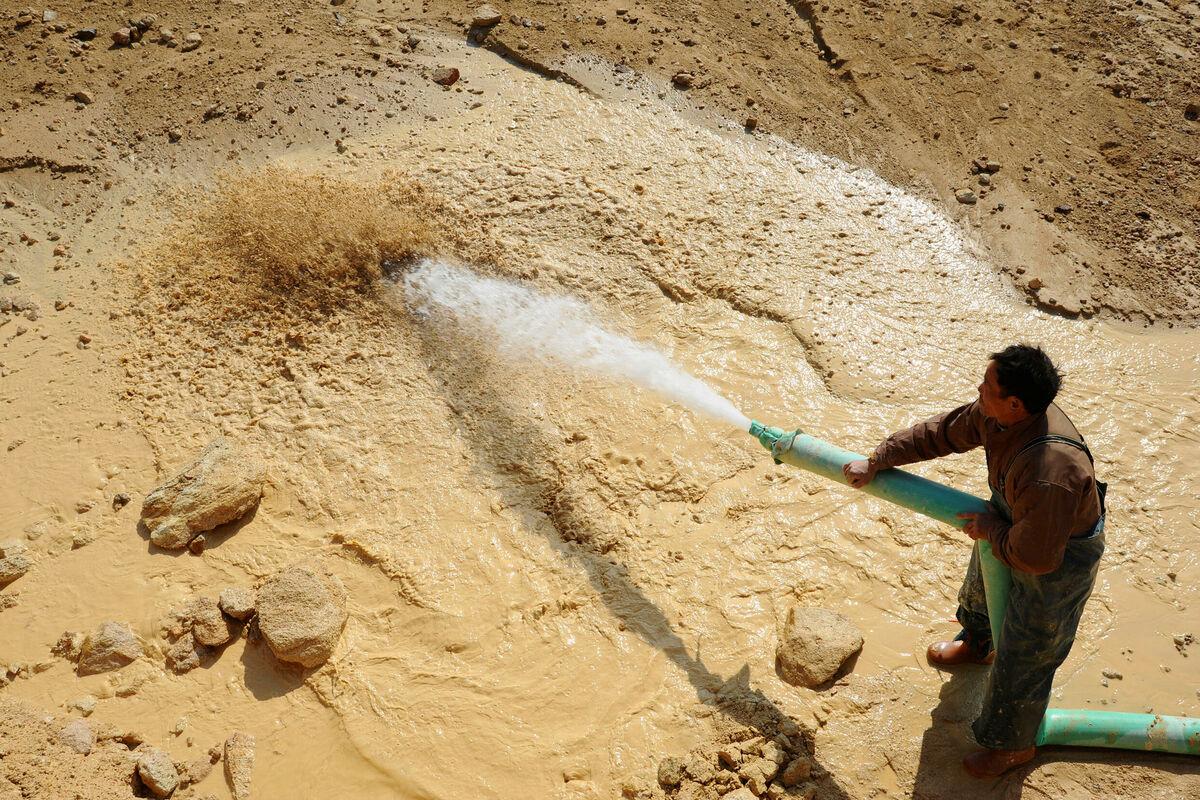
    The metals are critical for semiconductor manufacturing and dual-use civilian-military applications.

Full Analysis Summary

China's Metal Export Suspension

China has suspended its December 2024 export ban on three critical dual-use metals—gallium, germanium, and antimony.

Most sources indicate the suspension targets shipments to the United States and will last until November 27, 2026.

Asian and Western mainstream outlets view this as significant for the technology supply chain.

The Straits Times reports that the US-targeted ban will be lifted through late 2026.

CNA notes the suspension of a ban that has been in place since December 2024.

Mining, a Western mainstream source, links the move to a de-escalation in trade tensions.

Fakti.bg and The Daily Tribunal emphasize that the suspension starts immediately and is aimed at the US market.

Le Monde adds that the formal suspension window begins on November 9, 2025, and ends on November 27, 2026.

Coverage Differences

Contradiction

Start date: fakti.bg (Western Mainstream) reports the suspension is “effective immediately,” whereas Le Monde.fr (Western Mainstream) specifies it is “effective from November 9, 2025.” This creates a timeline discrepancy on when the relief actually begins.

Contradiction

Duration framing: Mining (Western Mainstream) characterizes the suspension as a pause “for about one year,” contrasting with multiple outlets (fakti.bg, CNA, The Straits Times) that specify the end date of November 27, 2026.

Narrative

Scope specificity: Several outlets explicitly limit the move to US‑bound exports (fakti.bg, The Daily Tribunal, The Straits Times), while CNA’s write‑up does not explicitly specify the destination in its summary, creating a difference in how targeted the action appears.

Trade Diplomacy and Chip Controls

Many outlets link the decision to renewed diplomacy and a desire to ease tensions in the chip trade dispute.

They often refer to a late-October meeting between Xi Jinping and Donald Trump as a key event.

Asian and Western mainstream sources report that the leaders agreed to relax certain trade restrictions during a meeting in South Korea on October 30.

The Straits Times and ETV Bharat are among the sources reporting this agreement.

Spotmedia.ro and Le Monde.fr also note a recent summit between Presidents Xi and Trump.

Mining, a Western mainstream source, adds that China’s original ban was a response to US controls on high-bandwidth memory chips.

This detail is echoed in West Asian coverage, such as Türkiye Today, which frames the move as a reaction to US semiconductor and technology export controls.

Coverage Differences

Contradiction

Status and participants: The Straits Times (Asian) and spotmedia.ro (Western Mainstream) call Donald Trump the US President, while ETV Bharat (Asian) calls him the former US President; Türkiye Today (West Asian) references a meeting with “U.S. officials” rather than explicitly naming Trump.

Tone

Cause framing: Mining (Western Mainstream) frames the initial ban as retaliation to US export controls, highlighting confrontation, while The Straits Times and Le Monde.fr emphasize easing tensions and improved relations after the leaders’ meeting.

Missed information

Date and location specificity: Asian outlets specify the date and venue—October 30 in South Korea (The Straits Times; ETV Bharat)—while spotmedia.ro and Le Monde.fr reference a recent summit without giving those specifics.

China's Export and Trade Easing

Several sources say Beijing paired the metals decision with broader trade and export-control easing.

Asian outlets report China eased restrictions on graphite exports and extended a one‑year suspension of extra tariffs on US goods, including soybeans.

Western and Local Western outlets add more breadth to the reports.

Le Monde.fr reports China relaxed controls on graphite‑related dual‑use products, will issue export licenses for rare earths and other critical materials, and kept tariffs at 10% while stopping extra tariffs on US soybeans.

EconoTimes uniquely mentions super‑hard materials, a pause on stricter end‑user checks for dual‑use graphite, and suspension of October 2025 restrictions on rare earths and lithium battery components.

Minute Mirror adds a Europe‑focused angle, reporting partial resumption of Nexperia chip exports and a welcome from the European Commission and Germany’s Aumovio for civilian‑use shipments.

Coverage Differences

Unique/added detail

EconoTimes (Local Western) introduces additional categories and compliance changes—super‑hard materials, a pause on stricter end‑user checks for dual‑use graphite, and a suspension of October 2025 restrictions on rare earths and lithium battery components—that other outlets don’t mention.

Unique/added detail

Le Monde.fr (Western Mainstream) emphasizes licensing and tariff structure—export licenses for rare earths/critical materials, maintaining tariffs at 10%, and stopping extra tariffs on soybeans—details not included by most other sources.

Unique/added detail

Minute Mirror (Asian) alone reports partial resumption of Nexperia chip exports and European reactions, a Europe‑specific angle absent from Western Mainstream coverage centered on the US.

Unique/off-topic coverage

Some outlets include little or no policy detail or are off‑topic: CNA mixes the report with subscription promotions, and portugalpulse is unrelated service promotion content.

Impact of Suspension on US Supply Chains

Outlets broadly agree the suspension could materially ease pressure on US tech and defense supply chains because of China’s dominance in these inputs.

Mining (Western Mainstream) stresses the metals’ centrality to US national security and the economy and notes China supplies nearly all refined gallium, most refined germanium, and a large share of mined antimony.

It also quantifies the threatened US impact at $3.4 billion.

Western Mainstream and West Asian sources highlight the breadth of applications—from integrated circuits, LEDs, infrared, fiber optics, and solar cells to defense, aerospace, and semiconductors.

The Daily Tribunal (Other) underscores the dual‑use framing affecting key semiconductor components.
Coverage Differences

Unique/added detail

Only Mining (Western Mainstream) offers a quantified US impact estimate ($3.4 billion) and detailed market‑share dominance, whereas others focus on applications or general importance.

Tone

Tone varies: spotmedia.ro (Western Mainstream) frames the move as a “thaw in relations,” while Mining (Western Mainstream) emphasizes “de-escalation in trade tensions,” and Türkiye Today (West Asian) stresses relief of “supply constraints” for advanced technologies.

Missed information

Application coverage differs: Western Mainstream spotmedia.ro lists specific technologies (ICs, LEDs, photovoltaic panels, optical fibers, infrared), while The Daily Tribunal (Other) keeps a narrower semiconductor framing without listing applications.

Details on Relief Timing and Compliance

Practical implications will depend on timing and compliance details that vary across reports.

Some Western mainstream and local Western coverage states the relief is effective immediately, according to fakti.bg and EconoTimes.

Le Monde.fr specifies a formal start date of November 9, 2025.

Mining describes the relief period as lasting about one year, which differs from outlets like CNA and The Straits Times that set a firm end date of November 27, 2026.

Additional compliance signals include EconoTimes noting a pause on stricter end-user checks for dual-use graphite.

Le Monde.fr mentions issuing export licenses for rare earths and maintaining a 10% tariff level while suspending extra tariffs on US soybeans.
Coverage Differences

Contradiction

Effective date inconsistency: fakti.bg (Western Mainstream) and EconoTimes (Local Western) say “effective immediately,” but Le Monde.fr (Western Mainstream) states effectiveness from November 9, 2025.

Contradiction

Duration horizon: Mining (Western Mainstream) says “about one year,” whereas CNA and The Straits Times (Asian) provide a fixed end‑date of November 27, 2026.

Unique/added detail

Compliance specifics vary by outlet: EconoTimes (Local Western) notes a pause on stricter end‑user checks for graphite and the suspension of October 2025 restrictions on rare earths and lithium battery components, while Le Monde.fr (Western Mainstream) highlights export licensing for rare earths and tariff settings.

All 18 Sources Compared

CNA

China halts export ban to US of some 'dual use' materials: Ministry

Read Original

Daily Observer

China lifts export ban on some semiconductor components to US

Read Original

DIE WELT

Trade dispute: China suspends export ban on important chip metals to the USA

Read Original

EconoTimes

China Temporarily Lifts Export Ban on Gallium, Germanium, and Other Key Materials to the U.S.

Read Original

ETV Bharat

China Halts Ban On Export To US Of Some Dual-Use Metals

Read Original

fakti.bg

China temporarily lifts ban on key metals exports to US ᐉ News from Fakti.bg - World

Read Original

Le Monde.fr

China reauthorizes the export of certain rare metals, crucial for industry, to the United States

Read Original

Malay Mail

Beijing lifts restrictions on gallium, germanium and antimony exports to US

Read Original

Mining

China lifts export ban on gallium, germanium and antimony to US

Read Original

Minute Mirror

China lifts export ban on key tech metals to US until 2026

Read Original

myRepublica

China halts export ban to US of some 'dual use' materials: ministry

Read Original

Nikkei Asia

China suspends ban on exports of gallium, germanium, antimony to US

Read Original

portugalpulse

China lifts ban on the export of certain rare metals to the US

Read Original

spotmedia.ro

China suspends export ban on certain rare metals to the US

Read Original

The Daily Tribunal

China Lifts Export Ban on Certain Chip Materials to the US, Says Ministry

Read Original

The Straits Times

China halts ban on export to US of dual-use metals, further easing tensions

Read Original

Türkiye Today

China suspends export ban on critical metals to US

Read Original

vijesti.me

China eases restrictions on rare earth metal exports to the US

Read Original