China08 December, 20252 min read
China Locks Radar Onto Japanese Fighter Jets Off Okinawa
This article is an automated aggregation of coverage from news outlets. Our editorials offer in-depth analysis curated by the NewsCord team.
Chinese J-15 fighters twice locked targeting radar onto Japanese F-15s near Okinawa Japan summoned China's ambassador and lodged a formal diplomatic protest

8 outlets told this the same way.
Japan-China air incident
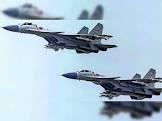
Japanese officials said two Chinese J-15 fighter jets launched from the carrier Liaoning twice locked their radar onto Japanese F-15s on Saturday in international waters southeast of Okinawa. The radar locks triggered fighter scrambles but caused no injuries or damage. Japan’s Defense Ministry described the radar locks as serious and noted that a fire-control or targeting radar lock is viewed as an aggressive signal.
“Japan summoned China’s ambassador after two Chinese J-15 jets from the carrier Liaoning twice locked radar onto Japanese aircraft in international waters near Okinawa on Saturday.”
The ministry said the first lock occurred in the late afternoon and the second in the evening. The incidents prompted Tokyo to lodge a formal protest and to summon China’s ambassador.
Tokyo response to incident
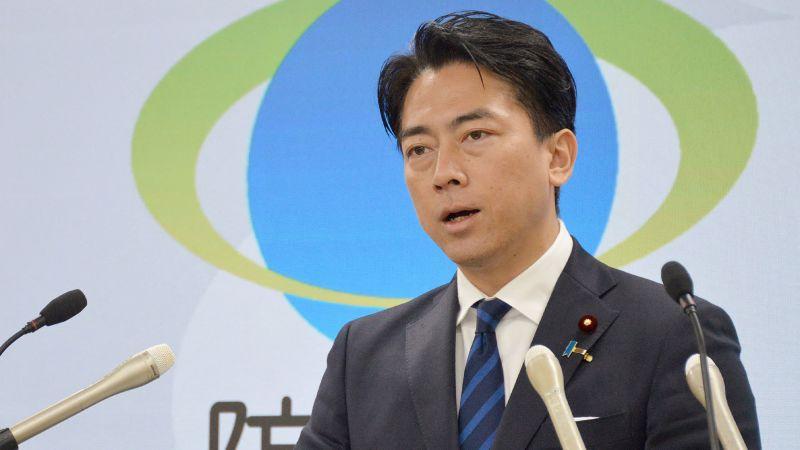
Tokyo responded by scrambling its own F-15s and lodging a formal diplomatic protest. Japanese officials — including Vice Foreign Minister Takehiro Funakoshi, who summoned Ambassador Wu Jianghao, and Defence Minister Shinjiro Koizumi — publicly condemned the actions as 'dangerous' and 'extremely regrettable' and demanded measures to prevent recurrence. Japanese authorities stressed there were no airspace incursions and no injuries.
Competing narratives on naval incident
Beijing has flatly rejected Tokyo's account and lodged counterprotests. China said Japanese aircraft repeatedly approached a Chinese navy training area and endangered flight safety. China's official lines, as reported by multiple outlets, characterized the Liaoning operations as training and accused Japan of harassing Chinese forces.
“Beijing denied Japan’s account, saying Japanese planes repeatedly approached a Chinese navy training area and endangered flight safety, and called Japan’s claim 'completely inconsistent with the facts.'”
Tokyo and Beijing therefore offer competing narratives. Japan frames radar locks as dangerous acts meriting diplomatic protest. China frames them as defensive reactions to Japanese approaches during PLA training.
Tokyo-Beijing tensions
Analysts and reporters place the incident in a wider context of rising tensions between Tokyo and Beijing following recent Japanese comments on Taiwan and other maritime clashes. Several outlets link the episode to Prime Minister Sanae Takaichi's prior remarks backing possible Japanese military intervention if China attacked Taiwan.
Others connect it to a broader deterioration in ties that has affected tourism and cultural exchanges and prompted reports of slower Chinese export permit processing for rare earths, though Tokyo says it has seen no significant changes yet. Some outlets also noted the scale of Liaoning operations, reporting about 100 take-offs during the period.
Japan China air incident
Available reporting shows a clear factual core: radar locks, scrambles, protests, and no injuries. However, differing narrative frames and selective quotes leave key aspects ambiguous: whether the Chinese jets intended to threaten the Japanese fighters, whether Japan came too close to a training area, and the precise operational timings and durations.
“Japan has protested after Chinese J-15 fighter jets locked their radars onto Japanese aircraft twice on Saturday off Japan’s southern Okinawa islands — an action widely seen as a threatening signal.”
Outlets across types—Asian, Western mainstream, and others—report both the Japanese allegation and China’s denial. Readers should therefore treat the competing claims as unresolved and note that both sides have formally protested the other.