Full Analysis Summary
China's Crackdown on Myanmar Crime
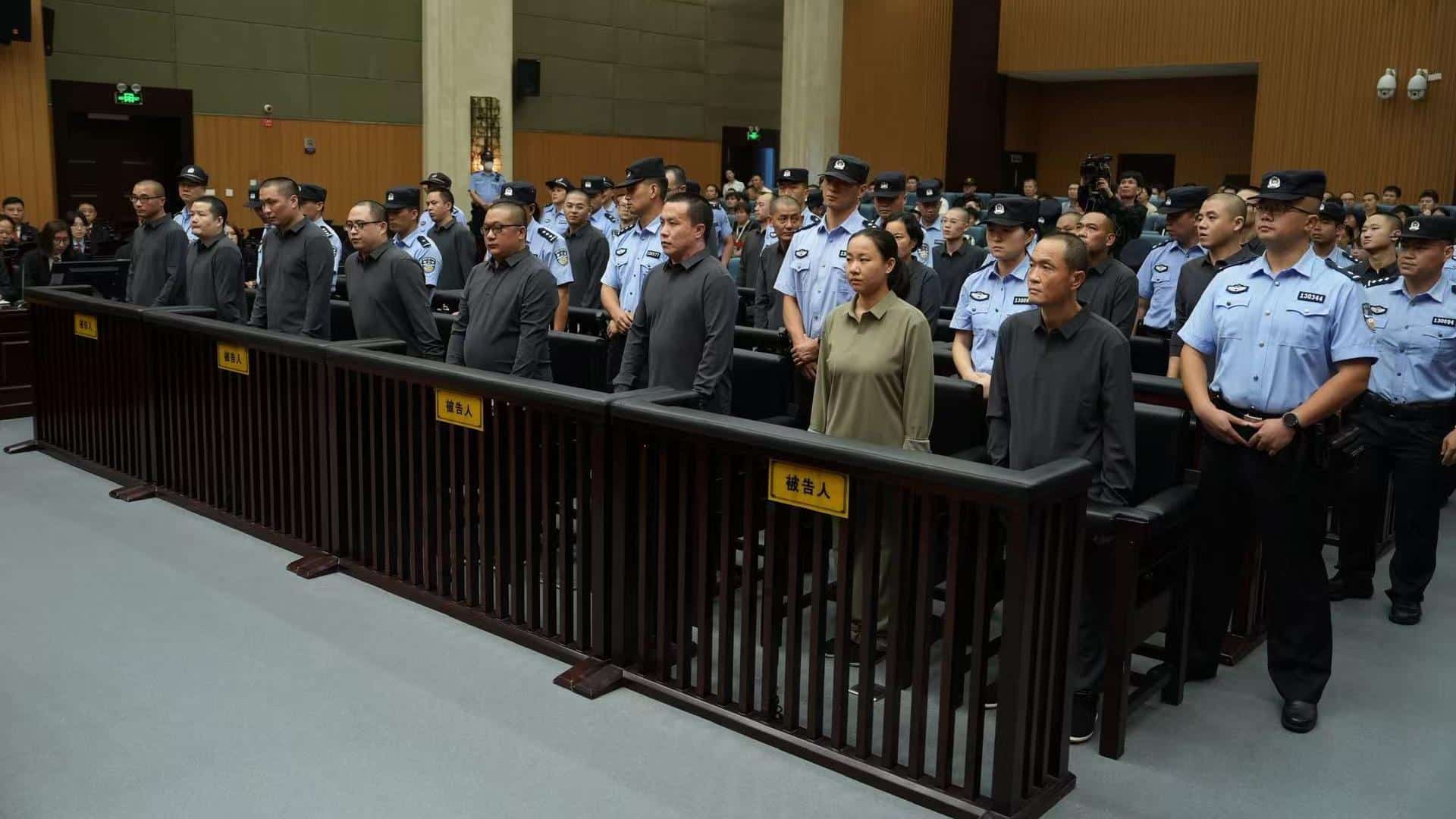
China has sentenced five senior leaders of Myanmar’s Bai family mafia—including patriarch Bai Suocheng and his son Bai Yingcang—to death.
Sources describe this as part of a broader Beijing-led crackdown on cross-border scam syndicates.
The network turned Laukkaing into a criminal hub and amassed roughly $4.1 billion in illicit revenue, according to figures reported by both outlets.
Beyond the five death sentences, courts imposed suspended death sentences, life terms, and other lengthy imprisonments.
While both sources frame the move as a major blow to crime operations targeting Chinese citizens, BBC specifies that 21 members and associates were convicted in total.
This highlights the breadth of the prosecution.
Coverage Differences
tone
Observer Voice (Western Mainstream) emphasizes a hardline message and geopolitical signal—stating the ruling reflects intensified efforts and that the government's message is 'clear' about severe punishment—whereas BBC (Western Mainstream) maintains a more neutral, descriptive tone focused on the case facts and total convictions.
missed information
BBC (Western Mainstream) provides numerical scope—'21 members and associates' convicted—that Observer Voice (Western Mainstream) does not quantify, while Observer Voice highlights broader political implications and messaging not emphasized by BBC.
Bai Network Criminal Activities
Both outlets describe the Bai network’s evolution from Laukkaing casinos and red-light districts in the 2000s to mass cyber-scam operations.
These operations trafficked and coerced workers—many of whom were Chinese—to defraud victims.
The scale of the network was vast, with 41 compounds in operation and illicit takings exceeding 29 billion yuan ($4.1 billion).
Observer Voice highlights the syndicate’s range of crimes, including human trafficking, cyber scams, casinos, and violent offenses.
The case is placed within a broader surge against drug-linked exploitation.
Coverage Differences
narrative
BBC (Western Mainstream) foregrounds the operational details—41 compounds, the shift from casinos to cyber scams, and coercion of trafficked workers—while Observer Voice (Western Mainstream) frames the network as a multi-crime enterprise tied to broader exploitation and drug trafficking.
missed information
Observer Voice (Western Mainstream) mentions drug trafficking and exploitation of vulnerable workers, which BBC does not explicitly highlight, while BBC gives exact infrastructure counts (41 compounds) absent from Observer Voice.
Sentencing in Cross-Border Crime Crackdown
Sentences extended beyond the five death penalties.
BBC notes the total number of convictions and details the range of punishments, including death and suspended death sentences, life terms, and shorter imprisonments.
Observer Voice similarly reports suspended death sentences, life imprisonment, and long prison terms.
Both sources agree the crackdown responds to widespread victimization of Chinese nationals through cross-border fraud and violence.
Observer Voice more strongly frames the crackdown as a deterrent action with a clear message from the state.
Coverage Differences
tone
Observer Voice (Western Mainstream) explicitly asserts state intent and deterrence—'the government's message is clear'—while BBC (Western Mainstream) offers procedural detail on the types and range of sentences without overt evaluative language.
missed information
BBC (Western Mainstream) provides the overall number of convicted individuals—21—while Observer Voice reports categories of sentences without stating the total count.
Regional Crime Enforcement Efforts
The case is also positioned within a wider regional enforcement drive.
Observer Voice links it to prior action against the Ming family mafia, extraditions, and arrest warrants.
It argues the case signals a shift in regional political dynamics and China’s willingness to pursue syndicate leaders abroad.
BBC situates the Bai case within Beijing’s broader crackdown on Southeast Asian scamming operations.
The BBC also documents operational specifics, including the 41 compounds and the forced scamming of trafficked Chinese workers.
Coverage Differences
unique/off-topic
Observer Voice (Western Mainstream) uniquely connects this verdict to a previous case against the Ming family mafia and highlights extraditions and arrest warrants as part of a strategic regional shift, content not mentioned by BBC (Western Mainstream).
missed information
BBC (Western Mainstream) catalogs the infrastructure and methods—'41 compounds,' casinos-to-cyber evolution, forced scam labor—while Observer Voice does not provide infrastructure counts and leans into narrative about geopolitical signaling.