Technology and Science05 March, 20262 min read
China Sets 4.5–5% Growth Target, Its Lowest Since 1991
This article is an automated aggregation of coverage from news outlets. Our editorials offer in-depth analysis curated by the NewsCord team.
China sets 2026 GDP growth target at 4.5%–5%, its lowest since 1991. Government cites domestic property slump, deflationary pressures and global trade uncertainty.

Growth target set
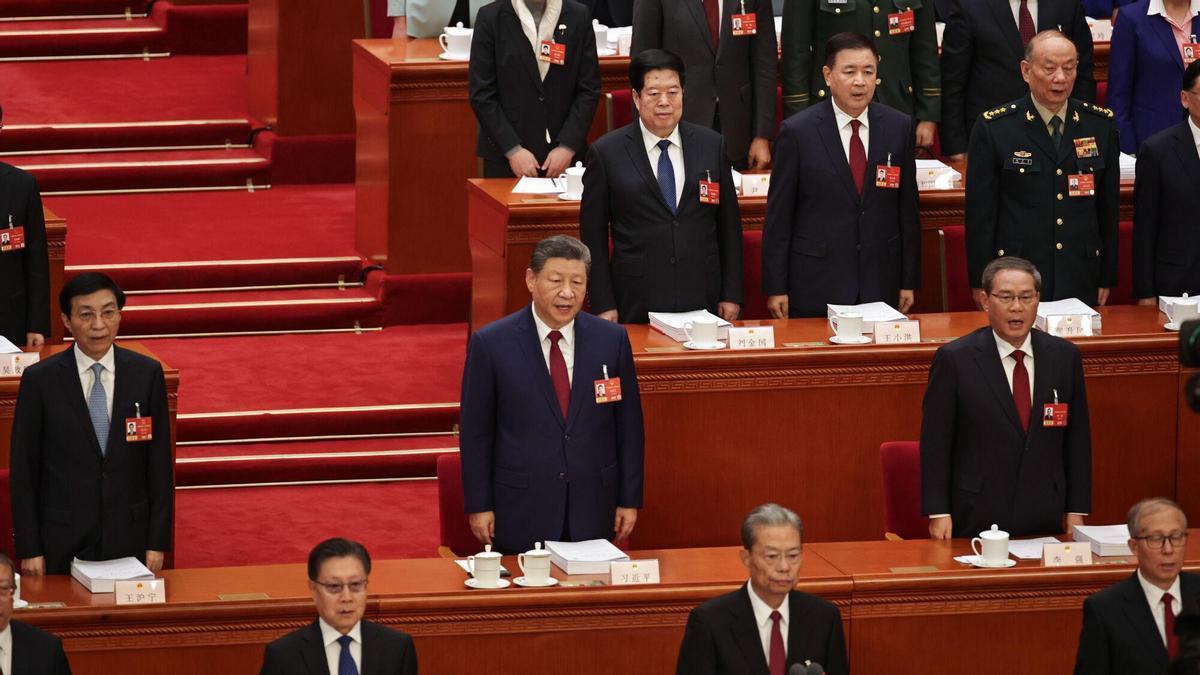
China’s leadership set an official GDP growth target of 4.5% to 5% for 2026, announcing the range at the opening of the National People’s Congress where Premier Li Qiang presented the government work report.
“Premier Li Qiang announced a target of 4.5% to 5% annual growth in his report presented to the opening session of this year’s meeting of the National People’s Congress.”
Officials and multiple outlets noted this is the lowest official growth target since 1991 and the first time the benchmark has been placed below 5% in more than three decades, signaling an acceptance of a slower near-term growth path.
Domestic and external headwinds
The government framed the lower target against a series of domestic and external headwinds: a prolonged property slump that weakened consumption and investment confidence, persistent deflationary pressures, trade tensions with the United States, and a weaker domestic demand backdrop.
Officials acknowledged these challenges in Li’s report and set related social and labor goals, including a higher urban unemployment threshold and job-creation targets for 2026.

Policy priorities and tools
Policy messaging emphasized a shift from prioritizing rapid numerical GDP expansion toward so-called “high-quality development,” with explicit aims to boost domestic consumption while accelerating self-reliance in advanced technologies such as artificial intelligence, robotics and semiconductors.
“The government is striving to balance two goals: reviving the flagging economy by boosting domestic spending, while also furthering leader Xi Jinping’s ambitions to build China into a global power in AI, robotics and other advanced technologies — and one that is not dependent on the U.S. or others for high-end semiconductors and other components.”
The government also signaled continued active fiscal support and an accomodative monetary stance, while trimming the planned increase in defense spending and using special bond issuance to finance infrastructure and bank capitalization.
Analysts and IMF views
International institutions and market analysts broadly saw the target as consistent with a tolerance for modestly slower growth while preserving structural goals.
The IMF’s projections quoted by outlets sit near the 4.5% mark for 2026, and analysts told reporters that the lower official target gives Beijing more flexibility to prioritize quality over headline growth while retaining policy room for interest-rate cuts or reductions to banks’ reserve requirement ratios if needed.
Political context
Politically the target and the accompanying five-year plan are set to be rubber-stamped at the National People’s Congress, a largely ceremonial but still important venue for signalling Beijing’s medium-term priorities through 2030.
“The nearly 3,000-member Congress, a largely ceremonial body that endorses policies set by Communist Party leaders, is due to approve the annual report and budget at its closing session next week, along with a five-year plan setting policy priorities until 2030.”
Outlets noted the five-year draft explicitly frames economic and technological self-reliance as central aims, while the lower growth number underscores the leadership’s willingness to tolerate slower headline expansion in favor of structural and strategic objectives.