
China's biggest political meeting is ending - what have we learned?
Key Takeaways
- National People's Congress is due to end on Thursday.
- NPC has authority to make laws, amend the constitution, and approve state budgets.
- NPC functions as a rubber-stamp parliament, approving decisions from the Chinese Communist Party leadership.
NPC overview
China's biggest political gathering, the National People's Congress (NPC), is due to end on Thursday.
“- Published China's biggest political gathering - the National People's Congress or NPC - is due to end on Thursday”
The NPC's extensive authority includes making laws, amending the constitution and approving state budgets, but it effectively functions as a rubber-stamp parliament, approving decisions made behind closed doors by the top echelons of the Chinese Communist Party.
The meetings of the NPC and the Chinese People's Political Consultative Conference (CPPCC) — also known as the "two sessions" — are watched closely as they signal the priorities of the world's second-largest economy.
Xi's stability push
Laura Bicker writes that China's push to be the world's leading superpower depends largely on one key thing — President Xi Jinping's ability to manage his economy.
She says Xi appears to be seeking more certainty as he tries to balance the books in a very uncertain world dominated by an unpredictable US president and a war in the Middle East.
Bicker says Xi's policies aim to encourage Chinese people to spend more to stabilise a stuttering domestic economy, and his push for technological supremacy and increased renewable energy production are bids to win the future and make China more self-reliant.
She highlights the choreographed, heavily controlled statecraft in the Great Hall of the People and contrasts it with a "fiery White House," and notes Xi may see an opening to rise while Washington is distracted, even as much depends on how China navigates its own economic challenges.
Tech and growth strategy
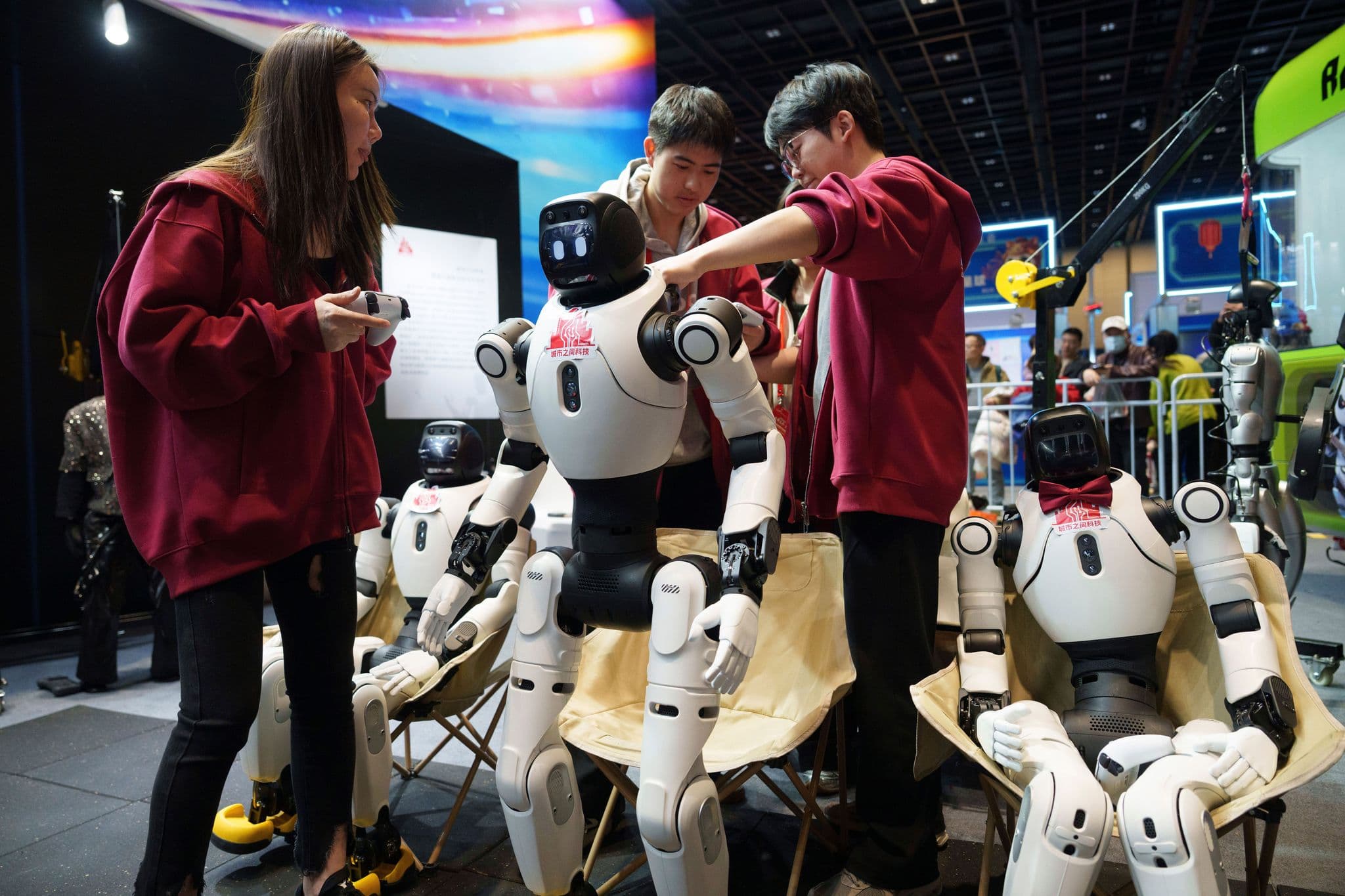
Suranjana Tewari reports that Beijing is betting big on technology and innovation to drive the next phase of economic growth, embedding AI across the economy under an "AI+" plan and accelerating scientific breakthroughs through the 15th Five-Year Plan.
“- Published China's biggest political gathering - the National People's Congress or NPC - is due to end on Thursday”
Research and development spending on technology is set to rise by about 7%, and officials are investing heavily in semiconductors, robotics, biotechnology, quantum computing and emerging fields such as 6G communications and brain-computer interfaces.
Leaders have set a GDP growth target of 4.5 to 5% — the lowest since 1991 — signalling expectations of slower expansion.
Analysts warn the plan could struggle unless household spending picks up, noting low consumer demand, a property downturn and risks from state-backed investment, overcapacity in electric vehicles, price wars and trade tensions.
Consumption plans vague
Stephen McDonell says leaders pledged to "vigorously stimulate consumer demand," but many analysts question whether the announced measures will make a real difference because details are scant.
NPC spokesman Lou Qinjian said there were plans to boost incomes but gave no specifics, and one announced measure was increased government spending on childcare.
Minimum retirement benefits for rural and non-working urban residents were raised by the equivalent of $3 (£2.24) per month, a change ridiculed on Chinese social media as virtually nothing.
Other measures — housing support for first-time married couples, refined parental leave and trade-in programmes for household equipment — lacked details, and officials could argue the NPC sets the tone and specifics will follow, but without detail it is hard to know if these plans will significantly improve consumption.
More on China

Apple Cuts China App Store Commissions to 25% After Regulator Pressure
25 sources compared

Trump Opens Broad Trade Investigation Targeting China, Mexico and EU; Beijing Calls It Political Manipulation
11 sources compared
President Xi Jinping Rubber-Stamps $30 Trillion Five-Year Plan To Weaponize PLA And Boost Growth
12 sources compared
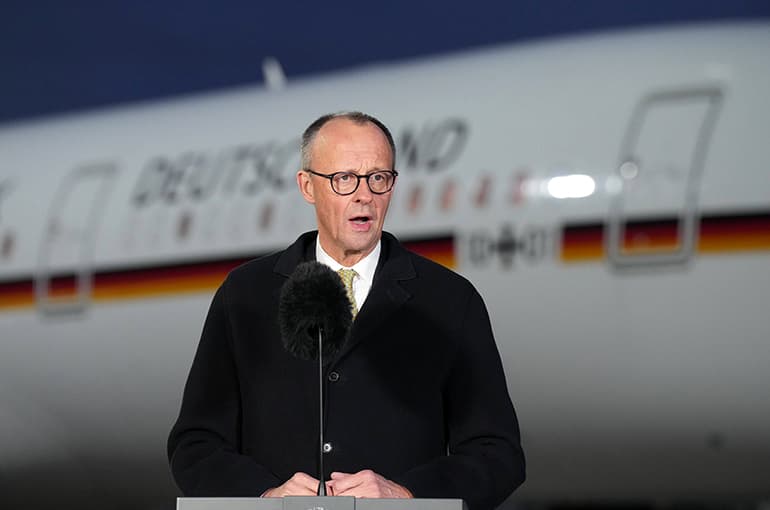
German Chancellor Friedrich Merz Presses President Xi Jinping to Reduce Market Distortions, Urges Chinese Investment
13 sources compared