Full Analysis Summary
China Japan Taiwan tensions
China's defense ministry publicly warned Japan it would face a "crushing defeat" if Tokyo used force over Taiwan.
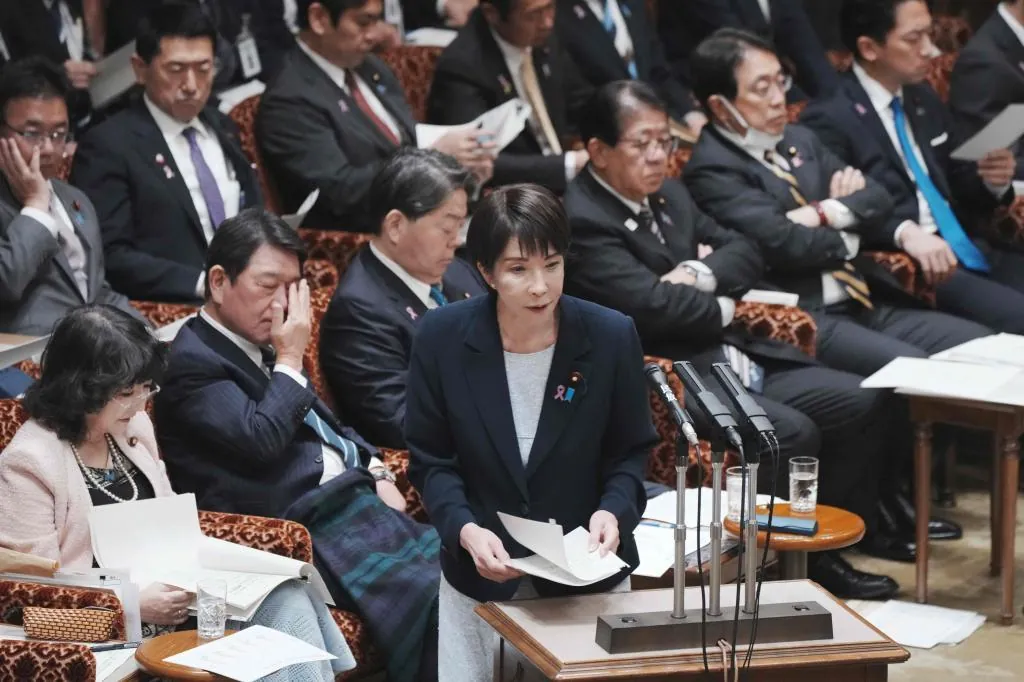
The warning followed remarks by new Japanese prime minister Sanae Takaichi to parliament that a Chinese attack on Taipei could create a "survival-threatening situation" for Japan and might prompt a military response.
The diplomatic row escalated when China's top diplomat in Osaka shared a news item about Takaichi's remarks on X with a violent comment, prompting a protest from Japan's embassy to Chinese Vice Foreign Minister Sun Weidong.
Chinese Defense Ministry spokesman Jiang Bin called Takaichi's comments "extremely irresponsible and dangerous" and warned of heavy consequences if Japan "dared to take a risk."
Coverage Differences
Tone and emphasis
BusinessWorld (Other) emphasizes the Chinese government’s direct threats and the sharp rhetoric from state media and officials — quoting the phrases “crushing defeat” and “extremely irresponsible and dangerous” — while El Mundo (Western Mainstream) frames the episode primarily as Takaichi’s remarks reigniting tensions and notes Beijing’s displeasure without reproducing the more bellicose Chinese quotations. The two sources therefore differ in which actors’ language they foreground (Chinese official threats vs. Japanese leader’s role in sparking tensions).
Media reactions to Takaichi
Chinese state media and party outlets in Beijing amplified the confrontation.
BusinessWorld reports that the Communist Party paper People's Daily ran harsh commentaries accusing Japan's right wing of reviving militarism and attempting to whitewash wartime aggression, signaling a broader political framing beyond the immediate diplomatic protest.
El Mundo likewise notes that Takaichi's comments touched a politically sensitive nerve for Xi Jinping's government and drew strong displeasure from China.
El Mundo centers its coverage on how her stance is perceived domestically and abroad rather than reproducing Beijing's denunciatory language.
Coverage Differences
Narrative focus
BusinessWorld (Other) highlights Beijing’s domestic messaging through state media and the Party paper, quoting accusations of reviving militarism and whitewashing wartime aggression; El Mundo (Western Mainstream) focuses on Takaichi’s political positioning and how her remarks sparked Beijing’s displeasure, without the same emphasis on the state-media campaign. This shows BusinessWorld foregrounding Chinese official narrative and media reaction while El Mundo frames it as fallout from a Japanese political figure’s comments.
Takaichi and China tensions
Observers described Takaichi as a long-standing critic of Beijing whose early tenure has already strained ties.
El Mundo calls her an "anti-China hawk" and notes she left open the possibility of intervention by Japan's Self-Defense Forces, a step even the United States has not formally committed to, underscoring how her comments expand the range of plausible Japanese responses in ways that may alarm Beijing.
BusinessWorld similarly quotes her warning that a Chinese attack could be "survival-threatening" for Japan, but it places greater weight on Beijing's retaliatory language and the historical grievances Beijing invoked in its rebuttal.
Coverage Differences
Emphasis on policy implication
El Mundo (Western Mainstream) stresses the policy novelty and international implications of Takaichi leaving open SDF intervention and notes that even the United States has not formally committed to such a step; BusinessWorld (Other) emphasizes Beijing’s portrayal of the comments as irresponsible and ties them to historical tensions. Thus El Mundo frames this as a change in Japanese posture with international ramifications, while BusinessWorld foregrounds Chinese threat and historical accusation.
China-Taiwan diplomatic tensions
The episode reflects long-standing, unresolved tensions.
Both sources link the immediate dispute to historical grievances.
They also highlight Beijing's persistent claim that Taiwan is part of China and note that Beijing has not ruled out seizing it by force.
BusinessWorld explicitly ties the flare-up to World War II history and Beijing's portrayal of Japan's right wing.
El Mundo frames the incident as an early test of Takaichi's premiership that has alarmed China and could complicate security calculations involving the United States.
Available reporting is limited to these two outlets and thus offers complementary but not fully comprehensive perspectives, so further reporting from additional regional, Chinese state, and U.S. sources would be needed to map the full diplomatic and military implications.
Coverage Differences
Scope and source limitation
BusinessWorld (Other) focuses on the interplay of historical grievance, state‑media denunciation, and direct Chinese threats over Taiwan, while El Mundo (Western Mainstream) situates the incident in the context of a new Japanese premier whose statements have geopolitical ripple effects. Both perspectives are consistent on core facts but differ in emphasis; importantly, only these two sources are available for this summary, meaning important viewpoints (e.g., U.S. official reaction, broader Chinese-language coverage) are not present in the materials provided.