
China’s PLA Monitors JMSDF Ikazuchi Through Taiwan Strait After Shimonoseki Anniversary
Key Takeaways
- JS Ikazuchi transited the Taiwan Strait under Chinese surveillance.
- China surveilled and warned after the transit, signaling future monitoring of foreign warships.
- Beijing-Tokyo tensions escalated over the Taiwan Strait transit.
Transit on Shimonoseki Day
On April 17, 2026, the Japanese Maritime Self-Defense Force (JMSDF) escort ship Ikazuchi made its way through the Taiwan Strait, and Chinese military surveillance and warnings followed, as sovereignty disputes and historical grievances resurfaced in East Asian waters.
“(DEFENCE SECURITY ASIA) — The release of drone-captured footage showing Chinese forces shadowing Japanese destroyer JS Ikazuchi transformed a routine naval transit into one of the most politically charged Taiwan Strait incidents this year”
Evrim Ağacı reports that the PLA was “ready and waiting,” dispatching both naval and air forces to monitor the passage from “4:02 AM to 5:50 PM,” and that the PLA filmed the entire transit with a drone and released the footage the following day on April 18.
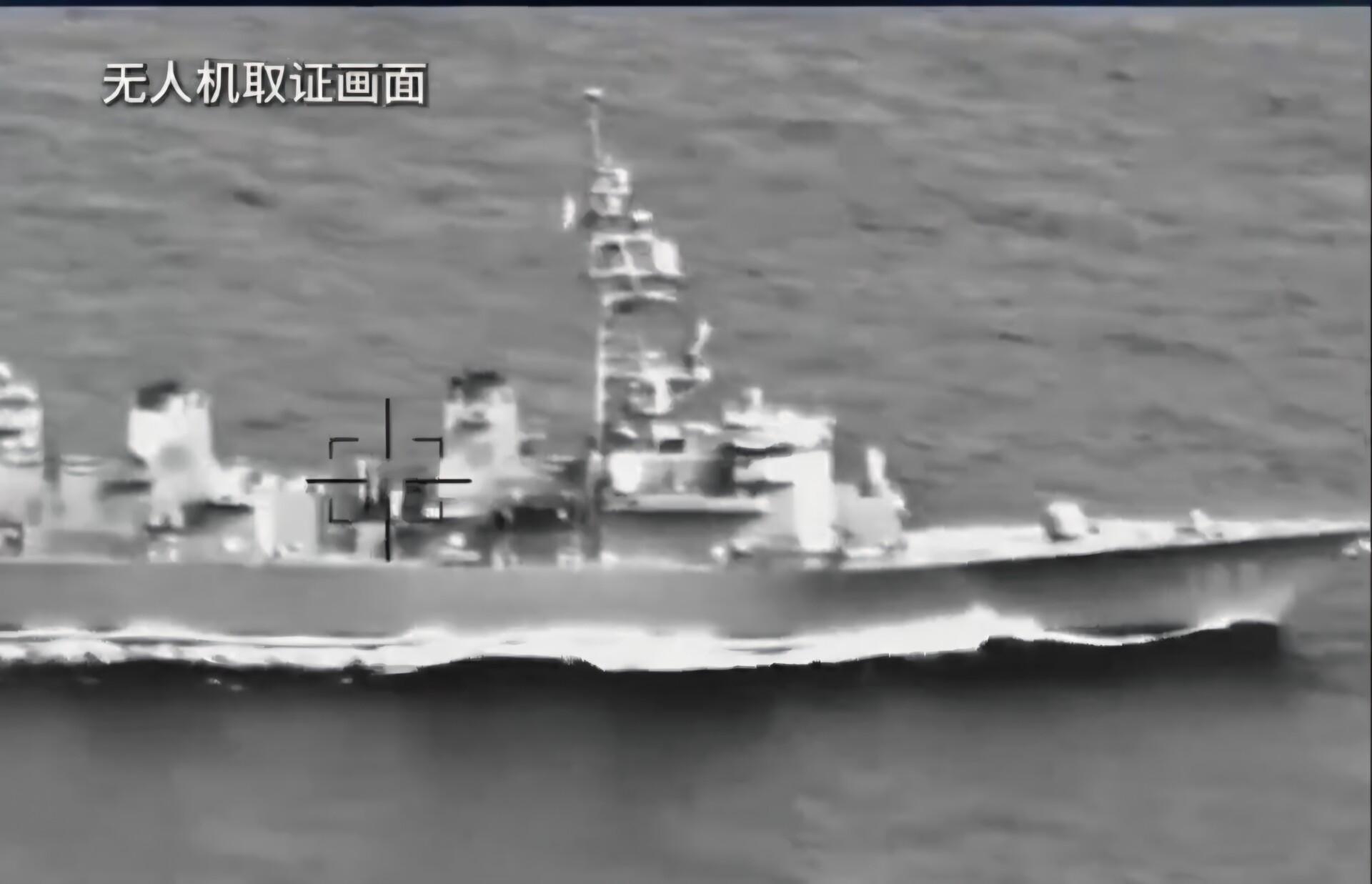
Defence Security Asia describes the release of drone-captured footage as transforming “a routine naval transit into one of the most politically charged Taiwan Strait incidents this year.”
It also ties the timing to history, saying the destroyer crossed “exactly 131 years after the Treaty of Shimonoseki forced China to surrender Taiwan to Japan.”
The same Defence Security Asia account states that the PLA Eastern Theater Command signalled that future foreign warship movements near Taiwan will increasingly be framed as tests of Chinese sovereignty and military dominance.
In the Sankei News report, the Eastern Theater Command “is intensifying its activities around Japan,” describing naval vessels forming a squadron that passed through “a sea area north of Amami Oshima in Kagoshima Prefecture” on the 19th while conducting training in the Western Pacific.
Across the accounts, the common thread is that the transit was treated not as routine seamanship but as a politically loaded episode, with Chinese forces emphasizing monitoring and control while Japan framed the movement as navigation.
Why the date mattered
The accounts connect the April 17 transit to the Treaty of Shimonoseki, signed in 1895 after Japan’s victory in the First Sino-Japanese War, which resulted in Taiwan becoming a Japanese colony for fifty years.
Evrim Ağacı says Chinese state media, including China News and Xinhua, seized on the historical resonance and interpreted the move as a deliberate provocation and a symbolic gesture “that, in their view, could not be chalked up to coincidence.”
%3Aquality(85)%2Ftpg%2Fsources%2F88345423-4c85-42a3-ac9f-e23b14ceed4a.jpeg&w=3840&q=75)
Defence Security Asia similarly emphasizes that the timing intensified the strategic impact because the destroyer crossed “exactly 131 years after the Treaty of Shimonoseki forced China to surrender Taiwan to Japan.”
In the Sankei News report, China’s military activity around Japan is described as intensifying, with Western Pacific training and East China Sea patrols “perhaps to counter JMSDF ships transiting the Taiwan Strait.”
It adds that the Eastern Theater Command, which oversees Taiwan-related matters in the People’s Liberation Army, announced on the 19th that its naval forces passed through “the sea area between the Tokara Islands and Amami Oshima in Kagoshima Prefecture” and conducted training in the Western Pacific to verify long-range expeditionary capabilities.
Evrim Ağacı also frames the transit as occurring in a context of Japan’s security posture, noting that the Japanese vessel was en route to the Philippines to take part in the annual Balikatan joint military exercise hosted by the United States and the Philippines, set to begin on April 20.
Taken together, the sources portray a chain in which historical anniversaries, Japan’s planned exercise schedule, and Chinese surveillance and patrol activity all converge around the Taiwan Strait and adjacent waters.
Statements from Beijing and Tokyo
Chinese officials and state media framed the Ikazuchi transit as sending a “wrong signal” and as a “dangerous plot” aimed at undermining stability, while Japanese officials asserted freedom of navigation.
“The system is currently undergoing maintenance”
Evrim Ağacı quotes Xu Chenghua, spokesperson for the Eastern Theater Command, saying on April 17 that Ikazuchi’s transit sent “the wrong signal to Taiwan independence forces.”
It also quotes Guo Jiaqun, a spokesperson for the Chinese Foreign Ministry, accusing Japan of “once again demonstrating a dangerous plot to intervene militarily in the Taiwan Strait and undermine peace and stability.”
Defence Security Asia adds that Foreign Ministry spokesperson Guo Jiakun described the transit as a deliberate provocation and warned that Japan had compounded earlier mistakes through Prime Minister Takaichi’s previous remarks regarding Taiwan, while Senior Colonel Xu Chenghua stated that the PLA deployed naval and air assets throughout the passage, maintained effective control, and remained on heightened alert.
On the Japanese side, Evrim Ağacı says Japan’s official stance, as reported by Global Times, is rooted in the principle of freedom of navigation, and that Japanese officials maintained their ships have the right to pass through the Taiwan Strait, which they consider international waters.
Evrim Ağacı also notes that the PLA Eastern Theater Command emphasized that the surveillance was “part of what it called an annual, regular joint patrol in the East China Sea,” and that the Eastern Theater Command spokesperson explained in a statement posted on Chinese social media that it is “not aimed at any particular country or target.”
Defence Security Asia describes the PLA’s posture as “effective surveillance and control” and says Chinese authorities amplified their warnings by publishing drone footage through the official China Military Bugle account.
Drone footage and surveillance framing
The sources describe a deliberate Chinese choice to publicize drone footage and to characterize the monitoring as comprehensive control rather than routine observation.
Evrim Ağacı says the PLA filmed the entire transit with a drone and “publicly releasing the footage the following day on April 18,” and it describes a “27-second video” that showed Ikazuchi’s journey in detail, including the ship’s number “107” and what Chinese claimed were visible anti-ship missiles.
It adds that the Chinese Eastern Theater Command emphasized the surveillance was comprehensive and part of an annual regular joint patrol in the East China Sea, while CCTV and China Military Bugle highlighted the video.
Defence Security Asia states that the PLA deployed naval and air assets throughout the passage, maintained “effective control,” and that Chinese authorities amplified warnings by publishing drone footage through the official China Military Bugle account.
It also says the released footage appeared designed less to intimidate the destroyer itself than to demonstrate that Chinese forces can observe, identify, and track foreign naval movements continuously.
Defence Security Asia further reports that the Eastern Theater Command maintained surveillance from approximately “4:02 a.m.” until “5:50 p.m. local time,” covering the destroyer’s entire “fourteen-hour passage through the strait.”
In the Evrim Ağacı account, CCTV released a “24-second clip” of the drone footage on its social media platform, and CCTV commented, “The very act of releasing the minute-by-minute details is itself a message,” underscoring that China could track every move “right down to the minute.”
Escalation risk and next moves
The sources portray the episode as escalating political confrontation while also emphasizing that the monitoring did not involve direct confrontation or missile targeting, and they connect the incident to broader regional military positioning.
“Chinese military surveillance and strong warnings follow Japanese destroyer’s Taiwan Strait transit, as sovereignty disputes and historical grievances resurface in East Asian waters”
Defence Security Asia says “No evidence has emerged showing missile targeting or hostile weapons locks against the Japanese destroyer,” even as it describes aggressive social media claims circulating immediately after the transit.
It argues that the absence of direct confrontation nevertheless concealed a deeper strategic message because Beijing demonstrated it can combine surveillance drones, naval vessels, and aircraft into a coordinated deterrence architecture around Taiwan.
Defence Security Asia also states that for Tokyo, the transit underscored that future Japanese operations near Taiwan will increasingly involve “persistent Chinese military shadowing designed to impose political and operational costs.”
Evrim Ağacı adds that the PLA Eastern Theater Command characterized the operation as a demonstration of “constant high alert and readiness,” a message aimed at both Japan and the international community.
It also includes a pointed warning from the PLA’s official social media account: “If Japan stubbornly persists and does not correct its mistakes, it will only end up burning itself with the fire it ignited.”
Sankei News frames the broader pattern as China intensifying activity around Japan, with Western Pacific training and East China Sea patrols and with the Eastern Theater Command verifying long-range expeditionary capabilities through training between the Tokara Islands and Amami Oshima.
More on China

Baroness Jacqui Smith Moves To Make Phone Bans Statutory In England Schools
10 sources compared

Honor Robot Wins Beijing Half-Marathon, Beating Jacob Kiplimo’s World Record
15 sources compared

Canada Cuts Tariffs on Chinese Electric Vehicles, Capping Imports at 49,000 Per Year
15 sources compared
Iran Threatens to Disrupt Red Sea and Gulf Shipping Over US Hormuz Blockade
11 sources compared