Business01 April, 20263 min read
Chinese New Year 2026 Disrupts China Supply Chains for Up to Six To Eight Weeks
This article is an automated aggregation of coverage from news outlets. Our editorials offer in-depth analysis curated by the NewsCord team.
Hormuz crisis disrupts China's trade routes, triggering logistics shifts and alternative sourcing. European firms in China rethink supply chains due to Iran war-driven cost pressures.
Chinese New Year logistics
The Trans.INFO report says the Chinese New Year is “un tournant logistique majeur” that interrupts industrial activity for “plusieurs semaines” across China and much of the Asia-Pacific region. It quotes Dachser warning that “Les fournisseurs en Chine réduisent généralement leurs activités 1 à 2 semaines avant le début officiel des congés,” while Röhlig Suus describes a “reprise progressive” that can extend for weeks after the holidays end. AC Porath adds that although official holidays run “du 17 février au 3 mars 2026,” the supply-chain shutdown can last “jusqu’à six à huit semaines.”
“Les fournisseurs en Chine réduisent généralement leurs activités 1 à 2 semaines avant le début officiel des congés.”
The same article warns that transport capacity will be limited as export activity drops, with Dachser saying freight planners “mobilisent moins de capacité pour les transports vers et depuis la Chine, ce qui affecte les plannings.” It also states that the last containers should leave Chinese terminals around “le 10 février,” and that firms still relying on freight after that date should expect arrivals “dans la seconde moitié de mars ou au début d’avril.”
EU firms adjust supply chains
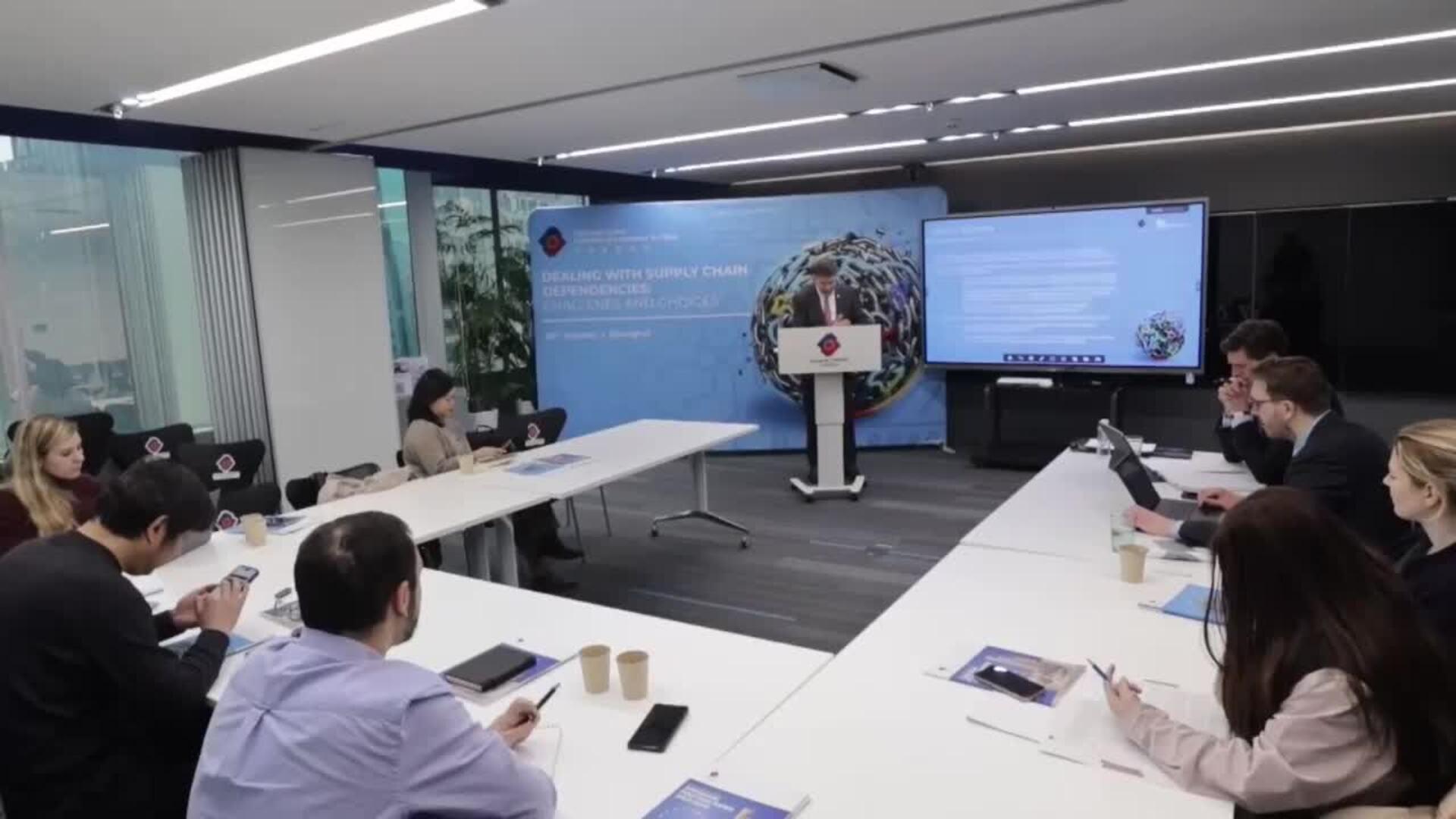
The South China Morning Post reports that a flash survey found more than a quarter of European firms in China adjusted their supply chain strategies after the Middle East conflict, as “higher energy and logistics costs weigh on operations.” It says six in 10 chemicals and petroleum firms made changes, with “35 per cent of these further onshoring production to China,” while the machinery sector saw 14 per cent of those adjusting supply chains looking to increase local production capacity. The survey results also show that “81 per cent of European firms in China were struggling to source Middle Eastern inputs,” with two-thirds reporting “longer delivery times and high transport costs.”
It adds that nearly a quarter of respondents warned that production stoppages were possible within “three to six months” if the conflict persisted. The same report says the automotive sector was hit hardest, with “62 per cent” of surveyed European companies operating in China reporting a decline in demand.
Cybersecurity and supply-chain pressure
Euractiv FR reports that China’s foreign ministry spokesperson Guo Jiakun said Beijing has “strong concern” about the Commission’s proposal under CSA2 to gradually eliminate equipment deemed high-risk from European supply chains. Guo Jiakun warned that “Beijing would take, if necessary, measures to defend the interests of its companies,” while Euractiv FR says the Commission’s technology spokesperson Thomas Regnier told the outlet the text does not target any particular country. The article quotes Commissioner Henna Virkkunen warning, “We can no longer be naïve about the capacity of malicious actors to disable the ICT systems that run our critical infrastructures,” and says the CSA2 proposal does not provide specific financial support for replacement equipment.
Euractiv FR also reports that the EU Chamber of Commerce in China argued the “forced exclusion of established suppliers could raise costs, limit supplier diversity, delay the upgrading of networks” and impose additional costs on industry. Separately, Euractiv.es says inverter manufacturers are forming an alliance because China dominates the solar panel supply chain, with “78% of devices shipped to the EU from abroad in 2023,” and it quotes SolarPower Europe saying remote access to “as little as 5 GW of solar panels” via internet-connected inverters could affect the grid.