Full Analysis Summary
Pakistan's Climate Crisis Impact
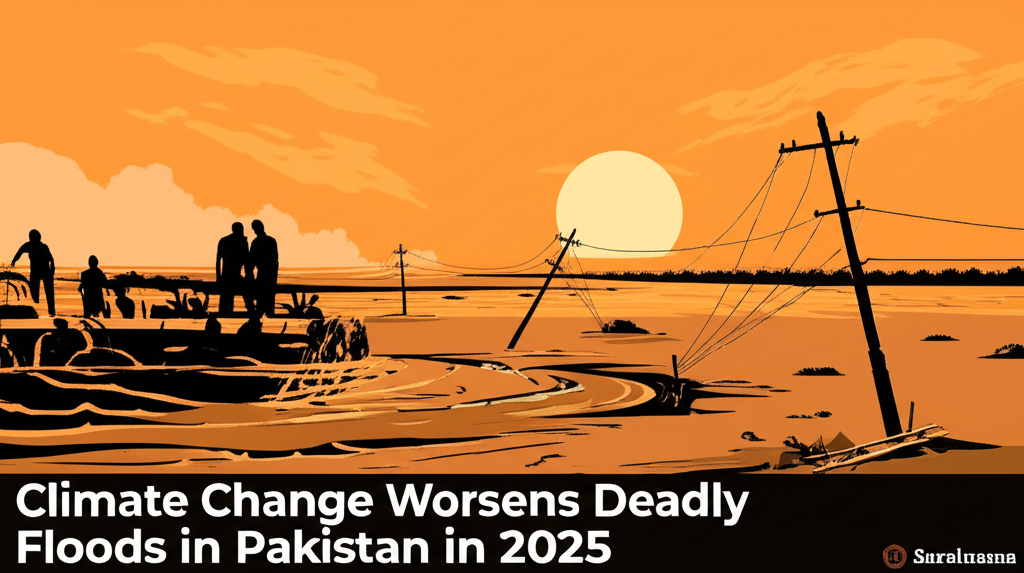
Pakistan’s latest monsoon catastrophe is described as a climate change–driven disaster that killed over 1,000 people and affected at least 6.9 million.
Punjab is among the worst-hit areas in this crisis.
One account centers the crisis in August 2025, linking deadly floods to heavy monsoon rains, flash floods, and glacial lake bursts.
Another report describes a comparable toll during the 2023 monsoon, emphasizing that Pakistan contributes only about 1% to global greenhouse gases yet faces severe climate impacts.
Both accounts portray a recurring, climate-fueled emergency but differ on timing and national framing.
Together, they depict a country where climate extremes, from swollen rivers to melting glaciers, have turned the summer monsoon into a lethal threat to lives and livelihoods.
The poorest communities are especially vulnerable to these climate-related disasters.
Coverage Differences
Contradiction
Saralnama (Other) dates the disaster to August 2025, while BBC (Western Mainstream) reports the death toll and affected figures in the context of the 2023 monsoon season beginning in late June. Both cite over 1,000 deaths and at least 6.9 million affected, but their timelines diverge, creating a chronological contradiction in coverage.
Narrative
BBC (Western Mainstream) frames the crisis within Pakistan’s minimal emissions and outsized climate vulnerability, while Saralnama (Other) emphasizes immediate flood drivers and provincial impacts in Punjab.
Tone
Saralnama (Other) highlights on-the-ground devastation in Punjab and practical disruptions, whereas BBC (Western Mainstream) adopts an investigative national lens linking the event to systemic climate drivers and international context (UN figures).
Flood Impact and Causes in Punjab
Punjab’s inundation is severe, with thousands of villages submerged and homes, roads, and farmland destroyed.
The poorest communities have endured the brunt of the disaster, facing displacement, contaminated water, and lack of healthcare.
Accounts differ on what worsened the catastrophe; one points to illegal construction near rivers that intensified flooding and hindered rescue efforts amid bad weather and damaged infrastructure.
Another account emphasizes logistical and communication challenges, as early warning systems struggled to operate effectively in remote areas.
Both perspectives agree that the humanitarian consequences are severe and uneven, with vulnerable families suffering the greatest losses.
Coverage Differences
Missed information
BBC (Western Mainstream) does not single out Punjab’s specific toll in the excerpt, focusing instead on nationwide patterns and northern regions, while Saralnama (Other) gives detail on Punjab (e.g., 4,500 villages submerged).
Proximate causes emphasis
Saralnama (Other) emphasizes illegal riverbank construction and weather-damaged infrastructure as amplifiers of flooding and rescue delays; BBC (Western Mainstream) emphasizes early warning and access problems in remote terrain as key challenges.
Tone
Saralnama (Other) uses a ground-level humanitarian lens—displacement, dirty water, inadequate healthcare—while BBC (Western Mainstream) uses a systems lens on disaster response capacity and infrastructure blockages.
Climate-Driven Flood Impacts
Beyond Punjab, reports indicate that climate factors are intensifying extreme floods.
Rising temperatures in Gilgit-Baltistan are causing glaciers to melt and form unstable lakes.
These lakes can burst suddenly, triggering flash floods and landslides.
In Khyber Pakhtunkhwa, sudden cloudbursts have destroyed homes and blocked roads with debris.
These events are similar to flash floods and glacial lake bursts causing damage further south.
Access difficulties such as blocked roads, delayed heavy machinery, and poor mobile coverage worsened the emergency.
As a result, villagers had to clear rubble by hand while floodwaters continued to rise.
Coverage Differences
Geographic focus
BBC (Western Mainstream) details northern-region hazards (Gilgit-Baltistan GLOFs and Khyber Pakhtunkhwa cloudbursts), whereas Saralnama (Other) foregrounds Punjab’s devastation while acknowledging flash floods and glacial lake bursts more generally.
Narrative
BBC (Western Mainstream) emphasizes a multi-province, months-long field investigation, while Saralnama (Other) concentrates on a concentrated provincial disaster window and its immediate impacts.
Community Response to Floods
Community action and adaptation feature prominently in flood response efforts.
Local volunteers warned villagers and saved lives in Punjab, mirroring stories of shepherd Wasit Khan and others who acted as informal early warning systems where state capacity was limited.
Rescue operations were hampered by weather and damaged infrastructure.
Officials warn that these monsoon floods will intensify annually as the climate crisis worsens.
One account highlights architect Yasmeen Lari’s flood-resistant homes made from natural materials as a grassroots adaptation effort.
This approach is less visible in national investigations that focus on systemic vulnerabilities and international inequalities.
Coverage Differences
Tone
BBC (Western Mainstream) underscores community heroism within a narrative of systemic capacity gaps (e.g., Wasit Khan as lifesaver amid poor coverage), while Saralnama (Other) frames local action alongside barriers like bad weather and damaged infrastructure.
Future risk framing
Saralnama (Other) explicitly reports officials warning that monsoon floods will intensify annually due to climate change, while BBC (Western Mainstream) emphasizes recurring, climate-induced disasters and national vulnerability without that specific annual-warning phrasing.