Full Analysis Summary
Chile-China lithium deal
China last month approved a planned partnership between Chile’s state-owned copper giant Codelco and private miner SQM.
The two firms announced a new public–private company, Nova Andino Litio SpA, to carry out lithium exploration, extraction, production and commercialization in the Atacama salt flat.
The arrangement follows China’s approval and involves SQM, in which Chinese firm Tianqi holds a 22% stake.
Codelco described the pact as a major development for Chilean business.
The lithium from the concession is intended for batteries, notably in electric vehicles.
The concession runs until 2060, indicating a long-term commitment to lithium development in the region.
Coverage Differences
Missing comparative perspectives
Only South China Morning Post (Asian) reporting is available in the provided material, so no other sources are present to compare narrative, tone, or emphasis. That means we cannot identify direct contradictions or alternate framings from Western Mainstream, Western Alternative, or regional outlets, nor can we contrast government, environmental, or indigenous perspectives. Any such comparisons would require additional sources.
Chile-China mining deal
The deal pairs Codelco, Chile's state-owned copper giant, with SQM, a private lithium miner in which Chinese firm Tianqi holds a 22% stake, highlighting the role of Chinese capital and approvals in enabling large-scale mining projects.
The South China Morning Post notes China's recent approval of the partnership and the formal creation of Nova Andino Litio SpA as a public-private vehicle, signalling Beijing's involvement both through corporate stakes and regulatory consent.
Codelco's description of the transaction as 'one of the most significant in the history of Chilean business' underscores how Chile's resource sector views the move as strategically important.
Coverage Differences
Missing viewpoints and stakeholder reactions
Because only South China Morning Post is available, there is no coverage from other source types to show different tones — for example, Western Mainstream outlets might emphasize geopolitical implications, Western Alternative outlets might focus on corporate accountability, and West Asian or regional outlets might frame the deal differently. We cannot attribute these perspectives to any source without additional reporting.
Atacama lithium venture
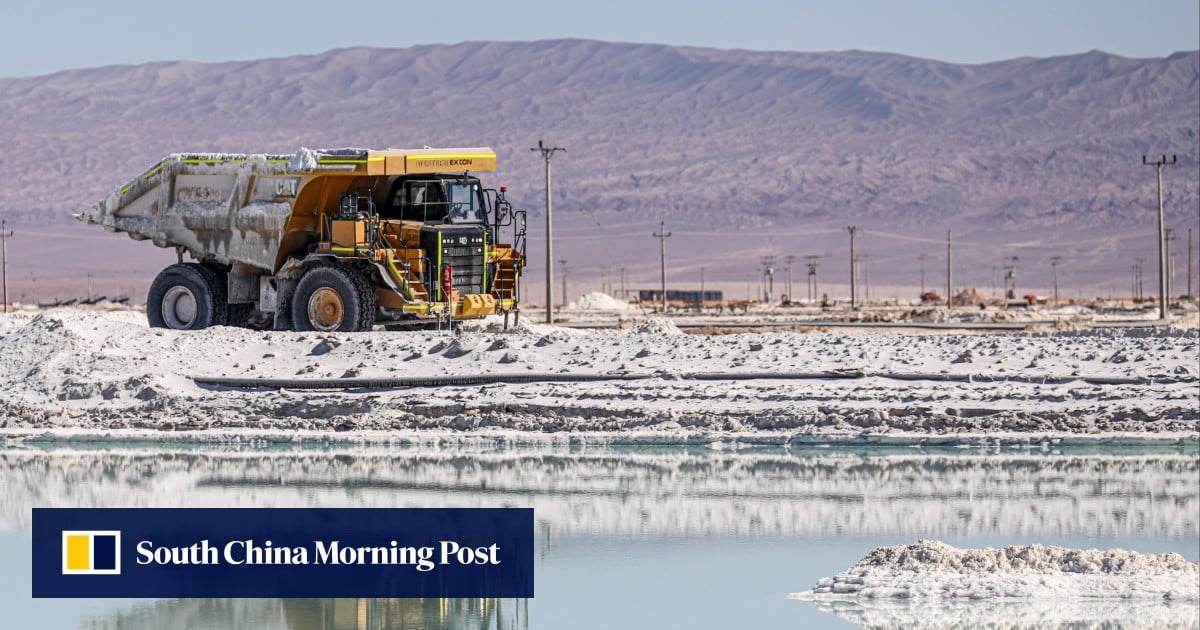
Operationally, the newly formed Nova Andino Litio SpA will be tasked with exploration, extraction, production, and commercialization of lithium from the Atacama salt flat, one of the world’s richest lithium basins.
A concession extending until 2060 indicates a multi-decade plan to supply lithium for batteries and electric vehicles, aligning Chile’s mineral output with growing global demand for EV supply chains.
The partnership — a public–private company backed by state-owned Codelco and private SQM with Chinese investment links — suggests a model to combine national resource control with private-sector and foreign capital.
Coverage Differences
Missing technical and environmental detail
The South China Morning Post summary reports the creation and mandate of Nova Andino but does not provide technical plans, environmental impact assessments, revenue-sharing details, or local community responses. Without additional sources, we cannot tell how environmental oversight, water use, indigenous consultation, or profit allocation are being handled.
Key reporting omissions
What is not present in the available reporting is as important as what is reported.
The snippet does not include SQM's own statement.
It lacks reactions from Chilean authorities beyond Codelco's comment.
It omits details of Chinese government involvement beyond approval.
Environmental assessments for the Atacama salt flat are not included.
There is no information on how the concession intersects with local communities and indigenous rights.
Given the singular source, these omissions mean significant uncertainties remain about governance and oversight.
They also raise questions about the broader geopolitical implications of Chinese capital entering a long-term Chilean lithium concession.
Coverage Differences
Omission / Ambiguity
South China Morning Post reports the approval, formation of Nova Andino, and the concession terms but omits several categories of information other sources might provide — such as SQM’s direct comments, environmental impact studies, indigenous or local responses, and specific financial terms — making it impossible to produce a fully rounded account without more reporting.