
Conditions or a maneuver? Behind-the-scenes of the mediation between Washington and Tehran and Tel Aviv's stance.
Key Takeaways
- Trump claims nearing a deal to end the 24-day war involving Iran.
- Tehran denies direct negotiations with the United States.
- Regional and international powers race to bridge the Washington-Tehran gap.
Mediation landscape and stances
The article notes that President Donald Trump continues to speak about nearing a deal to end the war that has been raging for 24 days over Iran, as regional and international powers race to bridge a gap between Washington and Tehran.
Tehran denies direct negotiations with the American side and accuses White House statements of trying to manipulate financial and oil markets.
A regional mediation effort is described as a beehive of activity led by Turkey, Egypt, Pakistan, Oman, and Qatar to find a way out of the crisis and protect the global economy.
Regional mediation tracks
Turkish Foreign Minister Hakan Fidan conducted intensive contacts with Egyptian counterpart Badr Abdel Aty, the Norwegian Espen Barth Eide, and Pakistani counterpart Muhammad Ishaq Dar to unify views on a ceasefire.
The Egyptian Foreign Ministry said it is making efforts to prevent reaching a point of no return and avoid sliding into comprehensive chaos, urging to seize Trump’s initiative to delay strikes to favor dialogue.
A senior Iranian official told Al Jazeera that exchanges of messages between Tehran and Washington have indeed taken place via Egypt and Turkey, confirming that this move came from good faith to reduce tension.
Islamabad has emerged as a key player; the Pakistani army chief spoke by phone with Trump, and the prime minister contacted the Iranian president, stressing the urgent need to de-escalate, with Pakistan seeking to host future talks and acting as a mailman for indirect messages.
Doha–Muscat lines saw Qatar and Oman engaging with both sides in a determined effort to secure safe passage for ships through the Strait of Hormuz with Iranian approval.
Tehran’s stance and indirect talks
Axios reports indicate indirect talks are taking place separately, with mediators meeting the American envoy Steve Waitkov and Jared Kushner on one side, and Iranian Foreign Minister Abbas Araghchi on the other.
Reports indicate Washington asked to hold a meeting later this week with Iranian Parliament Speaker Mohammad Bagher Ghalibaf, but a senior Iranian official told Reuters that the National Security Council has not reviewed the request yet.
Tel Aviv was surprised by Trump’s statements and did not know that things were moving this fast.
Iranian denial was sharp; the Iranian Foreign Ministry spokesman and Parliament Speaker Mohammad Bagher Ghalibaf denied any negotiations with Washington, describing Trump’s statements as fake news and saying Tehran replies to messages via friendly countries with a warning of severe consequences for any attack on infrastructure.
An Iranian official told Al Jazeera that the American president does not have the authority to set terms or deadlines for negotiations, signaling Tehran’s rejection of deadline-driven policy, and the IRGC’s air-space commander said that the fighting will continue until achieving national objectives.
Outlook and implications
Tehran set high-bar conditions for ending the war and opening the Strait of Hormuz, a point reportedly relayed by IRGC leaders to Arab officials.
Iran rejects the Arab proposal to place the strait under the supervision of a neutral regional committee and demands a new regime that would allow it to collect fees from ships passing through the strait, a demand met with Saudi and Gulf rejection.
Tehran demands assurances that the war will not resume, the closing of American bases in the Gulf, financial compensation for the destruction caused by more than 16,000 American and Israeli airstrikes, and recognition of the aggression.
Tehran also conditions an end to Israeli strikes on Lebanon, and Washington still refuses to accept two basic conditions, paying compensation and recognizing the aggression, according to an Iranian official.
Washington sticks to its own terms: the unconditional opening of the Strait of Hormuz, freezing the missile program, halting uranium enrichment, and withdrawing backing from the Iran-backed regional factions.
Britain, Germany, and Russia expressed cautious welcome, but the gap remains wide and a quick resolution is unlikely, as Egypt, Turkey, and Pakistan seek to capitalize on Trump's five-day window to stop energy facility attacks and cement a confidence-building ceasefire, while Tehran relies on Hormuz and energy markets as a strategic shield.
More on Iran

President Trump Says Iran Deal Within Reach Amid Talks With Senior Iranian Official
10 sources compared

Trump Approves Iran Operation After Netanyahu Presses for Joint Strike on Khamenei
12 sources compared

President Donald Trump orders ICE officers deployed to airports amid DHS shutdown.
227 sources compared
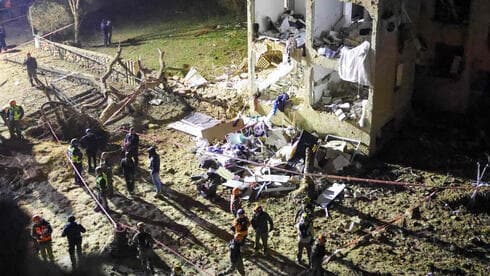
Iranian Missiles Strike Israel; Officials Report 180 Injured Amid Conflicting Casualty Figures.
12 sources compared