Technology and Science05 June, 20263 min read
Countries Stockpile Critical Minerals, Driving Up Clean Energy Costs And Delaying Rollouts
This article is an automated aggregation of coverage from news outlets. Our editorials offer in-depth analysis curated by the NewsCord team.
Major economies stockpile cobalt, lithium, graphite, and rare earths to secure supplies. Stockpiling and competition could raise energy transition costs and delay clean-energy rollouts.
Mineral stockpiling race
A growing number of countries are stockpiling critical minerals such as cobalt, lithium, graphite and rare earths as competition for clean-energy inputs intensifies, with the same materials also increasingly sought for military hardware and chips for AI. Hugh Miller, the critical minerals lead at the Centre for Economic Transition Expertise at the London School of Economics and Political Science, told Climate Home News that “Stockpiling ‘is happening, whether we like it or not’,” while warning that it needs coordination to avoid market disruption. Miller added that if countries stockpile “we need to have it in a coordinated manner that means we don’t have massive market volatility and adverse implications from every country trying to go at it alone,” according to Climate Home News.
The stakes are framed as cost and timing: Miller said, “If you undermine the financial viability of [clean energy] projects through higher raw material costs, you’re going to delay their roll-out,” as stockpiling competition pushes up prices. The article links the scramble to geopolitical episodes, including when US President Donald Trump announced “Project Vault” after China imposed export restrictions on rare earth supplies, with Beijing suspending the measures until November as part of a trade truce with Washington.

OECD and purchasing power
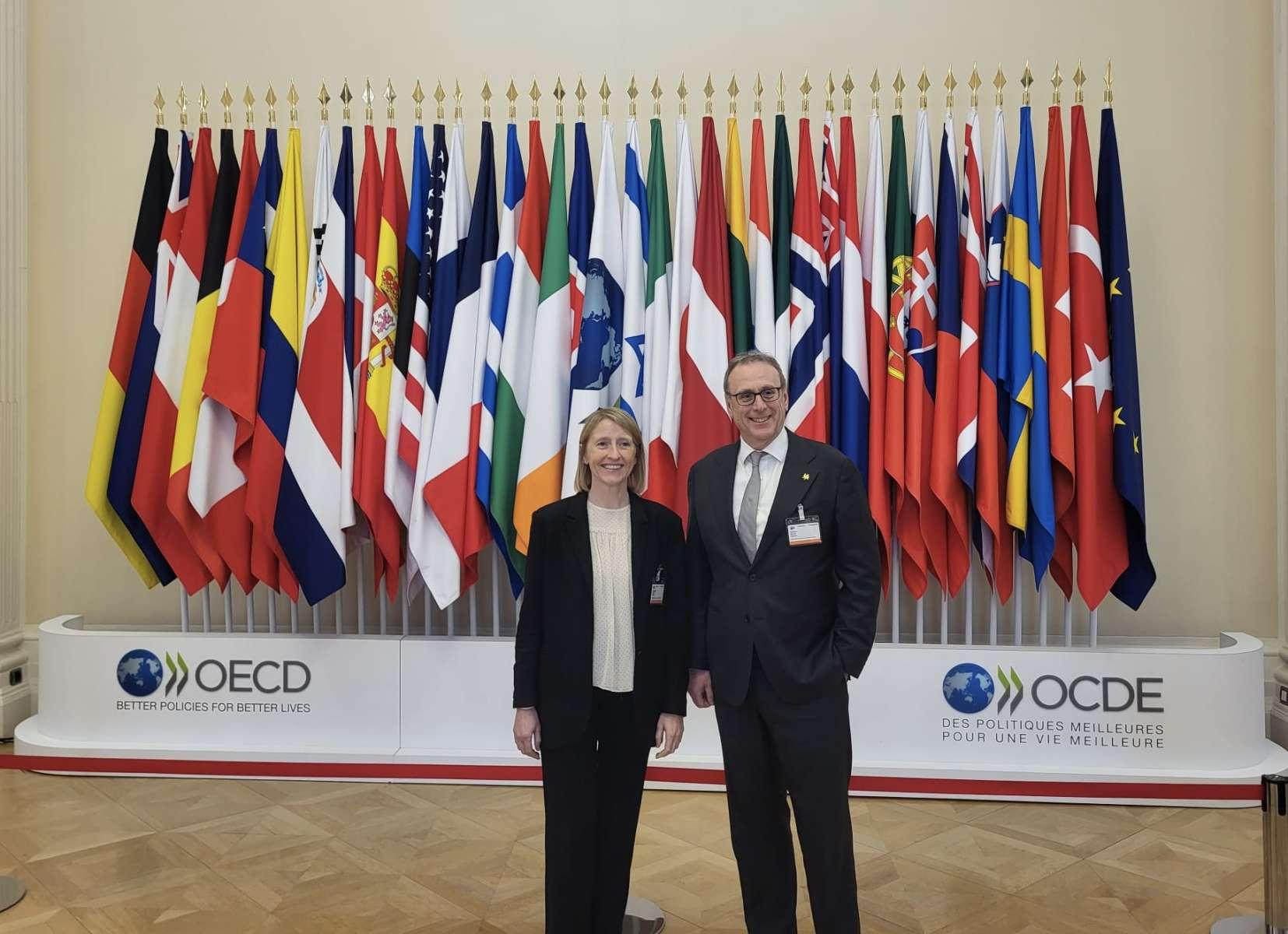
In Brussels, Walloon and Brussels deputies Aurélie Czekalski and Olivier Maroy participated in the OECD's Global Parliamentary Network meeting, where parliamentarians and experts debated energy and geopolitical challenges affecting Belgian and European citizens. Czekalski argued that the energy transition opens a new “era of electricity,” but warned that electric grids and flexibility solutions “do not always keep up,” which can translate into higher prices for households, the self-employed and businesses. The MR deputies also warned against regulatory frameworks that are “too complex or unbalanced,” saying such rules can reduce the number of suppliers, hinder innovation in services like self-consumption and dynamic pricing, and ultimately harm consumers by raising bills.
On critical minerals, the OECD discussion emphasized that production and trade are concentrated in a few countries, creating “strategic dependencies and risks for our supply chains,” while demand is rising with the energy transition and geopolitical tensions. Olivier Maroy stressed diversification of supply and recycling, while Czekalski said a credible European strategy on critical minerals is essential to “avoid disruptions and price shocks,” to protect purchasing power.

Morocco’s storage and minerals
In Morocco, Amina Benkhadra, director general of the National Office of Hydrocarbons and Mines (ONHYM), described a strategy that extends beyond exploration by integrating strategic gas storage, hydrogen preparation, and CO₂ capture. Benkhadra said that in September 2025 ONHYM launched a national study on the potential geological storage of energy resources, with the objective to map formations suitable for storage, model pilot sites, and propose an investment roadmap with volumes, costs, timelines, and potential partnerships. The Office initially prioritized strategic gas storage around three major projects: the reconversion and optimization of the GME gas pipeline, the Atlantic African Gas Pipeline, and the Nador LNG terminal, while Benkhadra said the medium-term plan includes multi-product hubs for storing gas, preparing hydrogen storage, and exploring CO₂ sequestration solutions.
In early October 2025, ONHYM strengthened international cooperation by signing two protocols with entities in the United Arab Emirates, including the Fujairah Natural Resources Corporation and the Fujairah Oil Industry Zone, to accelerate Morocco’s upskilling in strategic minerals and energy hubs. Benkhadra also tied the approach to ESG and mineral sovereignty, saying at IMC Morocco 2025 the Marrakech Declaration was adopted to establish the first unified ESG framework for Africa’s mining sector.