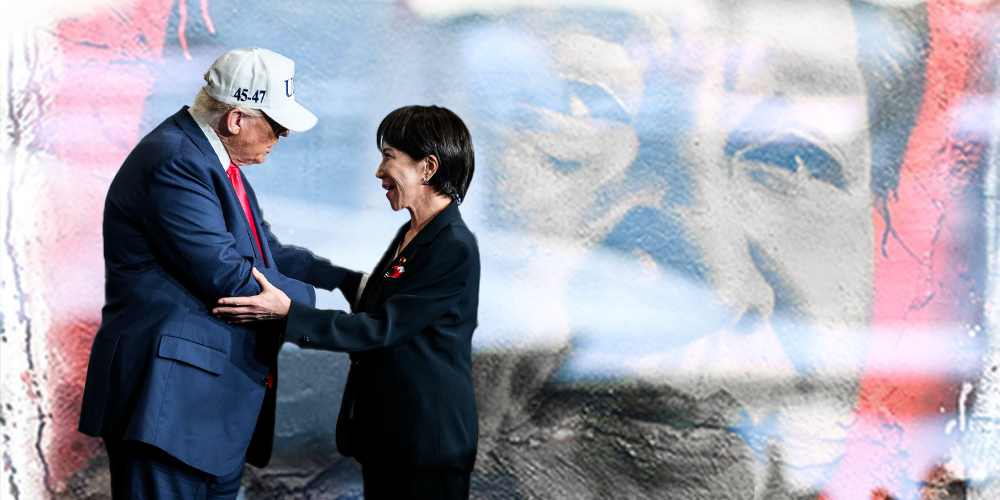
Crisis management in cherry blossom season
Key Takeaways
- Sanae Takaichi arrives at the White House on 19 March for a summit.
- Cherry blossoms along the Tidal Basin symbolize enduring friendship.
- The summit unfolds amid global pressure reshaping Japan-US relations.
Crisis backdrop and oil shock
When Japanese Prime Minister Sanae Takaichi arrives at the White House on 19 March, the cherry blossoms along Washington’s Tidal Basin will be starting to burst into pink clouds – a symbol of the enduring friendship between two nations that she is coming to reaffirm.
“What the Takaichi-Trump summit reveals about a world under pressure When Japanese Prime Minister Sanae Takaichi arrives at the White House on 19 March, the cherry blossoms along Washington’s Tidal Basin will be starting to burst into pink clouds – a symbol of the enduring friendship between two nations that she is coming to reaffirm”
But the summit she will walk into is looking much less like a celebration and more like high-stakes crisis management, its agenda reshaped by an energy emergency that is reverberating throughout the global economy.
The Iran war that began on 28 February, when the US and Israel launched nearly 900 strikes in 12 hours against Iranian military infrastructure – killing Supreme Leader Ali Khamenei in the opening wave – has effectively closed the Strait of Hormuz, the narrow waterway through which roughly one-fifth of the world’s daily oil supply typically flows.
Tanker traffic has dropped to near zero.
Iran’s Islamic Revolutionary Guard Corps has declaredit will not allow ‘a litre of oil’ though the strait and that any vessels linked to the US, Israel or their allies is a legitimate target.
Oil has risen above $100 a barrel.
Japan’s implications and mandate
For Japan, the world’s fourth-largest economy and one of the most energy import-dependent economies on earth – some 90% of Japan’s crude comes from the Middle East, with 70% transiting Hormuz.
On 11 March, Takaichi announced Japan would release 80m barrels from its strategic reserves.
That same day, the International Energy Agency announced the largest emergency reserve release in its history – 400m barrels across 32 member nations – calling the Hormuz closure the biggest supply disruption ever recorded.
The yen trading near an 18-month low of 159 to the dollar is compounding the pain for the Japanese consumer.
Japan pays for every barrel in US currency.
It is against this backdrop that Takaichi arrives in Washington bearing what Stephen Nagy, a professor at Tokyo’s International Christian University, advocates as a mandate for nothing less than a ‘new blueprint’ for the US-Japan alliance.
Writing in the Japan Times immediately prior to the summit, Nagy captured the tightrope Takaichi is walking: ‘[She] must protect Japan’s national interest by locking in American engagement, not just for the duration of the Trump administration but also for the post-Trump era.
To succeed, Takaichi must deploy a disciplined mix of flattery and hard deliverables, demonstrating to the transactional 47th president that Making America Great Again is directly contributing to making Japan great again.’
US–Japan economic and legal dynamic
Japan’s ‘iron lady’ The summit is Takaichi’s first overseas trip since her Liberal Democratic Party won a historic two-thirds supermajority in February’s snap election – the party’s strongest mandate since 1986.
“What the Takaichi-Trump summit reveals about a world under pressure When Japanese Prime Minister Sanae Takaichi arrives at the White House on 19 March, the cherry blossoms along Washington’s Tidal Basin will be starting to burst into pink clouds – a symbol of the enduring friendship between two nations that she is coming to reaffirm”
The Economisthas dubbed her ‘the world’s most powerful woman’.
President Donald Trump publicly endorsed her candidacy and called her Japan’s ‘iron lady’.
This ideological rapport is a genuine asset, though analysts in Tokyo noted it isdouble-edged: warm personal support from a transactional president can quickly become an expectation of concessions.
The economic centrepiece remains Japan’s commitment, forged in hard negotiations last July, to invest $550bn in the US over five years – in exchange for a 15% tariff cap.
The first tranche is moving: Japan’s Softbank Group together with others is investing $33bn in an Ohio natural gas plant and $2.1bn in a Gulf Coast oil export terminal.
A large but so far unspecified share of that investment will be supported by Japanese government loans and guarantees.
While this down payment is a good start, the US will keep up pressure on Japan to meet that pledge.
Meanwhile, the government is scrambling to find eligible US investment projects.
Asymmetric relationship The legal foundation of the deal was struck down on 20 February, when the Supreme Court ruled the president had exceeded his authority in imposing the emergency tariffs on which the agreement rested.
Japan has signalled it will honour its investment commitments regardless – a posture that speaks to the asymmetric nature of a relationship in which Tokyo has long calculated that the strategic logic of alliance with Washington outweighs legal turbulence.
That asymmetry runs deep.
The US-Japan alliance, born from occupation and defeat in 1945, has never been a partnership of equals.
Japan accepted US bases, the nuclear umbrella and severe constitutional constraints on its own military in exchange for security and reconstruction.
What followed was eight decades of managed tension – periodic trade wars, burden-sharing disputes and moments when Washington’s global priorities overrode Tokyo’s regional concerns – all the while held together by shared interests and remarkable institutional durability.
What is happening now, with Japan honouring the $550bn commitment despite its legal basis having dissolved, is historically continuous with that pattern.
China shadow and alliance timing
Shadow of China hangs over the summit Into this already complex summit falls the long shadow of Beijing.
Trump is expected in China from 31 March to 2 April, and the sequencing is not lost on Tokyo.
Japan is racing to lock in visible deliverables before Xi Jinping gets his turn with the president.
The urgency is sharpened by China’s economic coercion: Beijing tightened rare-earth export controls on Japan in January, a pressure campaign linked toTakaichi’s November remarkssuggesting Japan might respond militarily if China attacked Taiwan.
Trump’s response to that provocation against his closest Asian ally has been conspicuous silence.
Ironically, Japan, which had worked to ease US-China tensions during the first Trump administration, is concerned now about the two superpowers cutting a deal that could leave Japan – as well as other US allies and friends – exposed to Chinese coercion.
Reports surfaced this week, citing Japanese government sources, that Takaichi will announce Japan’sparticipationin Trump’s ‘Golden Dome’ missile initiative – a headline defence deliverable designed to give both leaders a concrete win, and a signal that the alliance remains very much open for business.
The US-Japan role in maintaining peace and stability in Asia will play an important role in the prime minister’s visit.
It’s anticipated that Trump and Takaichi will emphasise Japan’s increased defence spending, increasingly robust US defence co-operation and enhanced public-private collaboration in sectors key to national security, including semiconductors, critical materials and artificial intelligence.
Trump’s call on Japan and other countries over the weekend to help secure the Strait of Hormuz could create a wrinkle in that otherwise positive narrative.
Though constraints on use of Japan’s armed forces have been relaxed in recent years, placing military personnel in harm’s way still is a highly delicate political issue in Japan.
Washington’s cherry blossoms bloom brilliantly and briefly.
So too may the window for Japan to shape the terms of its alliance with a distracted and unpredictable Washington – before the centre of US diplomatic gravity shifts, as is likely on 31 March, towards Beijing.
Marsha Vande Berg is Treasurer/Director of the Japan Society Northern California and vice chair of the OMFIF Advisory Council.
Larry Greenwood, is Chair of the Japan Society Northern California and former US Vice President of the Asian Development Bank.
Image Source:The White HouseandCART’1Interested in this topic? Subscribe to OMFIF’s newsletter for more.
More on USA
FBI investigates Joe Kent, former National Counterterrorism Center director, for allegedly leaking classified information.
81 sources compared

Lt. Gov. Juliana Stratton Wins Illinois Democratic Senate Primary to Replace Durbin
171 sources compared

Senators Grill Mullin Over DHS Nomination as Intel Officials Testify on Top Threats
91 sources compared

César Chávez Faces Sexual Abuse Allegations, Including Rape of Dolores Huerta and Other Survivors
34 sources compared