
Crypto Insiders Say Stablecoins Unlock Agentic AI Finance.
Key Takeaways
- Stablecoins enable autonomous AI agents to perform micro-payments at scale.
- Programmable cryptocurrencies are expected to shine in agentic finance.
- Nano-payments via stablecoins differ from AI front-end shopping implementations.
Agentic Finance Emerges
The emerging field of agentic finance represents a paradigm shift in how AI systems will handle financial transactions.
“AI developers may not be keen on crypto, but stablecoins are the secret to agentic finance, crypto insiders say The brave new world of autonomous, micro-transacting AI agents is where programmable cryptocurrencies will shine, according to stablecoin experts”
Stablecoins are positioned as the key enabler for autonomous micro-transacting agents in this new ecosystem.
According to crypto industry experts, stablecoins offer unique advantages that traditional payment systems cannot match.
The concept involves millions of nano-payments occurring between AI agents requiring programmable infrastructure.
This differs fundamentally from current AI applications like ChatGPT integrated with shopping carts.
The new ecosystem demands frictionless, cross-border payment capabilities for high-frequency transactions.
Stablecoins, particularly dollar-pegged tokens on public blockchains like Ethereum, are increasingly seen as the natural solution.
Crypto Industry Optimism
Crypto industry insiders express strong optimism about stablecoins' role in enabling agentic commerce.
Dante Disparte, Circle's chief strategy officer, highlights stablecoins' programmability as essential.
Disparte emphasizes that stablecoins can be programmed to transfer only when specific conditions are met.
He notes that stablecoins can daisy-chain multiple actions upon receipt of a token.
Sean Neville, co-founder of Catana Labs and Circle, agrees that stablecoins have achieved 'escape velocity'.
Neville views stablecoins as a natural fit for autonomous financial systems requiring 24/7 programmable rails.
Companies like Circle Internet and Coinbase are actively developing infrastructure for this ecosystem.
Coinbase is leading engineering on x402, a payments protocol specifically designed for autonomous AI agents.
AI Developer Skepticism
Despite crypto industry enthusiasm, significant skepticism exists within the AI development community.
“AI developers may not be keen on crypto, but stablecoins are the secret to agentic finance, crypto insiders say The brave new world of autonomous, micro-transacting AI agents is where programmable cryptocurrencies will shine, according to stablecoin experts”
Peter Steinberger, creator of AI agent OpenClaw, represents this opposition with his public stance against crypto.
Steinberger refuses to engage in further commentary on the subject, highlighting the depth of his opposition.
Sean Neville reports encountering widespread negative sentiment among AI developers and engineers.
The AI community views crypto through the lens of 'memecoins and Ponzi schemes' according to Neville.
This creates a notable divide between crypto industry optimism and AI developer skepticism.
The tension reflects broader cultural differences between the two technical communities.
Blockchain advocates emphasize technical capabilities while AI developers remain wary of crypto's speculative history.
Technical Implementation Challenges
The technical implementation of agentic finance faces significant challenges around standardization.
Sean Neville identifies fragmentation and conflicting protocols as more pressing than regulatory concerns.
He notes that if AI agents cannot agree on payment protocols, marketplaces become difficult to establish.
Neville advocates for an 'SSL equivalent' for agents - a standard technology owned by no one.
Such a standard would enable interoperable development across different platforms.
Erik Reppel acknowledges debates around protocols like x402 often focus on transaction volume metrics.
Reppel emphasizes focus on the broader category of commerce that will disrupt internet advertising markets.
These challenges highlight the need for industry-wide collaboration to realize agentic finance potential.
Future Commercial Ecosystems
The convergence of AI and stablecoin technology promises to create entirely new commercial ecosystems.
“AI developers may not be keen on crypto, but stablecoins are the secret to agentic finance, crypto insiders say The brave new world of autonomous, micro-transacting AI agents is where programmable cryptocurrencies will shine, according to stablecoin experts”
Sean Neville suggests agentic systems will initially access both crypto and card payments.
He emphasizes that stablecoins offer significant advantages for more complex financial flows.
The potential extends far beyond simple retail commerce applications.
AI systems could leverage programmable rails to stream different types of money globally 24/7.
This capability fundamentally changes how value transfer occurs in digital economies.
It potentially disrupts existing payment networks and financial intermediaries.
As regulatory clarity emerges, focus shifts toward solving technical and interoperability challenges.
More on Crypto

Boris Johnson Calls Bitcoin a Ponzi Scheme; Saylor, Eric Trump Defend Crypto
12 sources compared

Bybit Pay Joins Mastercard Crypto Credential Network, Lets Users Send Digital Assets Using Verified Aliases
10 sources compared
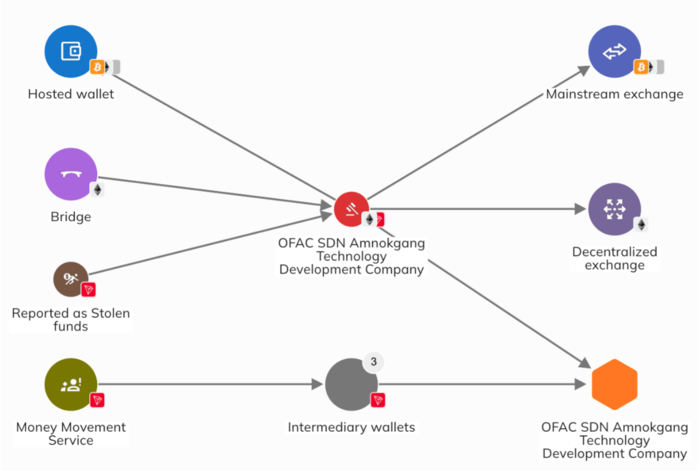
U.S. Treasury Freezes Crypto Network Feeding Nearly $800 Million To North Korea's Weapons Programs
10 sources compared

Europol and DOJ Freeze $3.4–$3.5M, Dismantle SocksEscort Proxy Network That Compromised 369,000 Devices
13 sources compared