South America16 January, 20263 min read
Cubans Rally in Havana to Denounce U.S. Raid That Killed 32 Cuban Officers and Demand Release of Nicolás Maduro
32 Cuban military and intelligence officers were killed during a U.S. strike in Venezuela Cuba repatriated the 32 officers’ remains and held state funeral ceremonies in Havana
21 outlets told this the same way.
Outlets did split on Alexandre de Moraes Orders Eduardo Bolsonaro Arrest, Cancels Passport, Enforces Four-Year Sentence →
Cuban rally after Venezuela raid
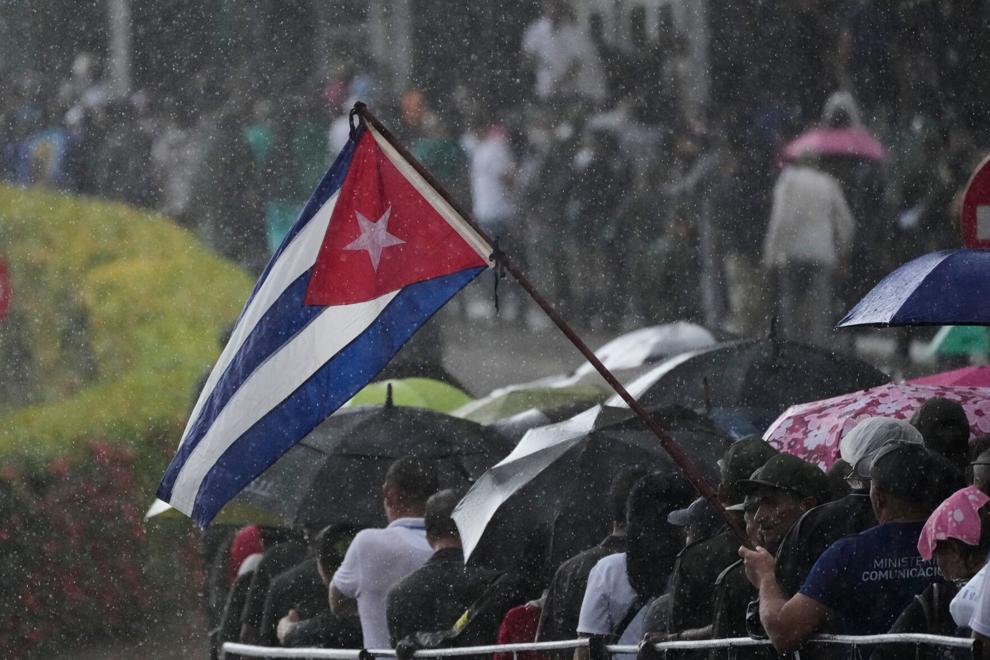
Tens of thousands of Cubans gathered on Jan. 16, 2026, at Havana's Jose Marti Anti-Imperialist Plaza, directly across from the U.S. Embassy, in a government-organized rally.
“Tens of thousands of Cubans gathered Jan. 16, 2026, in Havana’s José Martí Anti-Imperialist Plaza across from the U.S. Embassy in a government-organized rally to protest the killing of 32 Cuban officers in a U.S. operation in Venezuela that captured Venezuelan President Nicolás Maduro and his wife.”
They denounced a Jan. 3 U.S. operation in Venezuela that Havana says killed 32 Cuban officers and demanded the release of former Venezuelan president Nicolas Maduro.

President Miguel Diaz-Canel led and participated in the march, waving a Cuban flag.
Organizers and multiple reports described the event as a show of national unity amid sharply rising tensions with Washington after the operation that captured Maduro.
The demonstration followed state ceremonies and the repatriation of the remains of the 32 officers earlier in the week.
Cuban authorities called for broader protests and tributes nationwide.
Cuba repatriation and funerals
The rally followed state funerals and repatriation ceremonies for the 32 dead. Flag-draped coffins or urns arrived at Havana’s José Martí International Airport and were received with military honors amid mass mourning. The ceremonies were attended by President Miguel Díaz-Canel, former leader Raúl Castro and senior officials.
State television showed wounded 'combatants' arriving from Venezuela. Cuban officials released the names and ranks of the dead and said they were members of the armed forces and Interior Ministry who were deployed in Venezuela under bilateral security agreements.

Conflicting reports on Maduro
Reporting differs sharply on the operation’s character and the fate of Nicolás Maduro.
“Reuters reports that U.S. forces seized Maduro and his wife on Jan. 3 and flew them to the United States, where Maduro is reportedly held on drug charges.”
Several outlets — including The Straits Times (Asian) and Digital Journal (Western mainstream) — relay reports that U.S. forces seized Maduro and his wife on Jan. 3.
Those reports say they were transported to the United States, where Maduro is being held on drug-related charges.
Other sources frame the U.S. action as a counter-narcotics mission (okaynews).
Cuban authorities and state outlets call it an 'imperialist' attack and international aggression.
U.S. officials and analysts are cited in some reports.
The precise sequence of events, combatant locations, and legal status remain contested in the coverage.
Media framing of Cuba events
Coverage diverges on the wider implications and political framing. State and regional outlets frame the events as a national affront and rallying point. Anadolu Ajansı reports Cuba declared two days of national mourning and ordered a March of the Combatant People.
VINnews quotes Cuba’s Foreign Ministry calling the rally 'a resounding response.' By contrast, critical outlets emphasize geopolitical risk, internal governance critique and economic consequences. VINnews warns U.S. pressure could worsen Cuba’s fragile economy.
HotAir focuses on political control and turnout skepticism. Digital Journal records diplomatic fallout such as U.S. threats to cut off Venezuelan oil and Cuba dismissing U.S. aid as 'political manipulation.'
Disputed reporting on raid
Several key facts remain unclear or disputed in the reporting: Cuba has not specified where each of the 32 died, and sources differ on Venezuelan casualty counts and operational details. The Straits Times notes gaps in Cuban detail, Digital Journal reports additional figures (including 23 Venezuelan soldiers killed), and other outlets emphasize the contested nature of claims about how the raid unfolded and who carried it out. Given these discrepancies, the public record leaves open precise casualty locations, the exact combat sequence, and full independent verification of any U.S. role.
“Cuba said only that the 32 died during the raid and has not specified where each fell or how many were guarding Maduro.”