Full Analysis Summary
Cuba talks and power crisis
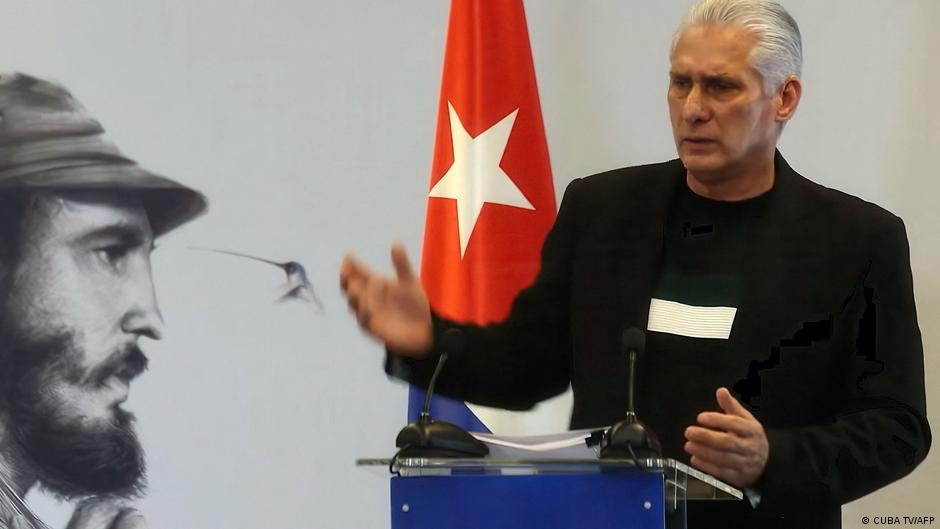
Cuban President Miguel Díaz‑Canel said he is willing to hold talks with the United States but only without pressure or preconditions and from a position of equality that respects Cuba’s sovereignty.
Those talks were reported as set for Thursday.
The statement came amid reports that recent U.S. actions blocking oil shipments to Cuba have worsened the island’s already fragile power system and produced deeper, more frequent blackouts.
The outages affected provinces including Granma, Guantánamo, Holguín and Santiago de Cuba.
The same reporting links the immediate fuel shortfalls to long‑standing structural problems, including six decades of the U.S. embargo and domestic mismanagement.
It also noted that the Trump administration publicly sought to cut Cuba off from Venezuelan oil and warned that Cuba would 'be failing pretty soon'.
Coverage Differences
Tone and emphasis
DW (Western Mainstream) frames Díaz‑Canel’s demand for talks as a sovereignty assertion against U.S. coercion and links the call to urgent humanitarian impacts (worsened blackouts). DIE WELT (Western Mainstream) does not provide coverage of the talks or energy crisis in the provided snippet and instead contains an unrelated quote about families from Trump, so it neither corroborates nor disputes DW’s framing—its absence is itself a difference of omission.
Cuba power causes and response
DW attributes Cuba's power failures to both external pressure and long-term internal weaknesses.
Six decades of the U.S. embargo, compounded by domestic mismanagement, have weakened the grid and recent fuel shortfalls have produced prolonged outages across multiple provinces.
In response, Díaz-Canel pledged short- and medium-term measures: building more solar farms, expanding fuel storage, seeking international cooperation to develop domestic oil and gas resources, and imposing further energy rationing to protect hospitals, schools, transport, and the broader economy.
Coverage Differences
Narrative/detail
DW provides both structural context (embargo, mismanagement) and specific policy responses from Díaz‑Canel, while DIE WELT’s supplied snippet contains no substantive reporting on Cuba’s energy situation—only a note about missing the article and an unrelated Trump quote—so DW is the sole substantive source for these details.
U.S. pressure on Cuba
DW highlights actions by the Trump administration that aimed to cut Cuba off from Venezuelan oil, including urging Mexico not to include oil in humanitarian deliveries and threatening tariffs on countries that do.
The report frames these moves as part of broader U.S. pressure with immediate humanitarian effects in Cuba, and it places Díaz‑Canel’s precondition for talks—no pressure, equality, sovereignty—against that backdrop.
Coverage Differences
Tone/attribution versus absence
DW reports U.S. measures and directly links them to worsening conditions in Cuba, using concrete examples and quotes. DIE WELT’s content in the provided snippet does not address U.S. policy toward Cuba at all; it contains a separate, unrelated quote attributed to Trump. The difference is DW’s explicit reporting and linkage versus DIE WELT’s lack of coverage in the provided material.
Limitations and ambiguities
Available material is limited to DW’s reporting, which supplies substantive detail and clear framing, and a DIE WELT snippet that does not cover the issue and notes the full article is missing.
No U.S. government statement or reporting from other regional or alternative outlets is included, so key perspectives are missing, most notably an official U.S. response to Díaz‑Canel’s conditions, independent technical assessments of Cuba’s grid, and coverage from Cuban state media or other international outlets.
These absences mean any fuller assessment of motives, likely outcomes of talks, or independent verification of causes and remedies remains ambiguous and would require additional sources.
Coverage Differences
Missed information/omission
DW offers a narrative linking U.S. policy and domestic mismanagement to the energy crisis and describes Díaz‑Canel’s proposed remedies. DIE WELT’s provided content does not engage with these topics and explicitly indicates missing source material. The consequence is an asymmetric evidence base: DW supplies claims and context; DIE WELT is effectively absent—so cross‑source corroboration is not possible with the materials given.