Full Analysis Summary
Jargeira battle claims
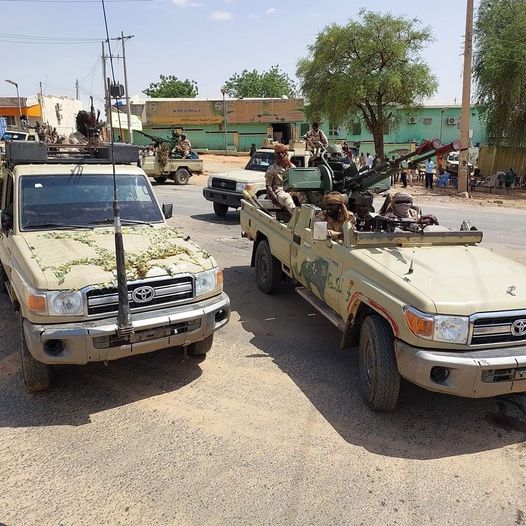
On 10 January the Darfur Joint Force announced it had retaken the North Darfur town of Jargeira from the Rapid Support Forces (RSF).
The Joint Force said it seized 20 fully equipped combat vehicles, destroyed another 15, and captured several RSF fighters.
It proclaimed that Jargeira had 'returned to the embrace of the homeland' and vowed to protect civilians and enable safe returns to liberated areas.
Radio Dabanga noted that earlier reports showed both the RSF and the Joint Force claimed victory after heavy fighting around Jargeira and nearby Mastura, and that independent verification of battlefield control was not possible.
The available reporting is drawn from the Joint Force's own claims as reported by Radio Dabanga, with no third-party verification or international observer confirmation included.
Coverage Differences
Tone and focus
Radio Dabanga (Other) reports the Joint Force’s operational claims and frames them as battlefield developments and humanitarian promises, quoting the group directly that Jargeira has “returned to the embrace of the homeland.” Dabanga Radio TV Online (Other) does not report on the Jargeira fighting at all; instead it focuses on political organisation in Eastern Sudan and the composition and stance of a newly formed Leadership Council. Thus Radio Dabanga provides military operational claims about Jargeira while Dabanga Radio TV Online covers separate political developments in Eastern Sudan, leaving the Jargeira story unaddressed in that source.
Allegations and reporting dispute
Radio Dabanga’s report includes grave allegations about civilian harm: the Joint Force accused the RSF of killing and kidnapping civilians during the clashes and said 19 people were left dead in Jargeira, describing the incidents as a serious breach of international humanitarian law.
Radio Dabanga also reiterated that earlier coverage showed both sides had claimed victory after heavy fighting around Jargeira and Mastura, and stressed that independent verification of control remained unavailable; the available material is therefore based on the claims reported by the parties themselves rather than corroborated third‑party evidence.
The Dabanga Radio TV Online article does not address these casualty claims and instead concentrates on political and organisational developments in Eastern Sudan.
Coverage Differences
Missed information
Radio Dabanga (Other) reports alleged civilian killings and kidnappings in Jargeira and cites a figure of 19 dead, presenting this as the Joint Force’s accusation of a serious breach of international humanitarian law. Dabanga Radio TV Online (Other) contains no reporting on Jargeira’s alleged civilian casualties; instead it focuses on the formation and objectives of an Eastern Sudan Leadership Council and the makeup of armed groups. Therefore important allegations of civilian harm are present in Radio Dabanga but absent from Dabanga Radio TV Online’s coverage.
Eastern Sudan political developments
Dabanga Radio TV Online reports on political developments in Eastern Sudan, noting that Khalid Mohammed Osman, secretary of a newly formed Leadership Council, said the council reaffirmed its commitment to Sudan's unity, territorial integrity, state consolidation, and protection of citizens.
The article lists the five armed movements comprising the alliance: Beja Congress, Eastern Sudan Liberation Movement, National Movement, National Front, and Free Lions, and says their charter was signed on 25 December.
It reports that these groups train in camps inside Eritrea under Eritrean supervision and have declared neutrality in the SAF-RSF war, in contrast to other Eritrea-trained groups that have sided with the army.
This reporting situates a separate eastern political-military alignment that Radio Dabanga's Jargeira-focused account does not address.
Coverage Differences
Unique/off‑topic coverage
Dabanga Radio TV Online (Other) provides a detailed account of a new Eastern Sudan Leadership Council, naming its constituent movements and their training arrangements, while Radio Dabanga (Other) focuses on battlefield claims in North Darfur. The two sources thus cover distinct theatres and issues: Radio Dabanga reports operational claims about Jargeira, and Dabanga Radio TV Online reports political/organizational developments in Eastern Sudan, including neutrality declarations and Eritrea training claims.
Limits of Sudan reporting
The two pieces together reveal both the limits of available reporting and the fractured scope of Sudan’s conflict.
Radio Dabanga reports Party A’s battlefield claims and alleges civilian harm in North Darfur.
Dabanga Radio TV Online highlights political realignment and declared neutrality among armed groups in Eastern Sudan and notes training links to Eritrea.
Both sources belong to the same broader media family and primarily relay claims and statements by parties involved.
Radio Dabanga explicitly states that independent verification of control over Jargeira was not possible.
Given the limited source set, significant gaps remain, including no independent on‑the‑ground confirmation of territorial changes or of the alleged civilian killings.
The Eastern Sudan reporting does not address the Jargeira events.
Readers should treat these reports as reported assertions rather than fully corroborated facts.
Coverage Differences
Ambiguity/Verification
Radio Dabanga (Other) explicitly states that independent verification of control over Jargeira was not possible and reports competing victory claims, emphasising uncertainty. Dabanga Radio TV Online (Other) focuses on political organisation and neutrality declarations and does not address verification of battlefield claims in Darfur. The two sources therefore underscore different uncertainties and leave important questions — casualty verification, territory control, and possible Eritrean involvement in training — unresolved in the available material.