China27 November, 20252 min read
Deadly Blaze in Hong Kong's Tai Po Kills at Least 75, Leaves Nearly 300 Missing; Police Arrest Three
At least 55 people killed, nearly 300 residents missing. Bamboo scaffolding, plastic mesh and renovation materials fueled rapid tower-to-tower spread.

26 outlets told this the same way.
Wang Fuk Court fire
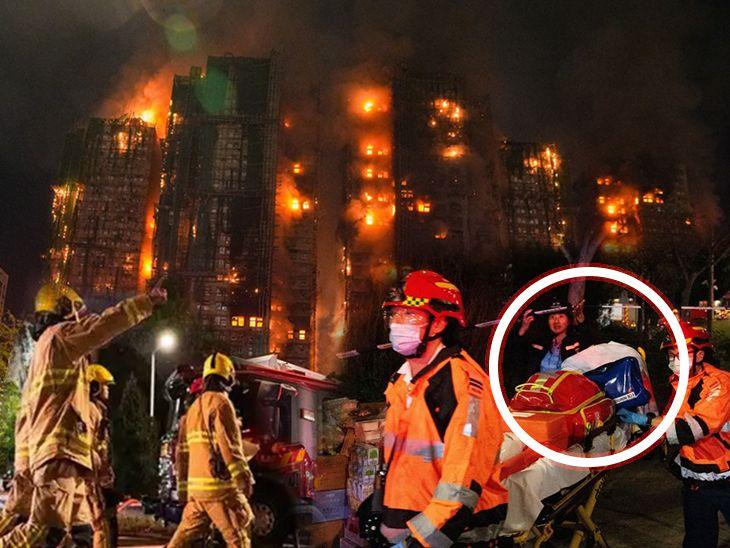
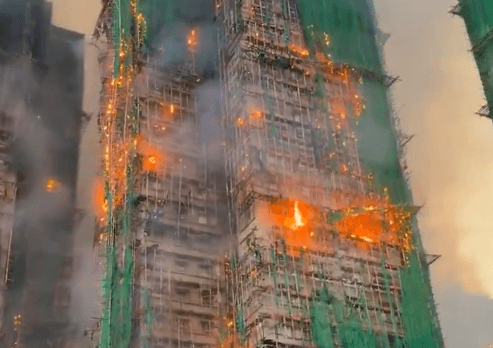
A fast-moving blaze tore through Wang Fuk Court, a large public-housing estate in Tai Po, Hong Kong, on Wednesday afternoon and burned through the night. The fire engulfed scaffolding and exterior coverings as flames raced up multiple 31–32-storey towers that were under renovation.
“A huge fire ripped through seven of the eight tower blocks of Wang Fuk Court, a subsidised housing estate in Tai Po, Hong Kong, in what authorities say is the deadliest blaze there in six decades.”
Authorities and reporters said the blaze spread rapidly via external bamboo scaffolding, green construction mesh and other flammable renovation materials, while strong winds and falling debris hampered access to upper floors. The complex, an eight-tower estate of roughly 1,800–2,000 flats housing several thousand residents, became the site of large-scale search, rescue and recovery operations as emergency services upgraded the incident to the city’s highest alert level.
Evolving casualty and missing counts
Casualty figures and the tally of missing people varied across reports as rescue and accounting continued. Some outlets reported an initial confirmed toll of about 44 deaths with roughly 279 people unaccounted for, while other reports later gave higher totals of 55 or 65 and the BBC cited 75 deaths. Many sources stressed that numbers were evolving as firefighters continued searches and bodies were recovered, and that dozens were hospitalized and hundreds displaced.
Emergency response summary
Emergency response descriptions vary but consistently show a very large mobilisation. Several outlets report between 700 and 800 firefighters, plus scores of fire engines and ambulances.
“More than 1,200 fire and ambulance personnel were deployed, but rescue efforts were hampered by extreme heat, falling debris and the fact that the tallest ladders reach only about halfway up, leaving some upper floors temporarily unreachable.”
Local reports and Deseret News highlight constraints: ladders reached only about halfway up, and extreme heat, falling debris, and smoldering structures slowed rescues. Authorities raised the incident to a level-5 emergency and set up temporary shelters for hundreds of displaced residents.
Arrests and scaffolding safety
Police have arrested three men in connection with the blaze and launched a criminal probe. Reports describe those arrested variously as "three construction company executives" (The Independent), "three men linked to a construction company" (Deseret News), or "three construction workers" (CNN). The charges are described as suspicion of manslaughter or "gross negligence."
Officials have pledged investigations into scaffolding and renovation safety. Some officials have suggested policy changes such as phasing out bamboo scaffolding in favour of metal.
Official response and coverage
The tragedy has prompted an outpouring of official condolences, offers of aid and public reaction. Chinese leader Xi Jinping offered condolences and pledged emergency support. Major mainland firms, foundations and individual donors were reported to make large pledges.
“The central government urged ‘all‑out efforts’ and allocated ¥2 million via the Red Cross, while major firms and individuals pledged substantial donations (examples reported: Alibaba HK$20m, Jack Ma HK$30m, ByteDance HK$10m, 361 Degrees HK$15m, BYD HK$10m, Xpeng HK$5m).”
Social media, volunteers and neighbouring city authorities mobilised to help. Coverage tone differs by source.
Some outlets stress shock, comparisons to past high-rise disasters and political implications. Others focus on the immediate human toll and ongoing searches.