Full Analysis Summary
Venezuela leadership and U.S. ties
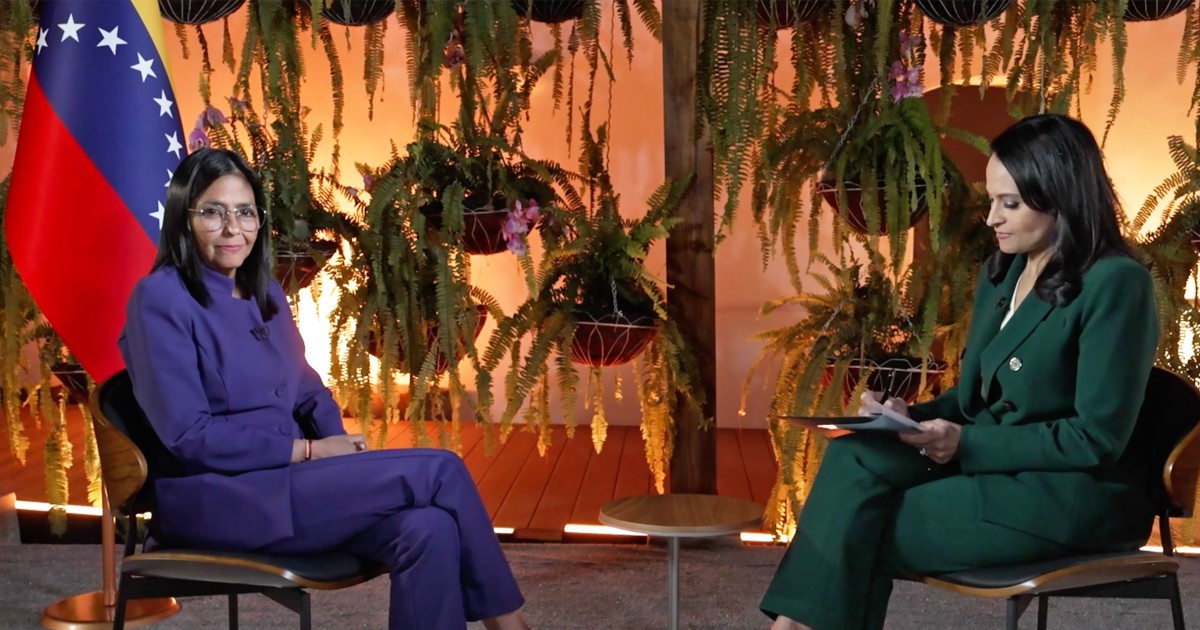
Interim Venezuelan leader Delcy Rodríguez told NBC in a Feb. 12 interview that Nicolás Maduro remains Venezuela's legitimate president.
She said she considers both Maduro and first lady Cilia Flores innocent.
Rodríguez confirmed she has been invited to the United States and is contemplating coming once cooperation is established.
Rodríguez previously served as Maduro's vice president.
She was named interim leader after U.S. forces captured Maduro and his wife and brought them to the United States.
She framed her claim in constitutional terms and pointed to her daily workload as evidence of authority.
The interview comes amid heightened U.S.–Venezuela engagement and visible moves to restart cooperation on energy and sanctions policy.
Coverage Differences
Narrative Framing
Mediaite (Western Alternative) foregrounds Rodríguez’s quoted assertions of Maduro’s innocence and her claim to authority, explicitly stating she "told NBC’s Today that deposed leader Nicolás Maduro is 'innocent' and remains, in her view, the country’s 'legitimate president.'" Folha de S.Paulo (Latin American) similarly reports those claims but situates them in the context of Maduro’s capture and subsequent diplomatic openings with the U.S., noting the capture occurred "more than a month" earlier. NBC News (Western Mainstream) reports the invitation and Rodríguez’s contemplation of a U.S. visit, but also signals caution about Venezuela’s government by warning of "authoritarian tendencies tied to Nicolás Maduro and the late Hugo Chávez." These differences reflect how each source balances Rodríguez’s claims against context or caveats.
Contested Venezuelan leadership claims
Rodríguez repeatedly asserted Maduro’s innocence and legitimacy on air, citing the Venezuelan constitution and her daily workload as proof of her authority.
Mediaite quotes her remarks and emphasizes that she was named interim leader after U.S. forces captured Maduro and his wife in January and flew them to New York on narco-terrorism charges, underscoring the contested legal and political backdrop.
Folha likewise records her insistence on Maduro’s legitimacy while describing domestic moves such as outreach to opposition sectors and an amnesty bill that signal efforts to consolidate the interim administration’s position.
Coverage Differences
Tone
Mediaite (Western Alternative) reproduces Rodríguez’s direct quotes and emphasizes the dramatic circumstance of Maduro’s capture and the interim claim to authority, giving prominence to Rodríguez’s own language. Folha de S.Paulo (Latin American) also reports Rodríguez’s statements but blends them with reporting on domestic political steps like an amnesty bill and outreach to opposition sectors. NBC News (Western Mainstream) includes the invitation detail and introduces a cautionary tone about authoritarian continuity, which Mediaite and Folha handle with less explicit editorial caution.
U.S.-Venezuela energy ties
U.S.-Venezuela engagements and energy policy form a prominent strand across the coverage.
Mediaite reports U.S. control over Venezuelan oil exports and quotes U.S. Energy Secretary Chris Wright saying the U.S. has "enormous leverage."
Wright also said cooperation with Rodríguez's administration is off to "a tremendous start," citing information sharing and changes to the hydrocarbon law.
Folha reports concrete steps: the U.S. Treasury issued a general license allowing U.S. goods and services for oil and gas projects.
Folha also notes Rodríguez struck a $2 billion oil supply deal with the U.S.
NBC highlights personal outreach—phone calls with Donald Trump—and a pending visit invitation as signs of warming ties, while warning readers to be cautious about entrenched authoritarian structures.
Coverage Differences
Unique Coverage
Folha de S.Paulo (Latin American) provides details on sanctions easing and a reported "$2 billion oil supply deal" and the U.S. Treasury's general license, emphasizing concrete economic steps. Mediaite (Western Alternative) foregrounds U.S. leverage and the Energy Secretary’s quotes about cooperation and hydrocarbon law changes. NBC News (Western Mainstream) focuses on the diplomatic gestures — "two phone calls with Donald Trump" and the invitation — and pairs that with a cautionary note about authoritarian tendencies. Each source therefore highlights different facets: economic arrangements (Folha), U.S. leverage and policy changes (Mediaite), and diplomatic signaling plus caution (NBC).
Coverage of Venezuelan politics
Coverage differs on domestic political conditions and human-rights signals.
NBC notes that Venezuela’s government still shows authoritarian tendencies tied to Nicolás Maduro and the late Hugo Chávez.
NBC also reports that opposition figure Juan Pablo Guanipa, released from prison, was quickly rearrested and placed under house arrest, citing a post on X by his son.
Folha reports the interim government has reached out to opposition sectors.
Folha also says Jorge Rodríguez asked forgiveness from political prisoners while lawmakers advanced a broadly written amnesty bill.
Mediaite focuses primarily on Rodríguez’s declarations of innocence and legitimacy and the international dynamics around U.S. leverage and oil control.
Mediaite reports less on the domestic legal gestures highlighted by Folha or the specific rearrest noted by NBC.
Coverage Differences
Missed Information
NBC News (Western Mainstream) includes a specific example of continued repression by reporting Juan Pablo Guanipa’s quick rearrest and places that alongside an editorial caution about authoritarian continuity. Folha de S.Paulo (Latin American) discusses outreach to opposition sectors and an amnesty bill, while Mediaite (Western Alternative) concentrates on Rodríguez’s claims and U.S.–Venezuela energy dynamics, giving less attention to the Guanipa case or the amnesty details. This shows variation in what each outlet highlights about domestic political change versus continuity.
Venezuelan media summary
Taken together, three sources present a mixed picture.
Rodríguez asserts Maduro’s innocence and legitimacy and is engaging with the U.S., including weighing a potential visit.
Other reporting highlights continued authoritarian structures while noting conciliatory moves such as amnesty talks, energy deals, and sanctions easing alongside worrying actions like rearrests.
Mediaite foregrounds Rodríguez’s direct claims and U.S. leverage, Folha focuses on concrete economic and parliamentary steps, and NBC balances diplomatic signals with caution about authoritarian continuity.
Details such as timing, delegation for any U.S. visit, and Maduro’s broader legal status remain unclear or contested, so the sources do not provide a definitive resolution and present an evolving story.
Coverage Differences
Contradiction
There is not a direct factual contradiction about Rodríguez’s statements: all three sources report that she called Maduro "innocent" and "legitimate." The key contradiction is in emphasis and inferred interpretation. NBC News (Western Mainstream) adds a cautionary editorial frame — "authoritarian tendencies" — that complicates Rodríguez's claims. Mediaite (Western Alternative) emphasizes Rodríguez’s own framing and the U.S.’s leverage; Folha (Latin American) emphasizes concrete economic and parliamentary actions. These are differences of emphasis rather than conflicting claims about the quoted facts.