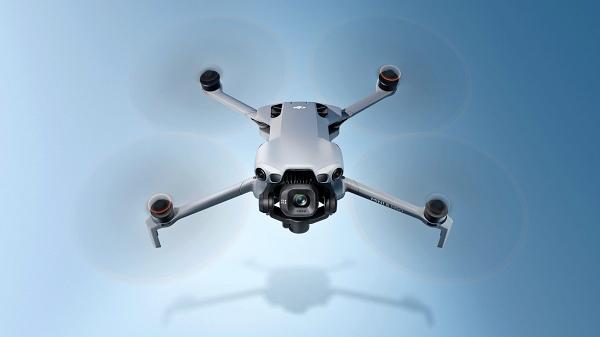
DJI And Insta360 Expand Shenzhen Rivalry Into Vlogging Devices And Patent Lawsuits
Key Takeaways
- Rivalry expands beyond drones into vlogging devices.
- Rivalry escalates, with broader product lines and cross-market moves.
- Western and Asian outlets cover the competition, reflecting cross-regional attention.
DJI vs Insta360
A rivalry between Shenzhen-based hardware companies DJI and Insta360 has expanded beyond drones and 360-degree cameras into vlogging devices, becoming a “key variable in the global smart imaging market,” according to DigitalToday.
“Search IndexBox Search across reports, market insights, and blog stories”
The South China Morning Post is cited as reporting that the head-to-head contest is spreading “on multiple fronts, including broader product lines, pricing strategy, talent recruitment and patent lawsuits,” affecting U.S. rivals and the wider global market, DigitalToday says.

The starting point of the latest competition is described as Insta360’s entry into the drone market in July last year through its independent brand Antigravity, with DJI responding by introducing a panoramic video camera.
DigitalToday says DJI still has a clear edge in market share in the civilian drone market, where it “holds about 70 percent of global market share.”
In the 360-degree camera market, DigitalToday reports that DJI’s Osmo 360 posted a “35 percent quarterly share,” while Insta360 maintained the top spot with a “65 percent annual share.”
The IndexBox report, also citing the South China Morning Post, frames the escalation as a “corporate struggle” unfolding in Shenzhen, describing DJI and Insta360 as engaged in “intensifying corporate struggle” in 2026.
Together, the accounts depict a competition that is moving through product categories and legal channels, not just consumer demand.
Market numbers and launches
The rivalry’s momentum is tied to specific product moves and sales figures that DigitalToday says are already reshaping the smart imaging landscape.
DigitalToday reports that Insta360 entered the 360-degree drone market in July last year through its independent brand Antigravity, and that DJI responded with a panoramic video camera as the two moved into a “direct face-off by targeting each other's core areas.”

It adds that Antigravity’s A1 drone, developed by Insta360, “logged sales of 30 million yuan in the first 48 hours after launch” and “exceeded 30,000 units in global shipments in its first month.”
DigitalToday also describes the 360-degree camera market as more favorable to Insta360, saying DJI’s Osmo 360 posted a “35 percent quarterly share,” while Insta360 maintained the top spot with a “65 percent annual share.”
In contrast, DigitalToday says DJI’s dominance is clearer in civilian drones, where it “holds about 70 percent of global market share.”
The same report describes how the competition is spilling into vlogging and handheld devices, saying “DJI's recently unveiled camera for vlogging is not yet being sold in the U.S. market,” while Insta360 is preparing to launch a new handheld camera, “Luna, jointly developed with Leica.”
DigitalToday further states that DJI ranked first in 2025 with a “62 percent share,” and that shipments rose sharply from a year earlier, while Insta360 followed with a “20 percent share” and GoPro’s share fell to “11 percent” as shipments declined.
IndexBox echoes the timeline by describing Insta360’s July launch of a “full-degree drone under an independent brand called Antigravity” and DJI’s quick response with its own panoramic video camera.
U.S. regulation and lawsuits
U.S. policy is described as a shared constraint that both companies must navigate as their rivalry intensifies.
“[DigitalToday reporter Jinju Hong] Competition between Shenzhen-based hardware companies DJI and Insta360 is spreading beyond drones and 360-degree cameras to vlogging devices, emerging as a key variable in the global smart imaging market”
DigitalToday says the U.S. Federal Communications Commission has included foreign-made drones and parts in its regulatory scope on national security grounds, “effectively limiting sales of new DJI products in the United States.”
It adds that DJI “has filed a lawsuit in protest,” while Insta360 is “also closely watching policy shifts, as some of its products could become subject to the rules.”
DigitalToday links this regulatory uncertainty to product timing, saying “The uncertainty is also affecting new product launches,” and that DJI’s vlogging camera is “not yet being sold in the U.S. market.”
The report also places the competition’s legal escalation alongside the regulatory backdrop, stating that “legal disputes have also begun in earnest,” including “DJI has filed a patent infringement lawsuit against Insta360 over drone technology.”
DigitalToday says Insta360 is also engaged in a design dispute with GoPro in the United States.
IndexBox similarly emphasizes that the fallout from the Shenzhen clash is “reverberating globally,” while also noting that Western competitors like GoPro are facing “national security bans imposed by the U.S. Federal Communications Commission (FCC).”
While that SCMP item is not focused on lawsuits, it reinforces that the rivalry is being tracked in a broader geopolitical and policy context.
A founder’s framing
Beyond market share and litigation, DigitalToday includes a direct statement from a DJI founder that reframes the rivalry as competition rather than destruction.
It says DJI founder Tao Wang (왕 타오) told an interview that “competition is not a fight to bring the other side down, but a race to run faster.”
The same report describes how some analysis views the rivalry as potentially non-zero-sum, saying “the rivalry will not necessarily end in a zero-sum result.”
DigitalToday attributes that view to the idea that “rapid product upgrades are creating new demand and price competition is driving market expansion,” and it characterizes the overall dynamic as “a typical case of high-intensity competition that grows the sector.”
It also notes that “Experts say both companies' products have significant room for technical improvement,” and that “the outcome will ultimately depend on product competitiveness.”
IndexBox provides a parallel characterization by describing the conflict as “a prime example of how intense competition can strengthen a nation's hardware ecosystem,” while also quoting a director of the Future Low-Altitude Economy Innovation Centre, Luo Jun, who is said to have described the rivalry as “a textbook case of high-level competition that drives the industry forward and forces both DJI and Insta360 to sharpen their competitive edge.”
The SCMP Weekend Reads item ties the rivalry to a broader set of “SCMP Highlights” that include “DJI-Insta360 rivalry” alongside “Donald Trump’s China policy” and “China’s military.”
China’s next carrier speculation
The SCMP Weekend Reads item places the DJI-Insta360 rivalry in the same news package as speculation about China’s next aircraft carrier, describing “hints of a Chinese nuclear aircraft carrier.”
“Edition: International [](https://www”
It says “A Chinese naval video has fuelled speculation that its next aircraft carrier is likely to be nuclear-powered,” and it describes the video as featuring “a young sailor named He Jian, a pun on the words for nuclear ship.”
The SCMP item also states that the US military website The War Zone reported that China’s new Type 004 aircraft carrier, “currently under construction at the Dalian shipyard,” has revealed a hull structure “that appears similar to that of the US nuclear-powered supercarriers.”
The SCMP item is explicit about the carrier type and location, naming “Type 004” and “Dalian shipyard,” and it ties the speculation to the “US military website The War Zone.”
While the other sources focus on DJI and Insta360, this SCMP piece shows how the rivalry is being bundled with broader China-related defense narratives in the same editorial product.
The SCMP item’s headline itself—“DJI-Insta360 rivalry, nuclear hint for China’s next carrier: 5 weekend reads you missed”—signals that the two themes are being presented together for readers.
In the same SCMP body, the item is dated “27 Apr 2026,” and it notes it was “Published: 12:28pm, 27 Apr 2026Updated: 12:58pm, 27 Apr 2026.”
More on China

Xi Jinping Travels To Pyongyang For Two-Day Meeting With Kim Jong-un
11 sources compared

Five Eyes Warn China Targets Australia, Canada, New Zealand, U.K., U.S. Personnel on Job Sites
46 sources compared

European Union Reshapes Trade Strategy, Investigates Sandoz Claims on Amoxicillin Imports From China
10 sources compared

Wang Yi Says China Will Expand China-Latin America Cooperation With Brazil in Beijing Dialogue
14 sources compared