
DOJ Brings Back Firing Squads, Gas, Electrocution for Federal Executions
Key Takeaways
- DOJ expands federal execution methods to include firing squads, gas, and electrocution.
- Pentobarbital lethal injections are readopted alongside the new methods.
- DOJ aims to strengthen and expedite federal death-penalty prosecutions.
DOJ expands federal methods
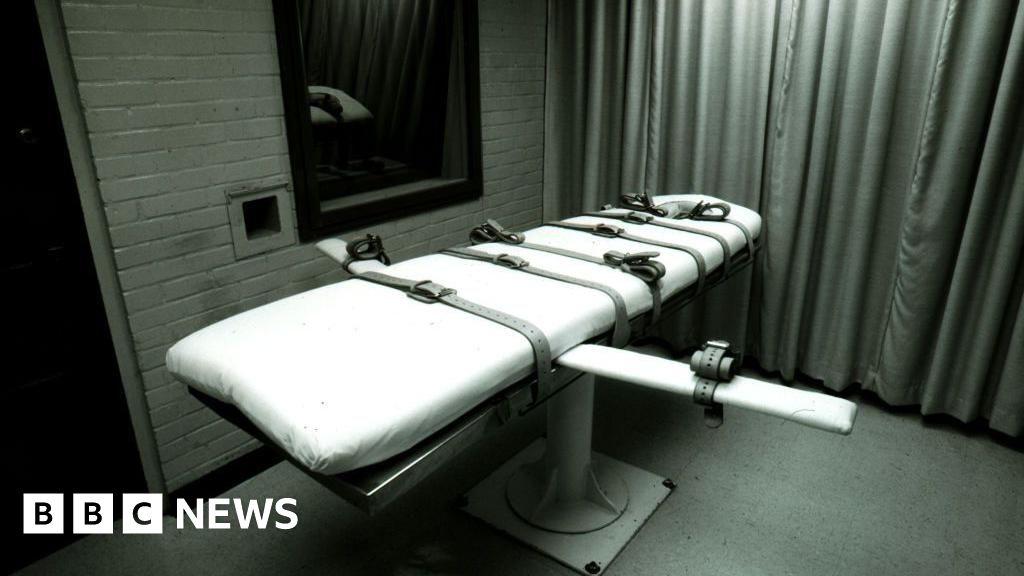
The U.S. Department of Justice announced on Friday that it is taking steps to “strengthen the federal death penalty,” including bringing back firing squads and readopting the lethal injection protocol used during the first Trump administration.
“The administration of United States President Donald Trump has announced plans to expand the use of the federal death penalty, including through the deployment of firing squads”
In a news release, the department said it was acting to “restore its solemn duty to seek, obtain, and implement lawful capital sentences – clearing the way for the Department to carry out executions once death-sentenced inmates have exhausted their appeals.”
The Justice Department said it would “readopt the lethal injection protocol utilized during the first Trump Administration,” which “relies on pentobarbital as the lethal agent,” and it would “expand[] the protocol to include additional manners of execution such as the firing squad.”
The department also said it was “streamlining internal processes to expedite death penalty cases,” and it “rescinded” the Biden-era moratorium on federal executions.
In the same statement, the DOJ said it had “authorized seeking death sentences against 44 defendants,” and that Acting Attorney General Todd Blanche had “already authorized seeking death sentence against nine of these defendants.”
NBC News reported that the DOJ directed federal prisons to expand the range of methods used for executions to include firing squads, electrocution and gas asphyxiation, and it said the recommendation came in a Justice Department report fulfilling Trump’s promise to resume capital punishment at the federal level.
The BBC similarly reported that the DOJ directed federal prisons to expand methods to include firing squads, gas asphyxiation and electrocution, and it quoted the department’s memo describing the change as “strengthen[ing]” the death penalty.
How the policy was set
The DOJ’s Friday announcement was framed as a reversal of the Biden administration’s approach to federal executions, which had been on hold since 2021.
The Guardian reported that federal executions had been on hold since 2021, when then-attorney general Merrick Garland imposed a moratorium on federal executions under the Joe Biden presidency, pending “a review of the Justice Department’s policies and procedures.”
The BBC said that before leaving office, former president Joe Biden gave clemency to 37 of the 40 federal death row prisoners, and it described Trump’s direction to resume seeking executions on his first day in office last year.
Multiple outlets tied the DOJ’s move to Trump’s executive order and his stated priorities for capital punishment, including cases involving slain law enforcement officers or capital crimes committed by undocumented immigrants.
The Tallahassee Democrat reported that the move was in response to a day-one executive order from President Donald Trump instructing the Attorney General to prioritize seeking death sentences, and it also said the order directed the attorney general to investigate whether 37 death row inmates whose sentences were commuted by former President Joe Biden could be charged with state capital crimes.
The Hill described the DOJ’s action as bringing back firing squads and electric chairs for some death penalty cases and “readopting” lethal injections, and it said the DOJ directed the Federal Bureau of Prisons to expand execution protocols to “include additional manners of execution such as the firing squad.”
The Al Jazeera report said the policy document touted steps for “restoring and strengthening” the death penalty as integral to the pursuit of justice, and it quoted Acting Attorney General Todd Blanche writing that “This changed when Donald Trump became President.”
Blanche and Durbin react
Acting Attorney General Todd Blanche defended the DOJ’s Friday steps as a return to enforcing the law and protecting the public, while Democratic lawmakers and death-penalty critics condemned the change as cruel.
The Hill quoted Blanche saying, “The prior administration failed in its duty to protect the American people by refusing to pursue and carry out the ultimate punishment against the most dangerous criminals, including terrorists, child murderers, and cop killers,” and it added, “Under President Trump’s leadership, the Department of Justice is once again enforcing the law and standing with victims.”
The BBC reported that Democratic Senator Dick Durbin called the change “cruel, immoral, and discriminatory,” and it quoted Durbin saying, “Expanding the federal death penalty will be a stain on our history,” in a statement on X.
The Guardian included a statement from Matt Wells, the deputy director of Reprieve, who said Friday’s report illustrated “the federal government’s determination to execute, at all costs,” and Wells added, “They don’t care how they do it – this report opens the door to a whole range of appalling methods.”
The Tallahassee Democrat also described anti-death-penalty advocates and inmate attorneys arguing that documents released in 2025 include incidents of the state using the wrong or expired chemicals or insufficient dosages and subjecting inmates to cruel and unusual suffering during executions, a violation of the Eighth Amendment.
In a separate reaction tied to state politics, the Tallahassee Democrat reported that after Fox News posted on X about the DOJ report, Governor Ron DeSantis’ chief of staff, Jason Weida, shared it with the statement, “Bravo. Would love to see this in Florida.”
The BBC also quoted the DOJ memo defending the use of lethal injection, calling pentobarbital “the gold standard of lethal injection drugs,” and it said the memo argued broadening methods would help ensure the department is prepared even if a specific drug is unavailable.
Different outlets, different emphases
While all the outlets described the DOJ’s Friday policy shift, they emphasized different aspects of what the change means for federal executions, legal process, and drug availability.
The Guardian focused on the DOJ’s steps to “readopt” pentobarbital and to “expand[] the protocol to include additional manners of execution such as the firing squad,” and it also highlighted that the DOJ had “rescinded” the Biden-era moratorium and “authorized seeking death sentences against 44 defendants.”

The BBC foregrounded the breadth of methods, reporting that the DOJ directed federal prisons to expand methods to include firing squads, gas asphyxiation and electrocution, and it quoted the memo’s framing that it would “strengthen” the death penalty by “deterring the most barbaric crimes, delivering justice for victims, and providing long-overdue closure to surviving loved ones.”
The NBC News account centered on the practical rationale, saying the recommendation noted difficulties in obtaining drugs for lethal injections and quoting the report’s statement that “This modification will help ensure the Department is prepared to carry out lawful executions even if a specific drug is unavailable.”
The Tallahassee Democrat tied the policy change to Florida’s possible next steps, asking “Is Florida next?” and reporting that DeSantis’ chief of staff Jason Weida said, “Bravo. Would love to see this in Florida,” after Fox News posted on X.
The Hill and CNN both described the DOJ’s move as part of expediting cases, with The Hill saying the DOJ would streamline internal processes and with CNN reporting that the DOJ was “continuing to clear the way for expediting federal death-penalty cases.”
In contrast, Al Jazeera placed the DOJ’s move in a broader political and historical context, quoting Blanche’s claim that “The federal death penalty has been rendered a dead letter, effectively transforming sub silentio each death sentence into a life sentence,” and it also included Trump’s 1989 full-page advertisements calling to “bring back the death penalty.”
What comes next
The DOJ’s Friday announcement also set out what it planned to do next, including potential changes to federal habeas review and rules affecting clemency petitions, while leaving only a small number of federal death-row inmates facing execution.
“Topline The Justice Department on Friday said it will seek to impose the death penalty in more federal cases and will expand the way in which convicted inmates can be killed—including bringing back the firing squad as a means of execution”
The Guardian reported that the DOJ said it planned in the coming weeks to also “consider a rule that will empower states to streamline federal habeas review of capital cases,” to “publish a proposed rule prohibiting capital inmates from submitting clemency petitions” and more.

The Guardian also reported that the DOJ said it would “streamline internal processes to expedite death penalty cases,” and it described the broader push as reversing what it called the Biden Justice Department’s efforts to erode the death penalty.
NBC News said that none of the three men on federal death row have yet received execution dates, naming Dzhokhar Tsarnaev, Dylann Roof and Robert Bowers, and it said it can take many years for condemned prisoners to exhaust legal avenues.
The Hill similarly listed three men remaining on federal death row and said the DOJ’s move would apply to “some death penalty cases,” while also noting that five states authorize the death penalty by firing squad.
The Guardian and Tallahassee Democrat both pointed to the political and public backdrop, with the Guardian citing a Gallup poll published in October that found support for capital punishment had declined from 80% in 1994 to 52% in 2025, and with the Tallahassee Democrat saying public support remains at a five-decade low of 52% and that a 2025 Gallup poll showed more than half of young U.S. adults ages 18 through 43 opposing it.
Finally, the policy shift is occurring alongside state-level developments, with the Tallahassee Democrat describing Florida’s legal groundwork through HB 903 and with NBC News describing that five states have firing squads and that South Carolina carried out the first execution by firing squad in 15 years after Brad Sigmon chose the method.
More on USA

Pete Hegseth Says U.S. Blockade of Iranian Vessels Will Continue in Strait of Hormuz
11 sources compared

DOJ Ends Criminal Probe Into Fed Chair Jerome Powell, Clearing Way for Kevin Warsh Confirmation
20 sources compared

Trump Administration Sanctions Hengli Petrochemical And 40 Shippers Over Iranian Oil
16 sources compared

Trump Administration Considers Suspending Spain From NATO Over Iran War Support
15 sources compared