Pete Hegseth Says U.S. Blockade of Iranian Vessels Will Continue in Strait of Hormuz
Key Takeaways
- Blockade of Iranian vessels and ports remains in effect, with no hurry for peace deal.
- Allies, especially Europe and Asia, should join security efforts in Strait of Hormuz.
- The operation enters a new phase intended to pressure Tehran to negotiate.
Blockade to Continue
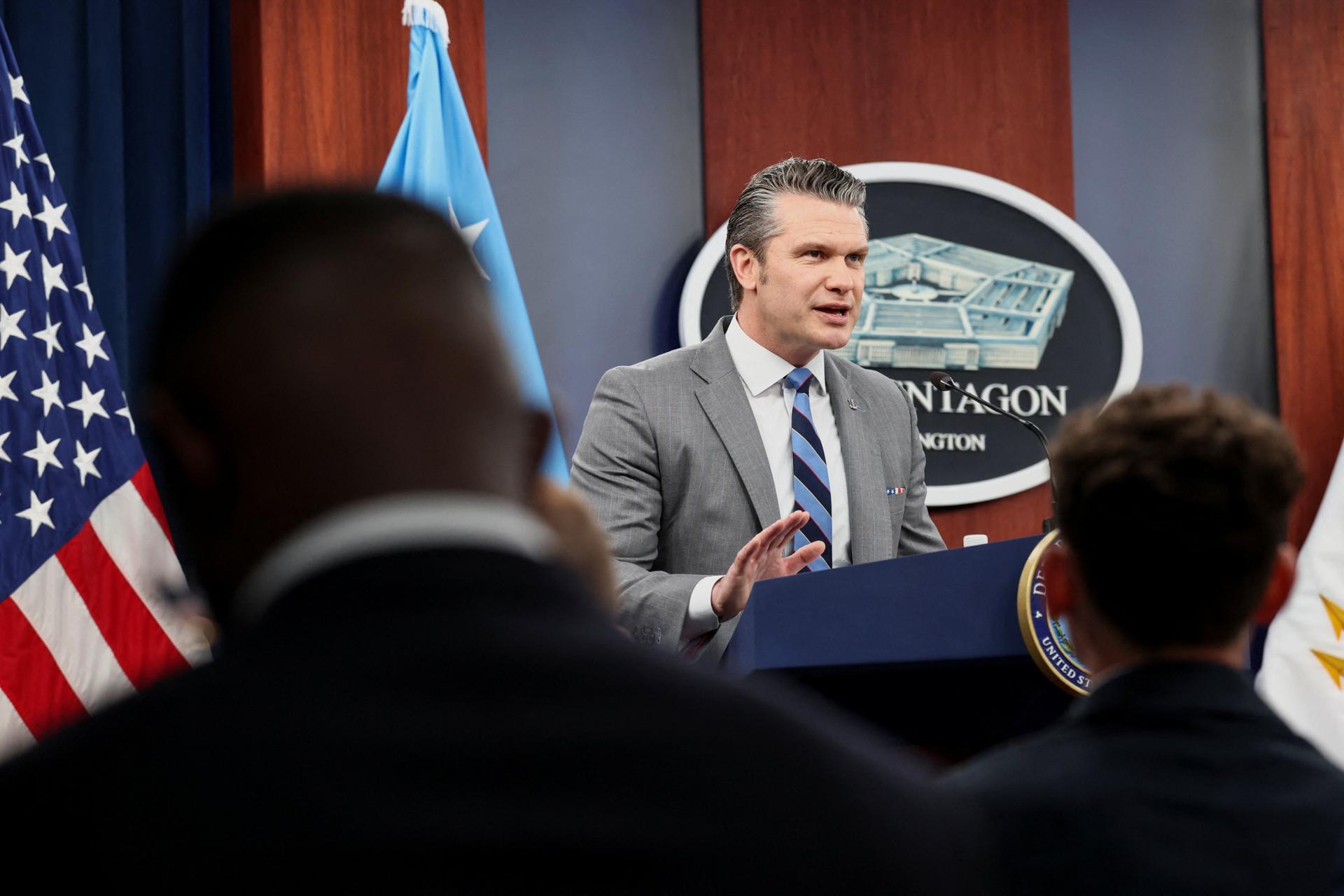
Defense Secretary Pete Hegseth told reporters at the Pentagon that the U.S. blockade of Iranian vessels and ports will remain in place “as long as it takes,” while also signaling that the Trump administration is “in no hurry to reach a peace deal with Iran.”
“Washington — Defense Secretary Pete Hegseth said Friday that the U”
Speaking Friday, Hegseth echoed President Trump’s comments that the U.S. is in control of the timeline for “Operation Epic Fury,” which the CBS News report says has continued for nearly two months.

Hegseth also said the U.S. is not anxious for an agreement, pointing to Trump’s statement that “We have all the time in the world, and we're not anxious for a deal.”
The CBS News account says Hegseth stressed the scope of the blockade in the Strait of Hormuz, calling it “ironclad,” and adding that “a second aircraft carrier will be joining the blockade in the coming days.”
Hegseth framed the blockade as expanding, saying “Our blockade is growing and going global,” and the CBS News report states that “as of Friday morning, 34 non-Iranian vessels are able to transit the Strait of Hormuz.”
The same briefing included a warning about mines and rules of engagement, with Hegseth saying, “If Iran is putting mines in the water, or otherwise threatening American commercial shipping or American forces, we will shoot to destroy. No hesitation.”
CBS News also reports that Chairman of the Joint Chiefs of Staff Gen. Dan Caine provided details, including that “34 ships have met the U.S. blockade and turned around,” while the M/V Touska was seized.
Mines as the Bottleneck
In a separate Pentagon briefing reported by gCaptain, Hegseth reinforced that mines remain a central obstacle to restoring confidence in the Strait of Hormuz even as some traffic moves.
When asked whether the mine threat had been neutralized enough to restore freer flows, Hegseth said, “We are seeing vessels transiting. There are paths that are open,” while also describing the situation as constrained: “Transit is occurring, much more limited than anybody would like to see, and with more risk than people would like to see.”

The gCaptain account says Hegseth did not explicitly confirm whether Iran has already mined or continues to mine commercial shipping lanes, but he did cite Trump’s authorization for U.S. naval forces “to destroy any Iranian fast boats that attempt to put mines in the water or disrupt passage through the Strait of Hormuz.”
Hegseth’s warning was direct in the gCaptain report: “If Iran is putting mines in the water… we will shoot to destroy, no hesitation.”
The same report says Hegseth confirmed U.S. mine countermeasure operations are underway, citing Trump’s order that American mine “sweepers are clearing the Strait right now,” and that those efforts had been surged.
gCaptain also describes a reporter referencing a leaked Pentagon briefing suggesting clearing could take as long as six months, and it says Hegseth declined to validate that timeline, stating, “We would not speculate on a timeline.”
The briefing also included Joint Chiefs Chairman Gen. Dan Caine, who in the gCaptain account said Iran retains “a variety of smaller Boston Whaler-sized boats” associated with the threat.
Allies Told to Act
CNN’s account of Hegseth’s remarks focused on the demand that allies take a larger role in the Strait of Hormuz rather than relying on the United States.
“barsbincheckedcloseclouddown-chevrondownexpandexternal-linkfast-forwardfog01101112131415161718192202122232425262728293303132333435363738394404142434445464756789closenafuture-twcicekeylayersleft-chevronlocationminus-thinminusfullMoonfirstQuarterlastQuarternewMoonwaningCrescentwaningGibbouswaxingCrescentwaxingGibbousnext-buttonpause-buttonpause-iconpause-twcplay-buttonplay-icon-engageplay-iconplay-twcplus-thinpluspoolprecipRainprecipMixprecipRainprecipSnowprev-buttonright-chevronsearchsettingsshowershrinkstar-emptystar-fullstop-buttonsunrisesunsettogglesup-chevronvolumewarningwind Flood Warning until THU 1:00 PM CDT, Mchenry County, Lake County 7 River Flood Warning until SUN 1:00 AM CDT, Lake County River Flood Warning until SUN 1:00 PM CDT, Lake County River Flood Warning until SAT 1:00 PM CDT, Lake County, Cook County River Flood Warning is in effect, Lake County, Mchenry County, Kane County, Lake County, Kenosha County River Flood Warning until TUE 1:00 PM CDT, Kane County, Kendall County River Flood Warning until SAT 11:00 AM CDT, Cook County”
CNN reports that Hegseth argued the U.S. shouldn’t shoulder the burden of protecting the chokepoint, saying America “barely” uses the chokepoint and has ample energy supplies, while Europe and Asia should stop “free-riding” and take a larger role.
The Independent similarly quotes Hegseth telling Europe to “stop talking and get in a boat” to help reopen the Strait of Hormuz, describing it as a pointed criticism of allies.
In The Independent’s account, Hegseth said “the time for free riding is over” and argued the U.S. “deserves allies who are capable, who are loyal, and who understand that being an ally is not a one-way street.”
The Independent also reports Hegseth’s claim that “We are not counting on Europe, but they need the Strait of Hormuz much more than we do,” and that Europe should do “less talking and having less fancy conferences in Europe and get in a boat.”
CNN’s framing and The Independent’s framing both tie the pressure on allies to the ongoing blockade and the U.S. insistence that it is not rushing toward a peace deal.
The Independent places the comments “amid a deepening rift between Washington and its Western allies,” and it says the backdrop included a Reuters report that the United States was weighing options to punish NATO allies it believes failed to support operations in the war with Iran.
Escalation and Counter-Statements
While Hegseth and U.S. officials emphasized blockade enforcement and mine threats, the reporting also shows how Iran and other regional actors responded.
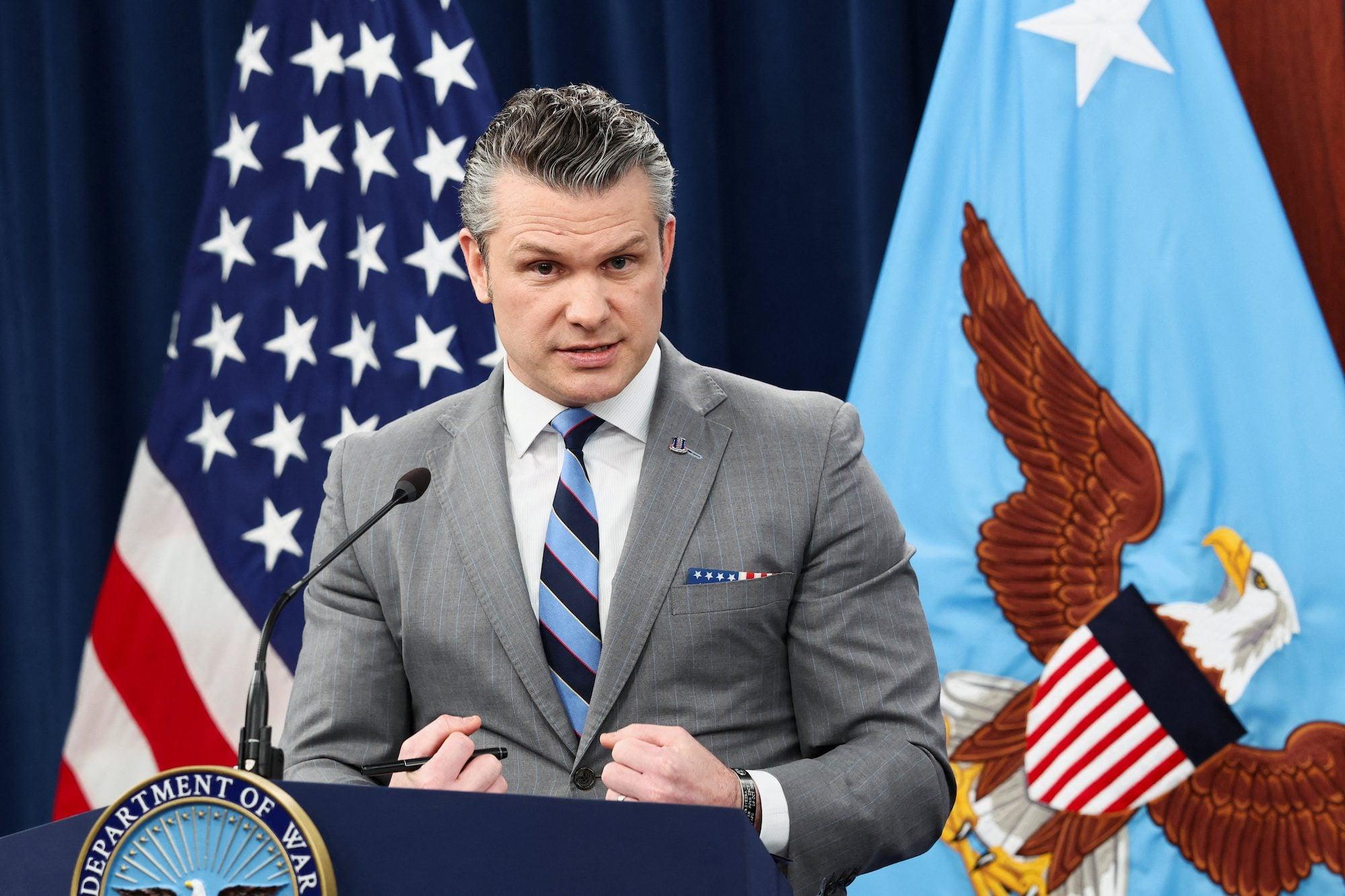
CBS News says Iran criticized the naval blockade and argued it is a breach of the ceasefire, quoting Hegseth’s response that “All they have to do is abandon a nuclear weapon in meaningful and verifiable ways, or instead they can watch the regime's fragile economic state collapse under the unrelenting pressure of American power, a blockade as long as it takes, whatever President Trump decides.”
The Independent adds that Tehran “says is keeping negotiations at an impasse,” and it reports that “Tehran has said it will not negotiate until Washington lifts its restrictions on Iranian shipping.”
The Independent also describes a diplomatic development in which Iranian foreign minister Abbas Araghchi arrived in Pakistan to discuss proposals for restarting talks with the United States, citing Pakistani government sources that he was expected to discuss his side of the proposal for talks with the U.S. and convey it to Washington.
In the same Independent account, Hegseth said Iran still had a chance to make a “good deal,” quoting him: “Iran knows that they still have an open window to choose wisely ... at the negotiating table. All they have to do is abandon a nuclear weapon in meaningful and verifiable ways.”
The Independent further reports that the war started on 28 February and that it has been at an impasse since Trump said on Tuesday he would indefinitely extend the ceasefire with Iran at the request of Pakistan until peace terms are agreed or reach a dead end.
It also reports that Trump ordered the U.S. military to “shoot and kill” Iranian small boats in the strait and claimed a leadership rift inside the Islamic Republic, which Iranian President Masoud Pezeshkian and Parliament Speaker Mohammad Bagher Qalibaf rejected with “In Iran there are no ‘hard-liners’ or ‘moderates.’ We are all Iranians and revolutionaries.”
What Comes Next
Across the U.S. reporting, the next phase is framed as continuing pressure while keeping the option of force open if the ceasefire collapses.
The Hill reports that Hegseth and Joint Chiefs of Staff Chair Gen. Dan Caine would speak with reporters Friday morning as tensions remained high over the conflict in Iran and the Strait of Hormuz, and it says the briefing came after Trump announced that Israel and Lebanon agreed to extend their temporary truce for another three weeks.

The Hill also says Trump expanded the fragile ceasefire with Iran “indefinitely” earlier in the week, while U.S. Central Command “touted early Friday” that the Pentagon has three aircraft carriers operating in the Middle East for the “first time in decades.”
KTXS and the National News Desk both describe Hegseth’s view that the war has delivered “rapid and decisive results” and is entering a new phase aimed at forcing Tehran to negotiate as the war approaches the eight-week mark.
In those accounts, Hegseth described the blockade as “ironclad” and “growing and going global,” and he warned that U.S. forces have clear orders to use lethal force if Iran attempts to disrupt shipping in the Strait of Hormuz, quoting him: “If Iran is putting mines in the water or otherwise threatening commercial shipping, we will shoot to destroy—no hesitation.”
KTXS and the National News Desk also both cite Joint Chiefs Chairman Gen. Dan Caine saying “34 vessels have already turned around” and that the Touska was disabled and seized after ignoring repeated warnings.
Meanwhile, KTXS reports that U.S. military officials are developing contingency plans to target Iran’s capabilities in the Strait of Hormuz should the ceasefire collapse, and it says those plans call for “a more concentrated bombing campaign around strategic waterways.”
More on USA

DOJ Brings Back Firing Squads, Gas, Electrocution for Federal Executions
12 sources compared

DC Circuit Blocks Trump Executive Order Suspending Asylum Access at U.S.-Mexico Border
13 sources compared

DOJ Ends Criminal Probe Into Fed Chair Jerome Powell, Clearing Way for Kevin Warsh Confirmation
20 sources compared

Trump Administration Sanctions Hengli Petrochemical And 40 Shippers Over Iranian Oil
16 sources compared