Full Analysis Summary
Epstein files disclosure
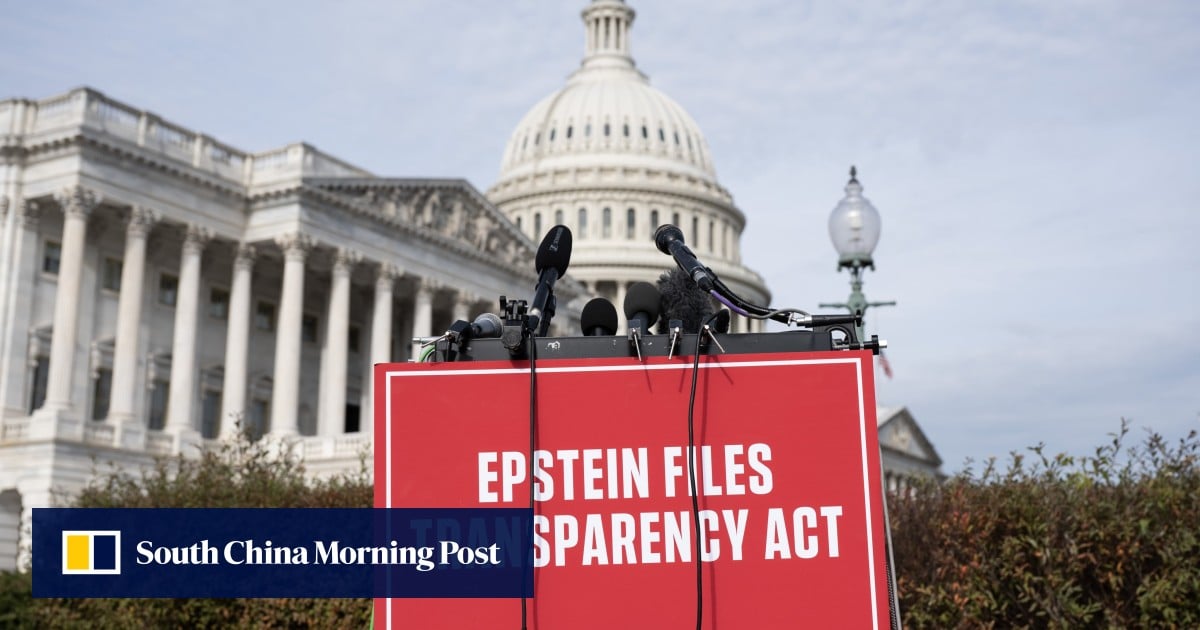
The Justice Department faces a statutory deadline of Dec. 19 to disclose a large, decades-spanning archive of files related to Jeffrey Epstein under the Epstein Files Transparency Act.
The documents are expected to include investigative material that could potentially reveal how his sex-trafficking operation worked and who aided or protected him.
They are also expected to contain items such as victim statements, flight logs, seized devices, correspondence about charging decisions, and records about his death.
Outlets call the release a crucial moment for public transparency and for survivors seeking answers.
Advocates and survivors view the release as a major opportunity to lift the veil on Epstein’s network, even as officials warn that legal limits could constrain what is made public.
Coverage Differences
Tone and emphasis
All three sources report the Dec. 19 deadline, but they emphasize different aspects. Mathrubhumi (Asian) stresses the range of specific documents and the release as a chance to "lift the veil" while warning about redactions; South China Morning Post (Asian) highlights the potential awkwardness for Donald Trump and the exploitation of underage girls; Report Focus News (Other) frames the deadline as a test of government transparency and explicitly notes Epstein’s 2019 death in custody.
Archive contents and reactions
Reports say the archive will include investigative reports, internal Department of Justice correspondence, court filings and evidence such as flight logs and seized electronic devices.
Some outlets explicitly state the files will also cover records about Epstein's jail death, which was officially ruled a suicide.
Survivors and lawyers have publicly expressed hope that the disclosures could clarify prosecutorial choices and reveal previously unknown associates.
Many observers, however, predict heavy redactions or that material will be withheld on legal or national-security grounds.
Coverage Differences
Narrative detail and specificity
Report Focus News (Other) lists the types of documents expected and explicitly includes records about Epstein’s jail death as part of the disclosures; Mathrubhumi (Asian) similarly itemizes documents and notes the possibility of exposing "new associates or clarify prosecutorial decisions," while South China Morning Post (Asian) stresses potential legal withholding and focuses language on exploitation of underage girls. The sources thus differ in what document types they highlight and in the framing of possible revelations.
Political reactions to disclosures
Coverage highlights political sensitivities surrounding the disclosures.
Outlets note the release could be awkward for former President Trump, who once socialized with Epstein.
They add that the transparency push has itself been politicized.
Mathrubhumi reports Trump called the effort a 'Democrat hoax' before signing the act.
Report Focus News says he initially resisted transparency but ultimately signed the bipartisan bill into law.
The South China Morning Post frames the disclosure as potentially embarrassing because of Epstein's links to powerful figures.
Coverage Differences
Attribution and reported claims
Mathrubhumi (Asian) explicitly quotes Trump as calling the transparency push a 'Democrat hoax' and notes he signed the law; Report Focus News (Other) reports Trump "initially resisted" then signed the bipartisan bill; South China Morning Post (Asian) emphasizes that disclosures may be "awkward for Donald Trump" given past scrutiny. The sources are reporting on the same sequence but choose different quotes and emphases — Mathrubhumi uses Trump's own phrasing, Report Focus reports on his resistance and eventual signature, and SCMP frames the public‑interest consequence.
Transparency and redaction concerns
Despite optimism from survivors and transparency advocates, multiple sources warn that the practical impact of the release is uncertain because of potential redactions and legal exemptions.
Mathrubhumi notes that transparency advocates warn the Department of Justice can still withhold or redact material that would identify victims, jeopardize active investigations, or affect national security, and observers expect heavy redactions despite a ban on censoring material merely for embarrassment or political sensitivity.
The South China Morning Post similarly cautions that some sensitive details may still be withheld for legal reasons, while Report Focus News calls the moment a major test of the government's commitment to transparency, with many observers expecting significant redactions.
Coverage Differences
Severity of skepticism
All sources express skepticism about complete disclosure, but Mathrubhumi (Asian) provides the most detailed list of legal grounds for withholding or redacting material and cites survivors by name; South China Morning Post (Asian) frames the restraint more generally as legal withholding of "sensitive details;" Report Focus News (Other) characterizes the release as a "major test" and highlights expectations of significant redactions. The differences lie in the level of specificity and the prominence given to survivor perspectives.
Implications of file disclosure
The files' disclosure on Friday could either provide new leads for investigations and name previously unknown associates or offer limited clarity because of redactions and political maneuvering.
Observers and some senators, including Sen. Ron Wyden, are pursuing parallel inquiries and financial probes to try to fill gaps they expect in the public release.
Three sources converge on the central facts — the deadline, the likely contents and the political sensitivity — but differ in emphasis and detail, leaving uncertainty about how revealing the released archive will be.
Coverage Differences
Consensus vs. emphasis
All sources converge on the deadline and that the release is politically sensitive; Mathrubhumi (Asian) emphasizes congressional skepticism and mentions named survivors and senators like Ron Wyden pursuing parallel inquiries, South China Morning Post (Asian) foregrounds potential embarrassment for powerful figures including Trump, and Report Focus News (Other) frames the moment as a transparency test with specific documentary categories. Those editorial choices shape how urgent or potentially consequential each outlet portrays the release.