
Dolores Huerta Accuses César Chávez of Sexually Abusing Her
Key Takeaways
- Allegations include sexual abuse of women and Dolores Huerta by Chavez during UFW leadership.
- UFW and Chavez Foundation canceled Cesar Chavez Day celebrations amid the allegations.
- New York Times investigation alleges Chavez abused women and girls.
Huerta's Sexual Abuse Allegations
Labor rights icon Dolores Huerta has broken a 60-year silence to accuse her longtime collaborator César Chávez of sexually abusing her during their work together in the 1960s.
“Chavez has been a longtime-celebrated figure in the Democratic Party as a model for labor rights”
In a statement released Wednesday, Huerta detailed two separate sexual encounters with Chávez, describing the first as a situation where she was 'manipulated and pressured' into sex due to his position as her boss and movement leader.

The second encounter, she said, was 'forced against my will' in an environment where she felt trapped.
Both encounters resulted in pregnancies that Huerta concealed, arranging for the children to be raised by other families while maintaining relationships with them without revealing their true parentage until recently.
Huerta explained her decades of silence by stating she 'believed that exposing the truth would hurt the farmworker movement I have spent my entire life fighting for,' but felt compelled to come forward after learning that others had experienced similar treatment by Chávez.
NYT Investigation Findings
Huerta's allegations corroborated findings from a multi-year investigation by The New York Times, which revealed that Chávez groomed and sexually abused young girls who were involved in the farmworker movement.
The investigation, based on interviews with more than 60 people and review of union records, emails, photographs, and recordings, found that Chávez engaged in inappropriate sexual behavior with women and minors during his time as president of the United Farm Workers of America.
Two women, Ana Murguia and Debra Rojas, both now 66 years old, came forward with detailed accounts of Chávez sexually abusing them when they were children, with Murguia stating the abuse began when she was 13 and occurred repeatedly in Chávez's office.
The Times reported that both women struggled with depression, panic attacks, and substance abuse in the years since the abuse, having maintained their silence for decades fearing speaking out would tarnish Chávez's legacy.
Institutional Responses
The allegations against Chávez have triggered widespread institutional and governmental responses across the United States.
The United Farm Workers union, which Chávez co-founded, announced it would not participate in any César Chávez Day activities, calling the allegations 'deeply troubling' and 'incompatible with our organization's values.'
The union stated that allegations involving 'abuse of young women or minors' were particularly concerning and established plans to create an external, confidential channel for those who may have experienced harm.
In Arizona, Governor Katie Hobbs became the first governor to publicly distance herself from Chávez, declining to recognize March 31 as César Chávez Day as she had in previous years, citing her 'deep concern' about the 'troubling allegations.'
Multiple cities including San Francisco, Austin, Tucson, and San Antonio canceled planned Chávez Day celebrations, and there are growing calls to rename streets, schools, and other landmarks bearing Chávez's name.
Community Responses
Latino civil rights leaders and community organizations have responded to the allegations with a mix of condemnation, support for survivors, and emphasis on separating Chávez's personal misconduct from the broader farmworker movement.
Organizations such as Voto Latino and LULAC issued statements condemning sexual violence while emphasizing that 'the farmworker movement has always been bigger and far more important than any one individual.'

U.S. Congresswoman Teresa Leger Fernández, chair of the Democratic Women's Caucus, expressed being 'heartbroken and deeply disturbed' by the accounts, stating that 'honoring that legacy means facing painful truths and continuing the work for justice with honesty and humanity.'
The Congressional Hispanic Caucus released a statement asserting that 'accountability never dies' and that 'we cannot celebrate a man, regardless of his accomplishments, if he harmed women and children in such vile ways.'
Meanwhile, some community members expressed disbelief and concern about what they perceive as an effort to diminish Latino historical figures, with activist Martha Ugarte stating, 'I feel that they want to take away from us the few leaders that Latinos have.'
Family and Foundation Responses
The Chávez family has responded to the allegations with a statement expressing shock and sadness while acknowledging the voices of those reporting abuse.
“He married Helen Fabela in 1948, and they had eight children between 1949 and 1958, according to a California state biography”
'Our family is shocked and saddened to learn of news that our father, César Chávez, engaged in sexual impropriety with women and minors nearly 50 years ago,' the family statement read.
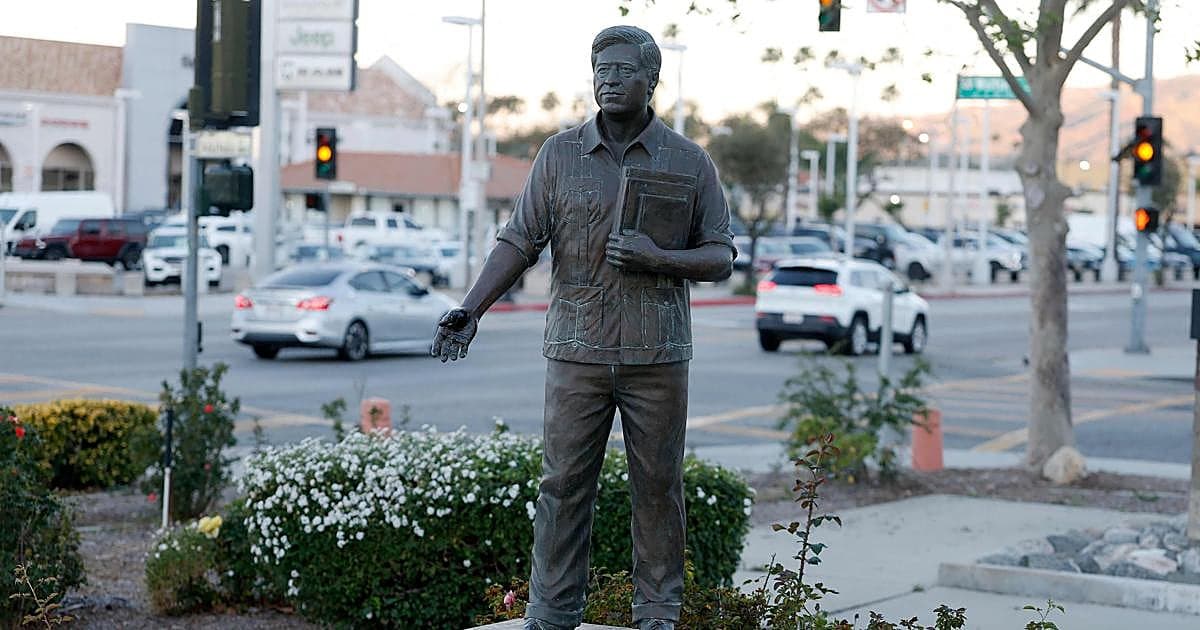
'As a family steeped in the values of equity and justice, we honor the voices of those who feel unheard and who report sexual abuse.'
The family emphasized that 'Mr. Chávez's crimes do not diminish the courage of farm workers and workers everywhere who fight for their rights, equality for Latinos, and a stronger nation for everyone.'
Meanwhile, the César Chávez Foundation, which works to preserve Chávez's legacy, released a statement expressing being 'deeply shocked and saddened' by the allegations and announced it would partner with the United Farm Workers to establish 'a safe and confidential process for those who wish to share their experiences of historic harm, and, if they choose, participate in efforts toward repair and reconciliation.'
More on USA

President Donald Trump Waives Jones Act for 60 Days to Cut Oil and Gas Costs
14 sources compared

Trump Waives Jones Act for 60 Days to Relieve Oil Price Surge Amid Iran War
10 sources compared

President Trump waives Jones Act to ease fuel costs amid US-Israel war against Iran.
10 sources compared

Rand Paul Opposes Mullin's Homeland Security Nomination Over Anger Issues and Inflammatory Remarks.
13 sources compared