
Donald Trump Could Become A Lame Duck If Democrats Win Control Of Congress
Key Takeaways
- Midterm elections could redefine Trump's political power and status.
- Trump seeks to influence the midterms, proposing federal control in some states.
- Analysts discuss strategies to keep the Republican base strong through the midterms.
Midterms and Trump’s leverage
The United States is set to hold midterm elections on November 3, 2026, and the question posed by Jean-Eric Branaa is what will become of Donald Trump if he loses control of Congress.
In an interview carried by ladepeche.fr, Branaa says the president would become “a lame duck,” arguing that “Normally, the president loses in midterms.”

Branaa frames the vote as a test of whether Trump will be “stopped in his increasingly autocratic exercise of power,” while also pointing to Trump’s stated desire to remove the organization of elections in the United States, which Branaa calls “simply unconstitutional.”
Branaa describes how House control would affect budget and allocation, saying “The House of Representatives votes on the budget and its allocation,” and that if Democrats take control it could lead to “potential blockages.”
He adds that Democratic control would enable “investigative commissions” and could open a “possible impeachment procedure,” even if he says it “would not be successful.”
The Hill’s Liz Peek similarly argues that “A lame-duck president” would have less power than Trump has today, but she ties the outcome to whether Trump can keep his party strong into the midterms.
In that analysis, the House passed legislation ending “the partial government shutdown” while lawmakers negotiated over “Immigration and Customs Enforcement policy and funding for the Department of Homeland Security,” underscoring that the midterms are already intersecting with immigration and funding fights.
How control could shift
Branaa’s analysis lays out a concrete chain from election results to institutional power, starting with the House’s role in budgeting and moving toward oversight tools.
He says, “The House of Representatives votes on the budget and its allocation,” and argues that if Democrats take control it could cause “potential blockages,” noting that “We can already see, the country is in the throes of a 'shutdown'.”
He also describes how Democrats could use control of finances to “thus have the power to block things,” and he adds that it would “grant them the right to launch investigative commissions.”
Branaa then connects that oversight to impeachment, saying “Not to mention a possible impeachment procedure,” and he emphasizes that it “would not be successful, but would make Donald Trump the only president to have undergone three impeachments during his terms.”
Even with those constraints, Branaa says the president could still act “by decree,” concluding that “Not completely, since the president can still act by decree.”
The Hill’s Liz Peek approaches the same institutional question from the opposite direction, arguing that Trump can keep his party strong into the midterms and that supporters hope he will not be “washed up.”
She grounds that claim in a Manhattan Institute study from December, saying “only 56 percent of the Republicans Trump has newly brought into the party” would “definitely” support a Republican in 2026, compared with “70 percent of “core Republicans.””
Election “nationalization” push
Le Grand Continent reports that Trump declared in January that there should not be midterm elections in November due to the risk of a Republican defeat in the House and Senate, and it describes a parallel effort to “nationalize” the vote.
“by Liz Peek, opinion contributor02/06/26 08:00 AM ET WASHINGTON, DC - FEBRUARY 03: Senate Majority Whip John Barrasso (R-WY), U”
The outlet says that earlier this week, Trump called for 'nationalizing' the vote in 15 Republican states, without naming them, in order to place the administration of elections in the hands of the federal government loyal to the president.
It emphasizes that “In the United States, states are responsible for administering elections and counting votes,” and that states delegate administration to city and county authorities through “the thousands of voting districts that exist in the country.”
Le Grand Continent adds that Trump “has not explained how he intends to 'nationalize' the elections,” calling the formulation “vague” and saying it does not seem to have the support of Republican leaders in Congress, “John Thune and Mike Johnson.”
The piece also links the White House’s framing to the SAVE Act, stating that “According to the White House, the president's statements” constitute support for a bill blocked in the Senate last year but “has, however, re-emerged strongly at the start of 2026.”
It describes the SAVE Act as requiring “all Americans to present a birth certificate, a passport, or any other document proving their citizenship each time they register or re-register to vote,” and it says the measure enjoys broad support “(83%).”
Le Grand Continent then cites an expert argument that the SAVE Act would harm voting because “more than 20% of voting-age Americans do not possess a valid driver's license.”
Legal and enforcement groundwork
Le Grand Continent also describes how the administration’s election-focused actions could extend beyond legislation into federal enforcement guidance and information-sharing.
It says the Department of Justice appears to have begun joining Trump’s attempt to nationalize the elections by preparing an update to the manual “Federal Prosecution of Election Offenses,” describing the document as intended for prosecutors that deals with federal prosecutions for election offenses.
The outlet quotes the manual’s current version as advising prosecutors “not to seize election-related material before the election has been certified” and to “refrain from questioning voters in order not to 'cool legitimate electoral activities.'”
It adds that the manual’s principles “also advocate respect for the states' role and 'emphasize moderation' in the exercise of federal authority in law enforcement affecting the electoral process.”
Le Grand Continent reports that the Department of Justice removed the latest version of the document from its website, noting it was “dating from 2017,” and it frames that removal as “could be signaling future changes to its recommendations.”
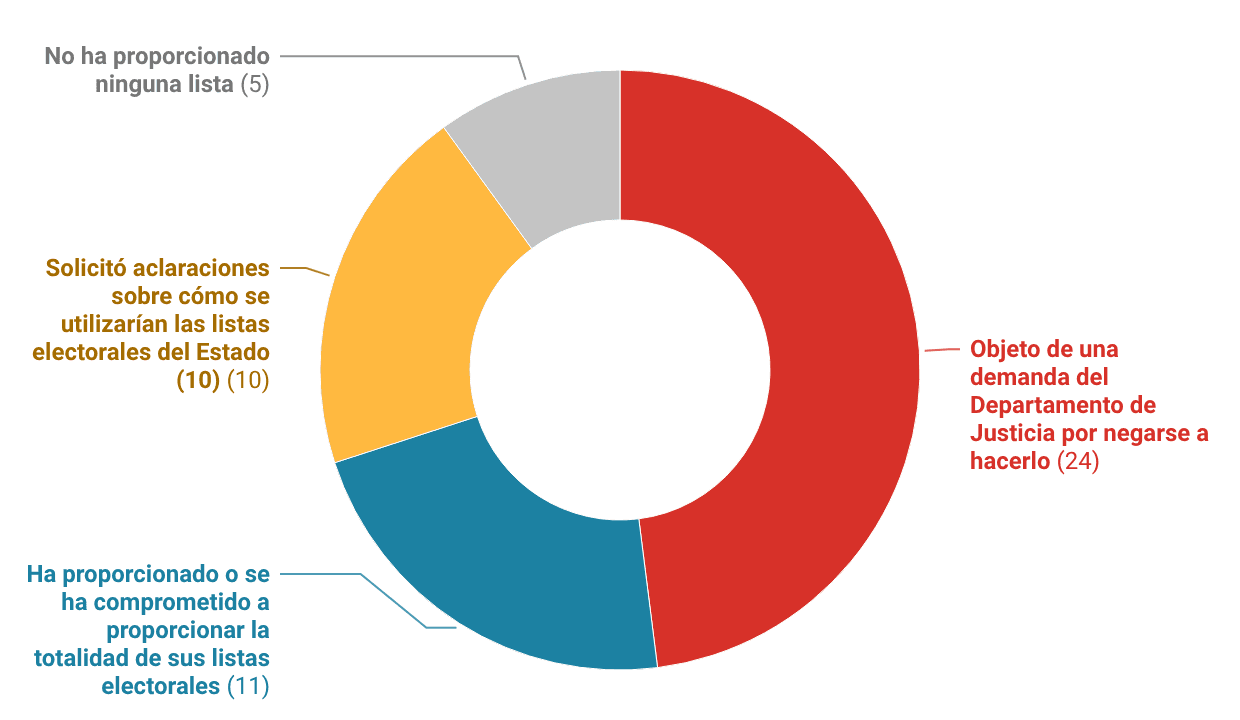
The outlet then lists steps it says the administration is laying groundwork for, including “forcing states to share their electoral records with the Department of Justice,” “asking the Department of Commerce to conduct a new census (which would be illegal),” “attempting to ban mail-in voting,” and “carrying out a highly controversial redistricting of electoral districts in several Republican states.”
It also ties the effort to a specific earlier episode, saying the Brennan Center notes the logic aligns with the government registering an election center in Fulton County, Georgia, on January 28 to search for documents related to the 2020 elections.
What’s at stake after votes
Across the three U.S.-focused pieces, the stakes after the midterms are portrayed as both immediate and long-running, affecting immigration policy, election administration, and the 2028 presidential race.
“Trump declared in January that there should not be midterm elections in November due to the risk of a Republican defeat in the House and Senate”
Branaa argues that the November 2026 vote could redraw power dynamics between Democrats and Republicans as the 2028 presidential election approaches, saying “these elections could redraw the power dynamics between the Democrats and the Republican camp led by Donald Trump.”
He also says the question is whether Trump will be “stopped in his increasingly autocratic exercise of power,” and he warns that even if Congress blocks laws, “the president can still act by decree.”
The Hill’s Liz Peek ties the midterms to whether Trump can keep control of the House, writing that “To keep control of the House, Trump must convince those who elected him in 2024 to come out and vote in the midterms.”
She also argues that if Trump loses control, “Democrats will not only block his agenda but also roll back projects underway,” and she lists campaign initiatives she says would “resonate,” including “Finish the border wall,” “root out fraud in our welfare programs,” and “require IDs for voters nationwide.”
Le Grand Continent, meanwhile, describes how election administration could become a central battleground, reporting that Trump called for “nationalizing” the vote in 15 Republican states and that the SAVE Act would require documents “each time they register or re-register to vote.”
It also reports that the “Make Elections Great Again Act” would “ban mail-in voting” and “prevent states from counting votes received after Election Day,” while requiring “electoral purges.”
More on USA

Trump Says U.S.-Iran Memorandum Will Be Signed Sunday, Strait of Hormuz Reopens
10 sources compared

Donald Trump Says U.S.-Iran Deal Will Sign Sunday, Reopen Strait of Hormuz Immediately
23 sources compared

Judge Angel Kelley Orders Trump Administration To Restore National Park Signs By July 3
24 sources compared

Trump Says US Killed Tren de Aragua Leader Niño Guerrero in Joint Strike With Venezuela
34 sources compared