USA24 April, 20266 min read
Donald Trump Defends Drug Price Cuts With “Different Way” Calculating Percentages
This article is an automated aggregation of coverage from news outlets. Our editorials offer in-depth analysis curated by the NewsCord team.
Trump claims drug price cuts exceed 100%, using a 'different way' of calculating percentages. Kennedy defended Trump's 'different way' of calculating percentages.

Trump’s Drug Math Dispute
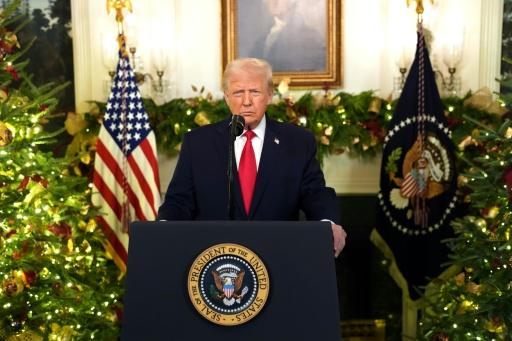
President Donald Trump doubled down on his claim that prescription drug prices had been cut by more than 100 per cent, defending what he described as a “different way” of calculating reductions during an Oval Office event announcing a deal with drugmaker Regeneron.
The Times of India reported that Trump said his administration had reduced drug costs by “500, 600 per cent,” before adding that the figures could also be framed as “50 or 60 per cent” depending on the method of calculation.

In the same account, Trump said, “People understand that better… there are two ways of calculating,” and US Health Secretary Robert F. Kennedy Jr echoed the defence by arguing that steep prior increases meant subsequent reductions could amount to cutting more than 100 per cent of those gains.
HuffPost described Kennedy’s defence as “bad math,” quoting Kennedy’s explanation that “there’s two ways of calculating percentage,” including a scenario where “If you have a $600 drug and you reduce it to $10, that’s a 600 percent reduction.”
Newsweek and The Times of India both framed the dispute around the arithmetic of percentage changes, with The Times of India saying that while prices can rise by more than 100 per cent, they cannot fall beyond 100 per cent without effectively dropping to zero or turning negative.
The dispute was also tied to scrutiny from lawmakers, including Senator Elizabeth Warren, who said such claims would imply drugmakers should be paying consumers, a point echoed in multiple reports of her pushback during hearings and the Oval Office exchange.
Kennedy’s “Device” Explanation
Robert F. Kennedy Jr defended President Donald Trump’s percentage claims by describing them as a “mathematical device” during the Oval Office announcement, while also offering a specific example that he said illustrated the magnitude of the dispute.
The Times of India reported that Kennedy referred to an exchange with Senator Elizabeth Warren at a congressional hearing, saying, “She was saying, ‘It’s mathematically impossible to have a drug drop by 600 per cent cost.’ And I said, ‘Well, if the drug was $100 and it raised the price to $600, that would be a 600 per cent rise. If it drops from 600 to 100, that’s a 600 per cent saving, isn’t it?’”
HuffPost similarly quoted Kennedy’s explanation during an Oval Office meeting, describing Trump’s “different way of calculating … there’s two ways of calculating percentage,” and stating, “If you have a $600 drug and you reduce it to $10, that’s a 600% reduction.”
Newsweek added that Kennedy acknowledged the framing departed from standard calculations, and it quoted Warren’s quip that “Which I think means companies should be paying you to take their drugs,” in response to Trump’s “600 percent” calculations.
In the same Newsweek account, Kennedy told Warren, “A Democratic senator claimed it's mathematically impossible to have a drug drop by 600%. I said, 'Well, if the drug was $100 and it raises to $600, that would be a 600% rise. If it drops from $600 to $100, that's a 600% savings.'”
The Times of India and HuffPost both described how the arithmetic Kennedy used was challenged, with The Times of India saying that a rise from $100 to $600 is a 500 per cent increase and a drop back to $100 is about an 83 per cent decrease rather than 600 per cent.
TrumpRx and the Hearing
The drug-price math dispute was tied directly to TrumpRx, a federal government website that Kennedy defended as part of the administration’s effort to slash prescription drug prices, and it became a focus of a Senate Finance Committee hearing.
Newsweek reported that Kennedy appeared before the Senate Finance Committee on Wednesday morning and said TrumpRx cuts the price of a $600 drug to $10 as a “600% reduction,” while also describing that “President Trump has a different way of calculating, there’s two ways of calculating percentages.”
It quoted Kennedy saying, “If you have a $600 drug and you reduce it to $10, that’s a 600 percent reduction,” and it described Warren’s pushback that the conventional arithmetic would amount to a reduction of about 98 percent.
Newsweek also quoted Warren’s line that using inflated percentage figures could mislead patients, and it included her quip that “Which I think means companies should be paying you to take their drugs.”
The Times of India and HuffPost both linked the hearing to the same exchange, with HuffPost quoting Kennedy’s earlier explanation during a Senate hearing where Sen. Elizabeth Warren pressed him about Trump’s drug price statements.
Newsweek further described the TrumpRx program as directing patients to discounted prices negotiated with pharmaceutical manufacturers under “most favored nation” agreements, and it said the administration pitched the program as allowing consumers to access brand-name medications at sharply lower prices without using insurance.
Competing Frames and Fact-Checks
Different outlets framed the same percentage claims and the same TrumpRx controversy in sharply different ways, with some emphasizing the administration’s “different way” of calculating and others emphasizing mathematical errors and the implications for patients. HuffPost described Kennedy’s defence as “bad math,” quoting its explanation that “Reducing the price by 100% would make the drugs free,” and adding that reducing by “1,000%, 600%, 500%, 1,500%” would make “the cost negative dollars ― with the drug company essentially paying people to take the medication.” The Times of India, while reporting Trump’s defence, explicitly called the assertion “mathematically impossible,” and it described Trump’s claim that prices had been cut by more than 100 per cent as “a mathematically impossible assertion.”
Newsweek presented the dispute as a Senate hearing moment, quoting Kennedy’s “different way” explanation and then quoting Warren’s conventional arithmetic pushback, including her line that “Which I think means companies should be paying you to take their drugs.” rts.ch and TF1 Info broadened the dispute beyond drug pricing into a wider set of claims in Trump’s year-end address, repeating that he said the price of medicines would fall by as much as “600%,” which they described as “mathematically impossible.” The Associated Press fact check referenced in Newsweek added another layer, saying that an AP fact check in August 2025 found Trump’s “300, 400, 500, even 600 percent” language to be false and that “patients would be getting paid to take the medications.”

Broader Stakes in the Address
The drug-price math dispute also appeared as part of a wider political and economic message in Trump’s year-end address, where multiple outlets reported the same “600%” medicine claim alongside other figures and policy themes. rts.ch reported that the only concrete announcement in the speech was the sending of 1.45 million American service members of “warrior dividends” checks for $1,776, while Trump said the country would experience “an economic boom like the world has never known.” It also said Trump boasted again that he had resolved eight wars and that he repeated that the price of medicines in the United States would fall by as much as “600%,” which rts.ch described as “mathematically impossible.”
TF1 Info similarly reported that Trump delivered a speech defending his economic policy while attacking Joe Biden and immigrants, and it quoted the same “warrior dividends” announcement of 1.45 million service members and $1,776 checks. TF1 Info also repeated that Trump said the price of medicines would fall by up to “600%,” which it described as “mathematically impossible,” and it reported that Trump said he had resolved eight wars, calling the figure “false but repeated at length by the president.” Ouest-France and Courrier international both tied the drug-price claim to the political stakes of the moment, describing the address as aimed at midterm elections and listing other assertions that they said were deceptive or impossible, including “drug prices falling by as much as ‘600%,’ are mathematically impossible.”
