Full story
Trump halts strikes
U.S. President Donald Trump said negotiations with Iran will begin on Monday after he decided to hold off on new strikes against the Islamic republic to pursue a deal.
“Obviously, they don't want to be attacked. They knew the extent of the attack because they saw it forming”
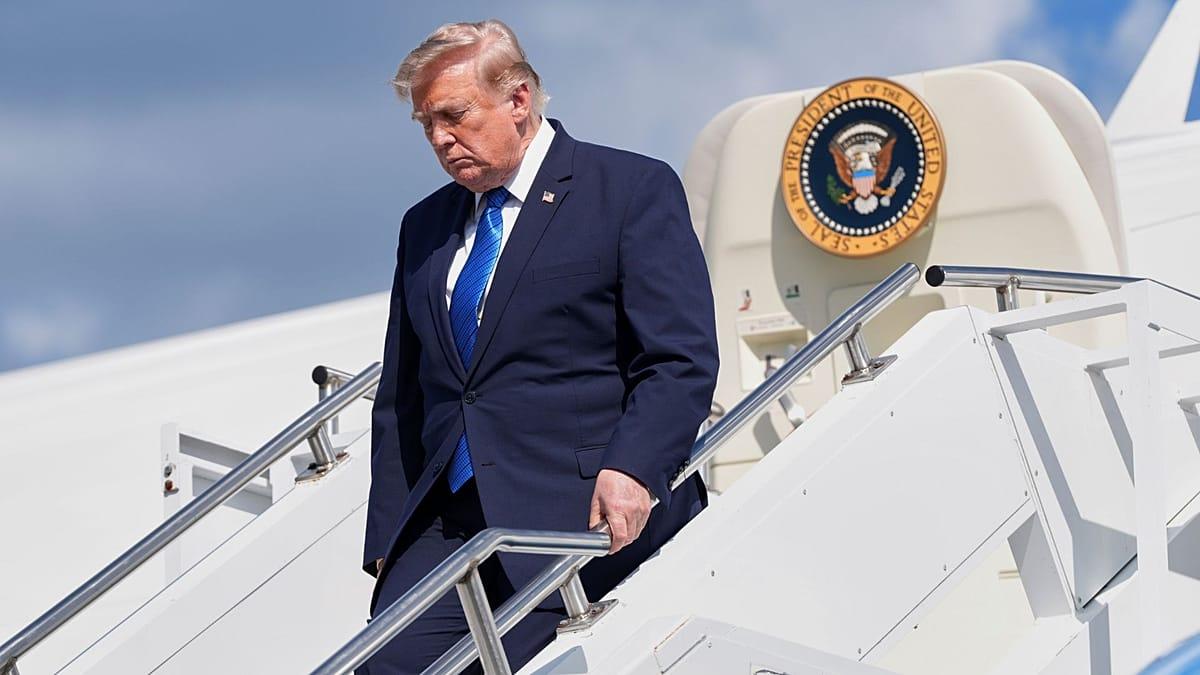
Speaking aboard Air Force One on Sunday, Trump said, "Obviously, they don't want to be attacked. They knew the extent of the attack because they saw it forming," describing the shift to talks.

Trump also said, "Now what we're doing is we're talking to them in the form of a negotiation. It begins tomorrow afternoon," tying the timing to the proposed negotiations.
The CBS News report said Trump’s social media post described a deal that would include the "Immediate, Complete, and Total OPENING OF THE HORMUZ STRAIT, and an end to Iran's nuclear threat."
The BBC said Trump had stated there was an agreement regarding the Hormuz Strait and that there would also be an agreement on Iran’s denuclearization.
Iran and allies respond
Iran’s Foreign Ministry spokesperson Esmaeil Baqaei told state television that a deal was close with Oman over a new route through the Strait of Hormuz, while insisting such an agreement did not mean the reopening of the strait.
The ABC7 New York report said Baqaei stated the Strait of Hormuz "will in no way return to the status it was before February 28th," the day the war started.

On Sunday, Trump said he was asked to call off the planned attack by Saudi Arabia, the United Arab Emirates, Qatar, and by Iran, and he told reporters, "I was asked to by Saudi Arabia, by UAE, by Qatar, and by Iran."
The BBC said Masoud Pishkian called for efforts to force the United States to adhere to the Islamabad Agreement, and it said Abbas Araghchi said talks with Oman about the Hormuz Strait are nearing completion.
The Al Jazeera report said Iran denied Trump’s claim that Tehran asked the U.S. to refrain from conducting new strikes, and it cited a denial that the allegation was "nothing but a new lie" and that Iranian armed forces were "on high alert and ready for any eventuality."
What’s at stake next
The emerging proposal described by a regional official involved in mediation efforts would call for reopening the Strait of Hormuz and halting attacks across the region, including by Iranian-backed militias in Iraq on the Arab Gulf countries and Jordan.
“end its naval blockade on Iran and allow Tehran to export its oil”
The ABC7 New York report said the U.S., in exchange, will end its naval blockade on Iran and allow Tehran to export its oil as stated in the tentative ceasefire deal, while noting no deal has been reached yet.
CBS News said Trump elaborated on the decision to hold off attacks on Iran and said it would have been "the biggest attacks since World War II," while also saying the deal is imminent.
CNN reported that no strikes were reported from either the Iranian or US side overnight into Sunday, and it said Iranian state media gave no indication Tehran asked for the attacks to be called off or changed its stance on the waterway.
The BBC also reported a UKMTO bulletin about a maritime incident 20 nautical miles northeast of Khasab, Oman, in which a tanker captain reported hearing an explosion sound at a very close distance, while the ship and all crew were safe.