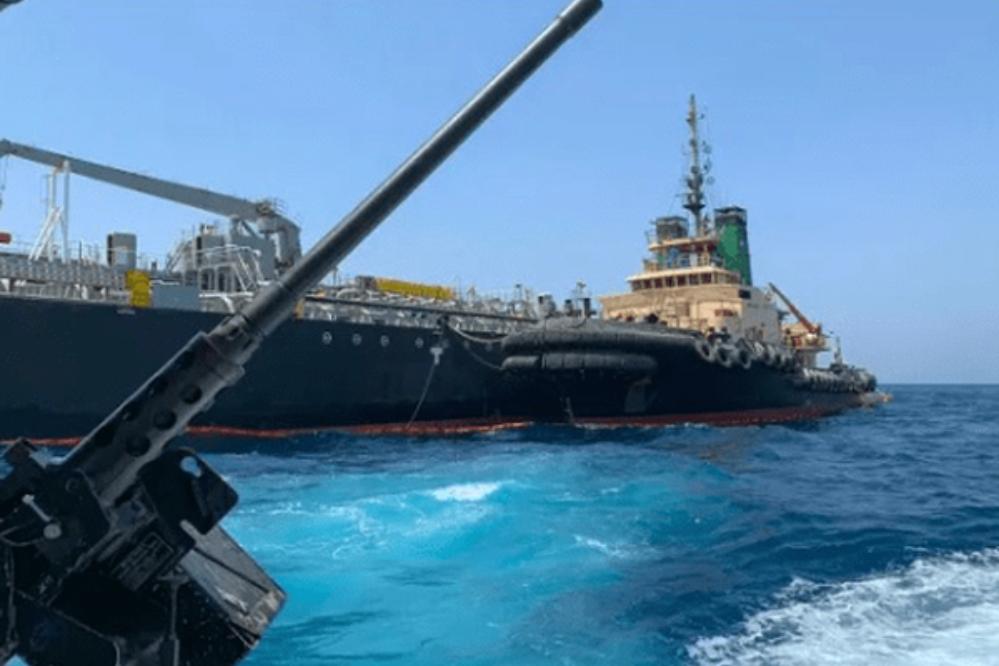
Donald Trump Says U.S. Will Help Guide Stranded Ships Through Strait of Hormuz Monday
Key Takeaways
- Trump announced Project Freedom to guide ships stranded in the Strait of Hormuz starting Monday.
- Iran warned the U.S. not to approach or enter the Strait, threatening retaliation.
- Focus on civilian ships flagged by neutral countries; escort may not be provided.
Project Freedom Begins Monday
President Donald Trump said the United States would begin helping to “guide” stranded ships through the Strait of Hormuz starting Monday morning, framing the effort as a humanitarian gesture for “neutral and innocent bystanders” whose vessels, crews and supplies have been stuck.
“United States President Donald Trump has said the US will “help free up” ships stuck in the Strait of Hormuz from Monday, suggesting that his administration will break Iran’s blockade of the strategic waterway”
NBC News reported that Trump announced the U.S. military would help free ships that have been “locked up” and unable to transit the key trade route amid the maritime standoff between Tehran and Washington.

The Jerusalem Post said Trump’s Sunday statement on Truth Social described “Project Freedom” beginning Monday morning, Middle East time, and quoted Trump saying, “This process, Project Freedom, will begin Monday morning, Middle East time.”
Al Jazeera reported that Trump said the U.S. would “help free up” ships stuck in the strait from Monday, and described the campaign as launched at the request of countries whose vessels are stranded.
The Politico report said Trump’s announcement came as the U.S. and Israel’s ongoing war with Iran continued, and that the effort would begin on Monday morning, Middle East time.
CNBC added that Trump said the effort would focus on getting civilian ships flagged in countries not affiliated with the conflict out of the contested waterway so they can “freely and ably get on with their business.”
Iran Threatens Attack, Maps Control
Iran immediately pushed back against Trump’s plan, warning the United States not to approach or enter the Strait of Hormuz as the American military launches the effort to “guide” stranded ships.
NBC News reported that Iran warned the United States on Monday not to approach or enter the strait, quoting Major General Pilot Ali Abdollahi saying, “We warn that any foreign armed force, especially the aggressive military of America, should they intend to approach or enter the Strait of Hormuz, will be subjected to attack.”

NBC News also said Tehran claimed it had stopped a U.S. destroyer from entering the strait, with army public relations stating, “the entry of enemy American-Zionist destroyers into the vicinity of the Strait of Hormuz was prevented.”
BBC reported that Iran’s armed forces said they blocked the entry of a United States Navy destroyer into the strait, and quoted state media: “With a firm and swift warning from the Islamic Republic's Navy, entry of enemy American and Zionist destroyers into the Strait of Hormuz was prevented.”
BBC further reported that Esmaeil Bagheri, spokesman for the Foreign Ministry, stressed that Iran remains “the guardian and custodian” of this strait and said, “Ships and shipping companies know well that ensuring their security requires coordination with the competent authorities of the Islamic Republic of Iran.”
BBC added that the IRGC published maps showing a “new region” of the Strait of Hormuz, delineated by lines between “Mount Mubarak” and the southern Fujairah, and between the end of Qeshm Island and Umm al-Quwain.
Al Jazeera reported that Ebrahim Azizi, head of the Iranian parliament’s National Security Commission, warned that any “American interference” in the strait would be considered a breach of the truce.
CENTCOM Details and Mine Warnings
Alongside Trump’s announcement, U.S. Central Command described a large-scale operation to support merchant vessels transiting the strait, while also directing mariners to consider routing changes due to hazards.
“Iran Claims to Prevent Entry of American Destroyer into the Strait of Hormuz”
NBC News reported that U.S. Central Command said that “15,000 service members, guided-missile destroyers, over 100 land and sea-based aircraft and multi-domain unmanned platforms will be involved in the new operation.”
NBC News also said the Joint Maritime Information Center established an “enhanced security area” to the south of usual shipping routes and that vessels should consider routing via Oman territorial waters because usual routes should be considered “extremely hazardous due the presence of mines that have not been fully surveyed and mitigated.”
Al Jazeera reported that CENTCOM said it would begin supporting merchant vessels “seeking to freely transit” the strait from Monday, and quoted CENTCOM Commander Admiral Brad Cooper saying, “Our support for this defensive mission is essential to regional security and the global economy as we also maintain the naval blockade.”
BBC similarly stated that CENTCOM outlined participation by “15,000 personnel, destroyers equipped with guided missiles, and more than 100 aircraft,” and said the U.S. would continue to blockade Iranian ports that began in mid-April.
The Jerusalem Post quoted CENTCOM commander Adm. Brad Cooper saying, “Our support for this defensive mission is essential to regional security and the global economy as we also maintain the naval blockade,” and added that the operation would not include “US military escorts for the ships.”
CNBC said the Department of Defense directed it to a CENTCOM social media post that called the broader goal “to restore freedom of navigation for commercial shipping through the Strait of Hormuz,” and quoted the post: “The mission, directed by the President, will support merchant vessels seeking to freely transit through the essential international trade corridor.”
Escort Dispute and Ceasefire Stakes
Even as CENTCOM and Trump framed the operation as defensive and humanitarian, multiple outlets reported uncertainty and disagreement over whether U.S. forces would escort ships through the strait.
The Jerusalem Post said, “There will be no US military escorts for the ships,” while also quoting a source familiar with details that “The U.S. military will defend the region.”

Fararo reported that, citing two American officials, the new initiative “does not necessarily include the escorting commercial ships by U.S. Navy ships,” and quoted one official saying American warships would be “in the vicinity” of the strait to deter Iranian forces if necessary.
The Wall Street Journal was cited by Fararo as claiming the mission “would not involve direct escorting of them by U.S. Navy ships,” and that the U.S. would announce safe navigational routes and coordinate with shipping companies and insurers.
Al Jazeera reported that it was unclear how the campaign would proceed or whether it would involve coordination with Tehran, and said the move risks shattering the fragile ceasefire that came into effect on April 7.
BBC reported that the two countries remain under a temporary ceasefire “which began on April 8,” and that Esmaeil Azizi wrote that “any U.S. intervention” would be considered a violation of the ceasefire.
Noor News and other outlets also emphasized the ceasefire language, quoting Ibrahim Azizi warning that any American interference in the new maritime regime “will be considered a violation of the ceasefire.”
In parallel, NBC News reported that Ebrahim Azizi warned in a post on X that any American interference in the strait will be considered a “violation of the ceasefire,” and that Tehran claimed it had stopped a U.S. destroyer from entering the strait hours after Trump’s announcement.
Energy, Mariners, and Negotiations
The operation is unfolding against a backdrop of rising energy costs and stranded crews, while both sides continue to exchange proposals and claims.
“(CNN) -- The Strait of Hormuz remained nearly devoid of ships on Monday, despite U”
NBC News said the standoff has left global shipping at an effective standstill and sent energy prices spiraling, adding that oil prices climbed slightly overnight with Brent crude trading at around $109 a barrel and that the national average gas price in the U.S. continued to rise, hitting $4.46.
BBC said it is estimated that since the start of the war with Iran, about 20,000 mariners have been stranded in the Persian Gulf, and that concerns about food shortages and their effects on the physical and mental health of these mariners are rising.
Politico reported that fuel prices around the world remain elevated with the strait effectively closed to commercial traffic for more than two months and that benchmark oil prices hit a four-year high on Thursday, while the average price at the pump for American drivers rose to $4.45 a gallon on Sunday.
Al Jazeera reported that Tehran’s blockade of the strait and Washington’s naval siege on Iranian ports have sent oil prices soaring and that in the U.S. petrol has risen to an average of $4.44 per gallon, up from less than $3 before the war started.
The Washington Post framed the moment as Iran’s military warning it will strike U.S. forces if they attempt to approach the Strait of Hormuz after Trump said the U.S. would soon begin guiding ships, calling it a humanitarian gesture requested by other countries whose vessels, crews and supplies have been stuck for weeks.
At the same time, NBC News said Tehran was reviewing the latest U.S. counterproposal and that mediator Pakistan facilitated the transfer of 22 Iranian sailors from the “Touska” container ship seized by U.S. forces last month, describing the move as a “confidence-building measure.”
More on USA

Tiroteo en Fiesta En Lago Arcadia Cerca De Oklahoma City Deja Al Menos 12 Heridos
21 sources compared
Mark Rutte Says Europe Ensures U.S. Military Base Agreements After Trump Criticized NATO
20 sources compared

NATO Chief Mark Rutte Says Europe Got the Message After Trump Plans 5,000 Troop Withdrawal From Germany
18 sources compared

United Flight 169 Strikes Light Pole, Damages Truck on New Jersey Turnpike Near Newark Liberty
31 sources compared