Europe · 04 May, 2026 · 7 min read
Mark Rutte Says Europe Ensures U.S. Military Base Agreements After Trump Criticized NATO
Trump criticized NATO; Europe commits to base-use agreements, according to Rutte. European leaders have grasped Trump's message after the 5,000-soldier withdrawal from Germany.
Evidence of broader militarization / readiness: pre-positioning assets vs. compliance checking.
4 of 5 outlets skipped it: pentagon email/punishment options (e.g., suspending Spain, reviewing UK/Falklands position) were reported via Reuters..
20outlets compared
Same story, two versions
tap a side to read it in full
Devdiscourse
““European nations are aligning with U.S. concerns regarding military base agreements””Read the original ↗
The Jerusalem Post
““European nations have "gotten the message" from US President Donald Trump and are now ensuring that agreements on the use of military bases are being implemented””Read the original ↗
The two outlets frame the compliance similarly but with different emphasis: Devdiscourse stresses alignment with U.S. concerns, while the Jerusalem Post emphasizes a message understood and executed via implementation—this affects how readers interpret agency (proactive policy alignment vs. response to coercion).
Trump, Bases, and NATO
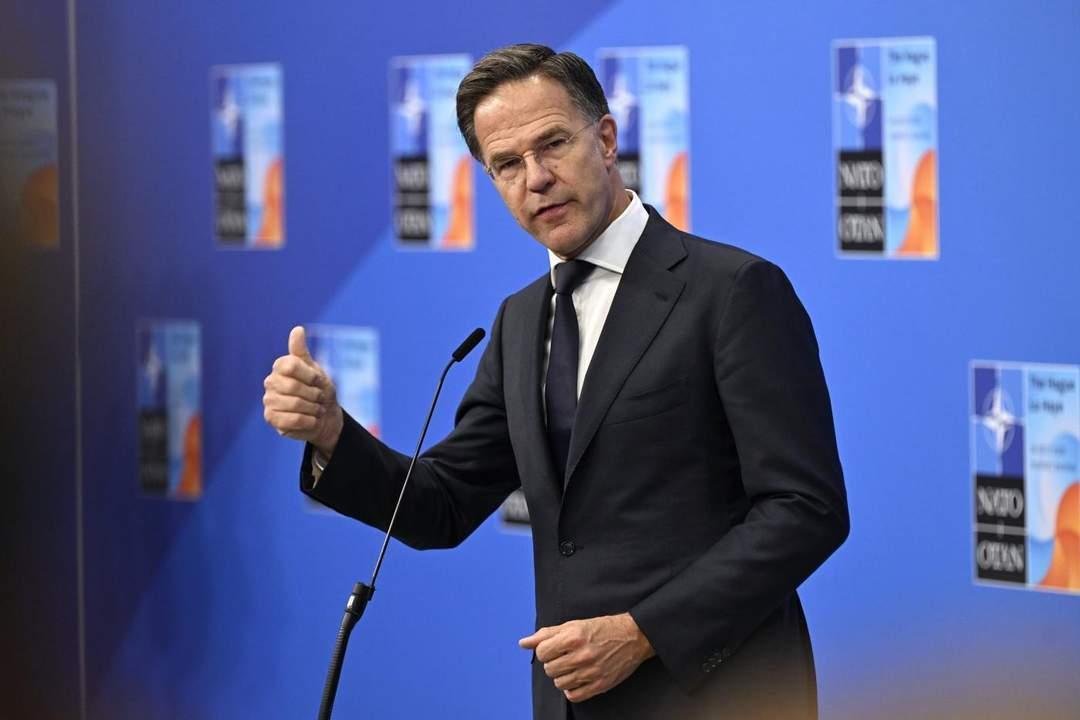
Europe is moving to ensure that agreements on the use of military bases with the United States are being implemented after Donald Trump criticized some NATO nations for not doing enough to support the United States in the conflict with Iran, NATO Secretary General Mark Rutte said on Monday.
“Europeans have "gotten the message" from US President Donald Trump and are now ensuring that agreements on the use of military bases are being implemented”
Rutte told reporters at a European Political Community summit in Armenia that “Yes, there has been some disappointment from the US side, but Europeans have listened,” and that Europeans are now “making sure that all the bilateral basing agreements are being implemented.”
The Jerusalem Post reported that Trump had accused some NATO nations of insufficient support in the Iran war and that the US announced on Friday plans to withdraw 5,000 troops from Germany.T
Demócrata and Infobae both tied that troop withdrawal to “decepción” by the United States over the limited European reaction to the war against Irán, with Rutte saying leaders had “han captado el mensaje” and “lo han escuchado alto y claro.”
In the same reporting, Rutte said he would not enter “en esa situación concreta” when asked directly about Trump’s decision to withdraw 5,000 troops from Germany, while insisting that Germany “ha cumplido desde el primer día” with commitments to the White House.
The dispute over bases is also linked to NATO’s internal debate about access, basing and overflight right, known as ABO, for the Iran war, as described by The Jerusalem Post via a Reuters account of a Pentagon email.T
Armenia Summit and the Iran War
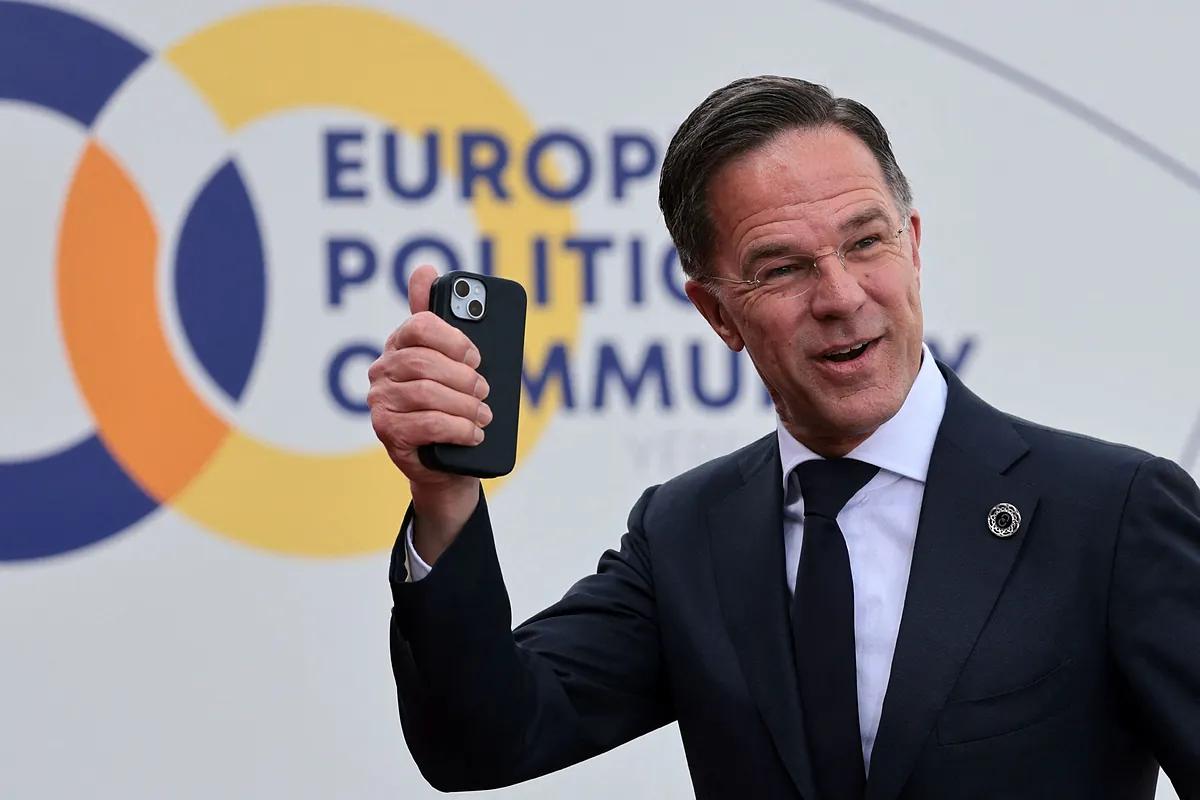
Rutte’s remarks came as he spoke at a European Political Community summit in Armenia, where he acknowledged initial disappointment from the United States but said European leaders had “heeded the call for more decisive action,” according to Devdiscourse’s account of his comments.D
The Jerusalem Post described Trump’s pressure as part of a broader pattern: Trump accused some NATO nations of not doing enough to support the United States in the Iran war, and the US announced on Friday plans to withdraw 5,000 troops from Germany.T
Demócrata and Infobae both reported that Rutte framed the US troop withdrawal as a response to “decepción” with European reaction to what was happening in “Oriente Próximo” or “Irán,” and both cited his claim that European leaders had “captado el mensaje” and listened “alto y claro.”
In the same Spanish-language reporting, Rutte said he would avoid commenting directly on the “situación concreta” of the troop withdrawal, but he asserted that Germany “ha cumplido desde el primer día” the commitments it made with the Casa Blanca about the use of bases on its territory.
The Jerusalem Post added that NATO member Spain has said military bases on its territory cannot be used for the war with Iran, while Rutte said other NATO countries including Montenegro, Croatia, Romania, Portugal, Greece, Italy, Britain, France and Germany were implementing requests for the use of bases and other logistical support.T
Rutte also said “more and more” European nations were pre-positioning assets such as minehunters and minesweepers close to the Gulf to be ready for a “next phase,” and multiple European nations said they were willing to take part in a mission to help ensure freedom of navigation through the Strait of Hormuz once the war is over.
Punishment Options and ABO
Beyond the immediate base-access disputes, The Jerusalem Post reported that an internal Pentagon email described options for the United States to punish NATO allies it believes failed to support US operations in the war with Iran.T
“ABO is "just the absolute baseline for NATO"”
The Jerusalem Post said the options included suspending Spain from the alliance and reviewing the US position on Britain’s claim to the Falkland Islands, and it described the policy options as detailed in a note expressing frustration at allies’ perceived reluctance or refusal to grant the United States access, basing and overflight right, known as ABO, for the Iran war.T
The Reuters account cited by The Jerusalem Post included a line from the email that ABO is “just the absolute baseline for NATO,” and it said the options were circulating at high levels in the Pentagon.T
The Jerusalem Post also reported that one option in the email envisioned suspending “difficult” countries from important or prestigious positions at NATO.T
Cadena SER’s report, drawing on a Wall Street Journal account, described a different but related concept: Washington was considering a plan to “castigar” allied countries that supported the war against Iran less, by relocating US troops in Europe and potentially closing a base in a country like Germany or Spain.
Cadena SER added that after Rutte’s closed-door meeting with Trump at the White House, Trump posted that “La OTAN no estuvo ahí cuando la necesitábamos, y tampoco estará ahí si volvemos a necesitarla,” and it said Rutte told CNN that “la gran mayoría de los países europeos han contribuido con el uso de bases y la logística y cumplen todos sus compromisos con la alianza.”
Greenland, Tariffs, and De-escalation
While the base-access dispute is framed around the Iran war, several European outlets also connected Rutte’s role to a separate, high-stakes negotiation involving Greenland and the Arctic.
Le Temps described a “spectacular reversal” by Donald Trump on the Greenland issue after an aggressive speech directed at Europeans, saying Trump used his appearance at the World Economic Forum in Davos on Wednesday, January 21 to initiate a reversal that could ease the crisis sparked within NATO by Trump’s project to annex the Danish autonomous territory.

Ouest-France reported that after a discussion with NATO Secretary General Mark Rutte, Trump announced on Wednesday, January 21 that he would drop plans to impose tariffs on February 1 due to a “future agreement” with NATO on Greenland, and it said the NATO spokesperson stated that Rutte had had a “very productive discussion” with Trump.
Le Figaro similarly reported that Trump ruled out the use of force to seize Greenland and said that “If this succeeds, this solution will be very advantageous for the United States of America and all NATO member countries,” while also noting that Trump would not impose the tariffs due to take effect on February 1.
Euractiv FR reported that NATO and Denmark denied that Trump’s Greenland “agreement” compromised Denmark’s sovereignty, and it quoted Danish Prime Minister Mette Frederiksen saying, “Our red lines are the same as they have always been and will continue to be: we will, of course, not renounce our sovereignty.”
France 24 reported that Trump announced the framework of a future agreement on Greenland and the entire Arctic region with NATO’s Secretary General, and it said Trump had softened his tone by saying he would renounce the use of force and sanctions while still pressing for Greenland.
Sovereignty Disputes and Arctic Stakes
The Greenland negotiations described by European outlets also fed into a sovereignty dispute that mirrors the base-access tension seen in the Iran war reporting.
“Our red lines are the same as they have always been and will continue to be: we will, of course, not renounce our sovereignty”
Euractiv FR said confusion intensified when the New York Times reported, citing two anonymous sources, that the agreement would be modeled on the British Cyprus base model, where certain military bases are considered sovereign territory of the United Kingdom, and it added that The Telegraph claimed some installations in Greenland could be recognized as American territory.
Euractiv FR also reported that a senior EU diplomat said the agreement essentially tracked “what the Danes have proposed to the Americans over the last twelve months,” while another diplomat said they knew “nothing” about whether the agreement included formal recognition of American sovereignty over its military bases.
Euractiv FR quoted Mark Rutte in a Reuters interview saying the agreement provides that NATO allies strengthen their military presence in the Arctic, while he said “I'm not sure we can achieve that fairly quickly,” and added that he “hopes” it will happen “early 2026.”
Le Figaro reported that Danish Prime Minister Mette Frederiksen said, “But we cannot negotiate our sovereignty,” and it also cited a statement that “Territorial compromise” discussions involved the possibility of granting the United States sovereignty over small portions of Greenland compared with British military bases in Cyprus.
Le HuffPost said the idea of placing the American base on Arctic territory under U.S. sovereignty drew on the example of British sovereign bases in Cyprus, and it quoted Greenlandic vice-premier Mute Egede saying, “Whatever pressure from others, our country will neither be ceded, nor subjected to bargaining over our future.”