Syria19 December, 20253 min read
Donald Trump Signs Law Repealing U.S. Caesar Sanctions on Assad Regime
Congress repealed the 2019 Caesar Act by including it in the 2026 defense bill President Donald Trump signed the National Defense Authorization Act, formally lifting the Caesar sanctions

16 outlets told this the same way.
Outlets did split on France Suspends Police Stun Grenades at High School Protests After 15-Year-Old Loses Hand →
U.S. repeal of Syria sanctions
President Donald Trump signed into law a repeal of the 2019 Caesar Syria Civilian Protection Act as part of the $901 billion FY2026 National Defense Authorization Act, formally ending U.S. economic sanctions that had targeted the Assad-era regime.
“The U.S. Senate approved a $901 billion FY2026 defense bill that included repeal of the 2019 Caesar Syria Civilian Protection Act, and President Donald Trump finalized the repeal by signing the bill at a closed-door White House ceremony.”
Multiple West Asian outlets framed the move as the formal delisting and the end of years of restrictions.
Daily Sabah reported that the U.S. Senate approved the $901 billion FY2026 defense bill which included repeal of the 2019 Caesar Act, and that President Trump finalized the repeal by signing the bill at a closed-door White House ceremony.
Evrim Ağacı wrote that for the first time in more than a decade, U.S. economic sanctions on Syria were lifted after President Trump on Dec. 19, 2025 signed legislation repealing the final punitive measures, including the 2019 Caesar Act.
Western mainstream coverage emphasized the economic and reconstruction angle, with NBC noting the repeal could spur private investment and reconstruction.
Türkiye Today also cited that Congress repealed the Caesar Act as part of the $901 billion 2026 National Defense Authorization Act.
Reactions to Syria sanctions repeal
Regional governments and Syrian officials presented the repeal as a turning point that will enable reconstruction and the return of refugees. Türkiye’s Foreign Ministry welcomed the decision. Yeni Safak reported Ankara's hope that the repeal 'will encourage international cooperation on Syria’s reconstruction'.
Türkiye Today quoted Syrian official Ahmed al-Sharaa thanking the United States, Türkiye, Saudi Arabia, Qatar and others and calling it 'the first day that Syria is without sanctions'. Middle East Monitor reported Riyadh's welcome, saying Saudi Arabia welcomed a U.S. decision to lift sanctions on Syria under the 2019 Caesar Act. It also flagged a factual inconsistency in some coverage by noting an erroneous claim that 'Syrian President Hafez al-Assad' fled to Russia, saying this appears incorrect because the current president is Bashar al-Assad and the Baath party remains in power.
Reconstruction coverage summary
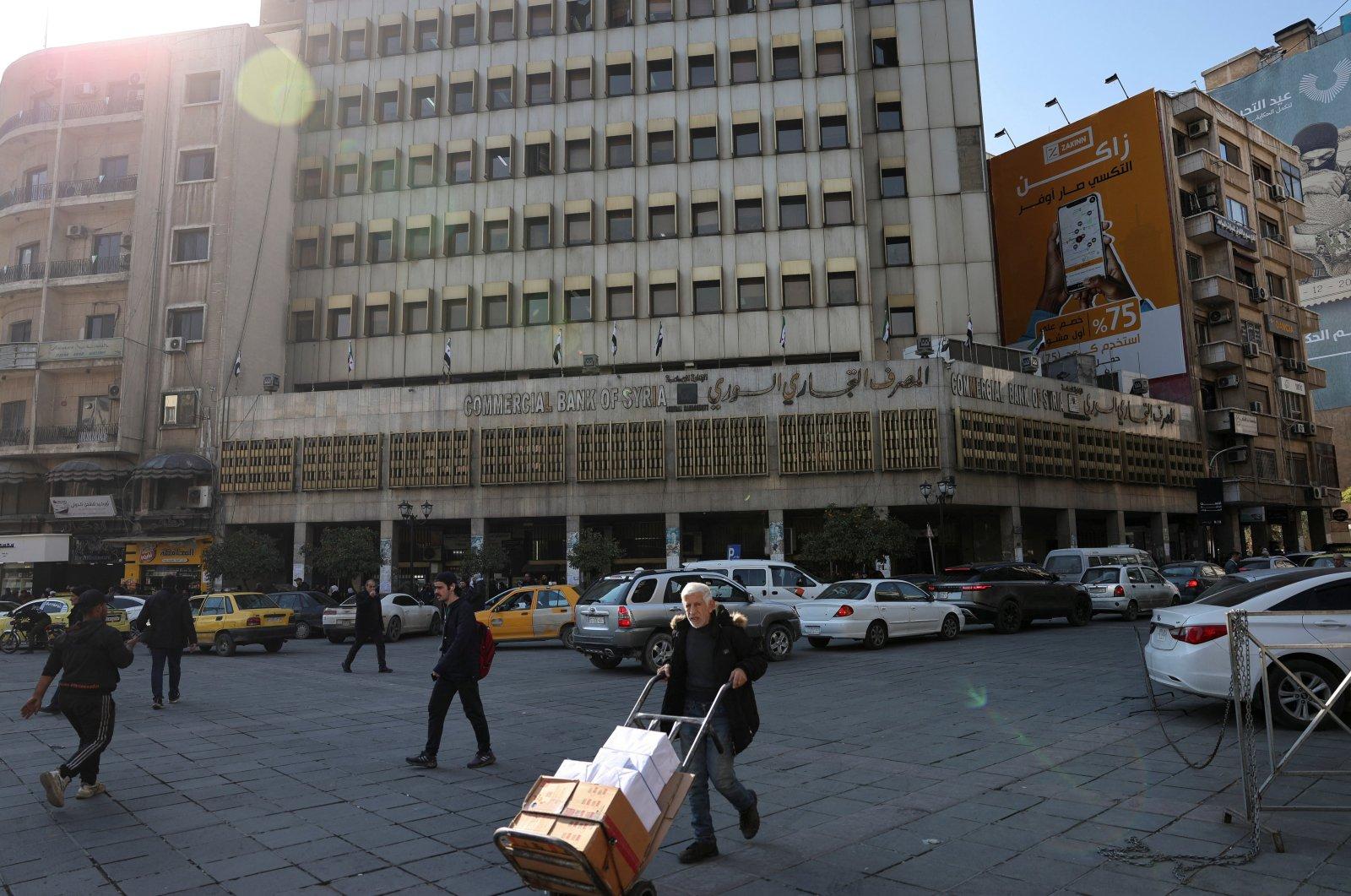
Western mainstream reporting highlighted practical barriers to reconstruction even after repeal, stressing the scale of need and lingering caution among businesses. NBC reported detailed humanitarian and fiscal figures, noting that the World Bank estimates reconstruction will cost $216 billion. NBC noted that returnees face destroyed homes and few jobs and that businesses remain wary unless sanctions are permanently removed.
“The World Bank estimates reconstruction will cost $216 billion.”
NBC also relayed U.N. warnings about funding shortages and quoted U.N. officials saying international aid remains small relative to needs. Regional outlets and analysts framed the repeal as a turning point for the battered economy. Evrim Ağacı called it 'a turning point for Syria's battered economy and populace,' and Daily Sabah and other West Asian outlets expected foreign investment and international aid to return.
Coverage gaps and inconsistencies
Coverage shows gaps and inconsistencies across sources. Several source snippets in this collection are placeholders or requests for original text, including PBS, the Associated Press prompt, وكالة الانباء الاردنية, usmuslims, and VOI.id. This pattern indicates missing local reporting or untranslated originals in the compilation.
PBS explicitly said it did not yet have the article and asked for the article text to be pasted. The Associated Press entry offered summary options instead of a finished article. وكالة الانباء الاردنية stated it could not fetch external pages and asked for the Petra article to be pasted.
usmuslims and VOI.id also requested the article text rather than providing a complete item. Separately, Middle East Monitor flagged an apparent factual error about which Assad was said to have fled. These discrepancies show that not all outlets applied the same fact-checking standards or editorial frames.
Sanctions repeal and reconstruction
Looking ahead, reporting divides on whether repeal alone will unlock reconstruction. Several West Asian outlets and Syrian officials stressed the symbolic end of sanctions and urged investors back. Türkiye Today quoted Sharaa warning that keeping sanctions "on the books" would still deter business.
“Sharaa — described as a former jihadist and current government head — warned that keeping sanctions ‘on the books’ would still deter business...”
Western mainstream reporting stressed that businesses, donors and multilateral banks will watch implementation and funding. NBC observed that "businesses remain wary unless sanctions are permanently removed" and noted U.N. appeals remain underfunded.
Evrim Ağacı and others recounted the Caesar Act's origins and the view that the repeal is a potential turning point. They and mainstream outlets both underline that reconstruction requires sustained capital, security and donor support before meaningful recovery occurs.