USA29 April, 20268 min read
Donald Trump Studies Possible Reduction of US Troops in Germany Amid Feud With Friedrich Merz
Trump says U.S. studying possible reductions of troops in Germany amid Iran feud. Merz says Iran is humiliating the U.S., fueling the dispute with Berlin.

Trump’s Troop Cut Threat
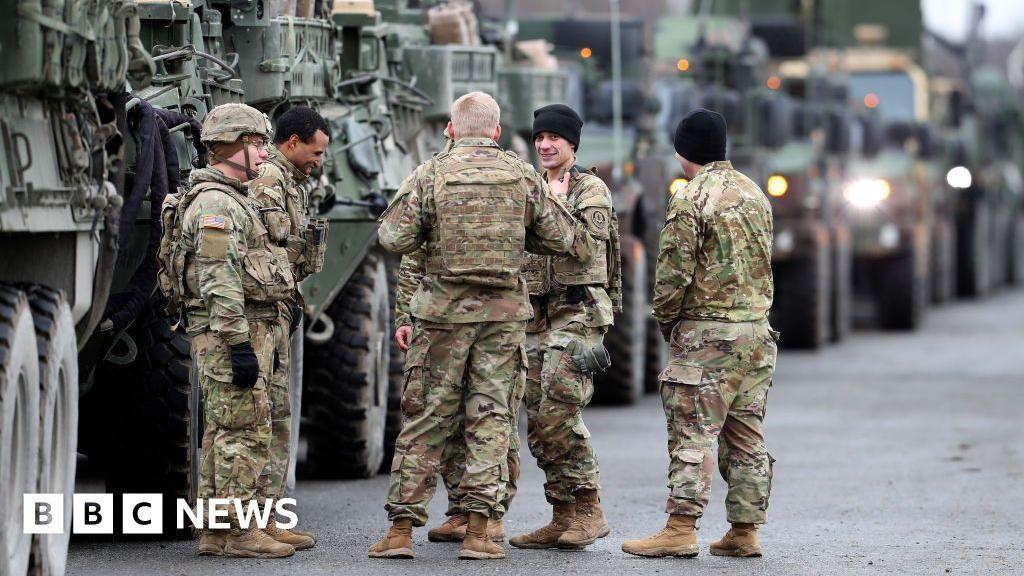
President Donald Trump said the United States is “studying and reviewing the possible reduction of Troops in Germany,” with “a determination to be made over the next short period of time,” as his feud with German Chancellor Friedrich Merz over the Iran war intensified.
The announcement came via Trump’s Truth Social posts, including a Wednesday afternoon Washington-time message reported by DW and a separate late Wednesday post described by the BBC.
Trump’s comments were framed as a decision point on whether to cut forces in Germany, where the United States maintains a major military presence, and where the U.S. has “more forces in Germany than anywhere else in Europe,” according to DW.
DW also cited U.S. Defense Manpower Data Center data saying that “As of December 2025, more than 36,000 active service members were stationed in Germany.”
CBS News added that “More than 36,000 active duty troops were assigned to bases throughout Germany as of last December,” and it also reported “nearly 1,500 reservists and 11,500 civilians” alongside those active-duty troops.
The BBC described how Trump’s troop-cut threat followed days after Merz criticized Washington’s approach to the war in Iran, saying the U.S. had been “humiliated” by Iranian negotiators.
In the background of the troop discussion, Stars and Stripes reported that Trump’s comments came after Merz said the United States was being “humiliated” by Iran during the prolonged war, and it noted that Defense Secretary Pete Hegseth reposted Trump’s social media comment about possible troop cuts in Germany.
Why the Feud Escalated
The troop-cut threat was tied directly to Merz’s remarks about Iran and to Trump’s response, with multiple outlets describing a sequence of criticism and counter-criticism. DW reported that Merz said the “Iranians are obviously very skilled at negotiating, or rather, very skillful at not negotiating, letting the Americans travel to Islamabad and then leave again without any result,” and it added Merz’s claim that “An entire nation is being humiliated by the Iranian leadership, especially by these so-called Revolutionary Guards.” CNBC similarly described the dispute as “Trump’s feud with Berlin deepens” and said Merz’s comments came after he criticized the U.S. for being “humiliated” by the Iranian regime.
The BBC quoted Merz telling university students that “the Americans clearly have no strategy” and that he could not see “what strategic exit” they were going to choose, while also repeating Merz’s “humiliated” line about the Iranian leadership. After Merz’s comments, Trump hit back on Truth Social, with the BBC reporting Trump said Merz thought it was “OK for Iran to have a Nuclear Weapon” and that Merz “doesn’t know what he’s talking about.” Fox News likewise reported Trump’s Truth Social post saying “The Chancellor of Germany, Friedrich Merz, thinks it’s OK for Iran to have a Nuclear Weapon,” and it included Trump’s warning that “If Iran had a Nuclear Weapon, the whole World would be held hostage.”

The Guardian described Trump’s renewed attack on Merz as a post on Truth Social in which Trump wrote that Merz should spend more time on “ending the war with Russia/Ukraine (Where he has been totally ineffective!)” and “fixing his broken Country, especially Immigration and Energy.” NPR (via AP) placed the threat in Washington and said Trump made it after Merz criticized Washington’s lack of strategy and said the U.S. was being “humiliated” by the Iranian leadership.
German Response and NATO Lines
German officials sought to separate the troop question from the personal dispute, while still responding to Trump’s threat. The Guardian’s live reporting included comments from Germany’s foreign minister Johann Wadephul, who insisted that Germany was “prepared for any decision from the US amid Donald Trump’s threats he could pull out some troops from the country.” Wadephul told AFP, as quoted by the Guardian, “We are prepared for that, we are discussing it closely and in a spirit of trust in all Nato bodies, and we are expecting decisions from the Americans about this.”
“We are prepared for that, we are discussing it closely and in a spirit of trust in all Nato bodies, and we are expecting decisions from the Americans about this.”
The Guardian also reported Wadephul saying that large American bases in Germany are “not up for discussion at all,” and it specified that the Ramstein airbase had “an irreplaceable function for the United States and for us alike.” DW similarly reported Wadephul’s clarification of Merz’s Iran remarks, telling DW’s Berlin bureau chief Max Hoffmann in New York City that it was “addressing the behavior of Iran,” and that “They are, as I said, misunderstanding their position and overplaying their role.” Stars and Stripes described how Merz tried to lower the temperature by telling Wednesday that “the personal relationship between the American president and me is, from my perspective, still good,” even as Trump’s insistence about allied support could have “longer-term implications” for NATO ties.
NPR reported that Merz told Trump in March that Germany was eager to work with the U.S. on a strategy for when the current Iranian government no longer exists, and it said Merz also expressed concern that an extended conflict could do “great damage to the global economy.” NPR also quoted Merz saying, “We are suffering considerably in Germany and in Europe from the consequences of, for example, the closure of the Strait of Hormuz,” and it said Merz urged that “this conflict be resolved.” In parallel, the BBC reported that Merz made no mention of Trump’s troop comments during a visit to German soldiers in northern Germany, while emphasizing “transatlantic solidarity” and the importance of the Nato defensive alliance.
U.S. Officials Set the Stakes
U.S. officials and lawmakers framed the troop-reduction question as leverage tied to allied support for U.S. operations against Iran.
Stars and Stripes reported that Defense Secretary Pete Hegseth told Congress that he expected allies to get on board with U.S. war efforts, saying, “When allies “do not step up, there will be consequences,” Hegseth said during a hearing of the House Armed Services Committee.”
Stars and Stripes added that Hegseth said, “In recent weeks, for instance, far too many of our NATO allies showed that they could not be relied upon to support our nation’s operations against Iran. … This is unconscionable, and we will remember,” and it linked those remarks to Trump’s troop-cut threat.
The same outlet reported that Rep. Don Bacon, R-Neb., said, “The continued attacks on NATO allies are counterproductive,” and it quoted Bacon’s argument that “The two big airfields in Germany give us great access in three continents. We are shooting ourselves in our own feet.”
CNBC described the troop review as a logistical and strategic issue, noting that “Analysts suggest a withdrawal of troops in Germany would be a logistical headache and ultimately damage U.S. interests,” while also saying Trump gave no further details on the review.
CBS News emphasized the scale of the U.S. presence and said the deployment “dates back to the aftermath of World War II and the Cold War,” while also noting that Trump has threatened to leave NATO, calling it a “paper tiger.”
The Independent reported that Trump’s administration also criticized NATO members for not assisting in the U.S.-Israeli war against Iran, including berating some for not sending their navies to help open the Strait of Hormuz.
The Independent quoted Hegseth dismissing efforts led by the UK and France as “silly” and saying they should have “less fancy conferences in Europe and get in a boat,” and it added that Hegseth said Europe needed the strait “much more than we do” and that it was “much more their fight than ours.”
In the same reporting stream, the BBC described how Trump’s threat came as the spat with Merz intensified, and it noted that Trump has proposed troop reductions before but they “have so far not come into effect.”
Numbers, Bases, and What Comes Next
Multiple outlets detailed the U.S. force footprint in Germany and the operational importance of specific installations, while also describing what could happen next if Trump follows through.
DW said Ramstein in southwestern Germany is “regarded as the US's largest overseas air force base,” and it noted that Germany is home to five of the seven U.S. garrisons in Europe, with the United Kingdom and Italy having the biggest presence after Germany.
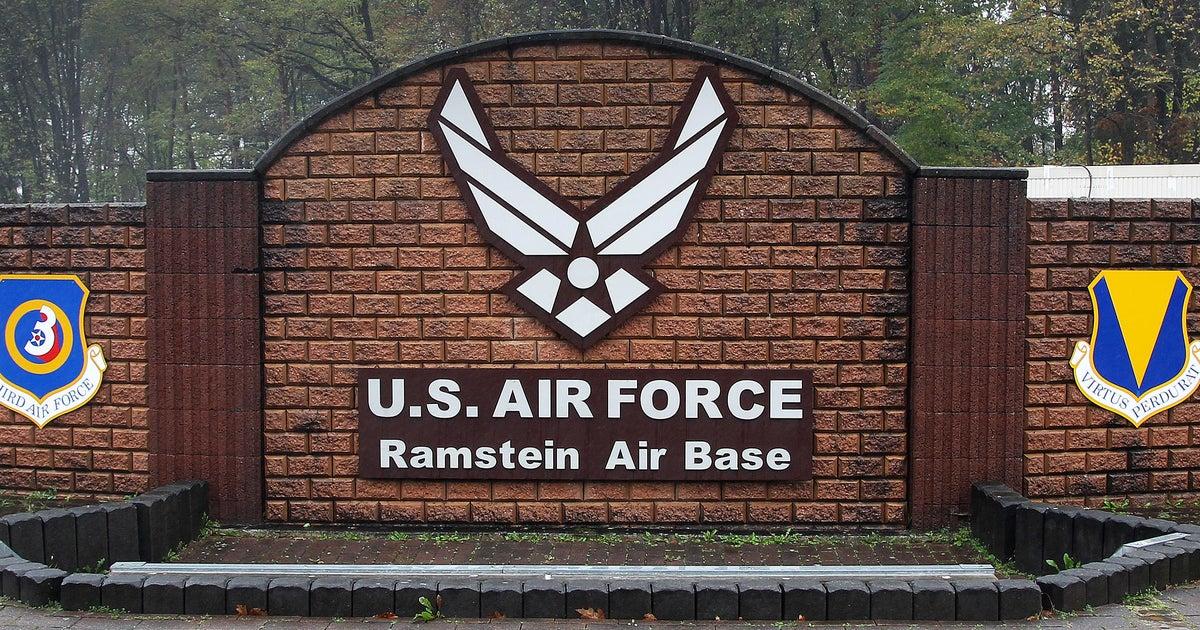
Stars and Stripes said the U.S. has “roughly 34,000 troops spread out at various bases and installations across the country,” and it described Ramstein as a key facility for extending U.S. reach worldwide, while also naming Spangdahlem as another major air hub.
CNBC reported that many troops and their families are based at Ramstein Air Base, described as “a major transportation hub and command center for U.S. military operations in Europe, Africa, and the Middle East,” and it said a significant number are also based at the Grafenwoehr Training Area, described as “the largest U.S. Army training facility in Europe.”
CBS News added that Germany is home to “the headquarters of U.S. European Command and Africa Command,” and it identified Ramstein Air Base as “a key hub for U.S. operations.”
NPR (via AP) listed additional facilities including “Landstuhl Regional Medical Center, the largest American hospital outside the United States,” and it said the U.S. has headquarters for U.S. European Command and U.S. Africa Command in Germany.
On the political timeline, the Guardian said Trump’s renewed attack on Merz’s record in government comes “just days before his first anniversary in office,” and it also reported that Trump’s latest outburst came “a day after he suggested the US military presence in Germany was being reviewed with a “possible reduction” under consideration.”
The BBC reported that Trump’s decision would be made “over the next short period of time,” and it said Merz had not responded to Trump’s suggestion about reducing troops in Germany.
Looking back, NPR described Trump’s earlier plan in June 2020 to pull out about 9,500 of roughly 34,500 troops stationed in Germany, and it said “the process never actually started,” with Biden later stopping the planned withdrawal in 2021.
In the immediate future, the Guardian reported Wadephul saying Germany was expecting “decisions from the Americans,” while Stars and Stripes said Hegseth expected allies to “step up” or face “consequences,” tying the troop question to the broader Iran conflict.